Quick links
- What Is Backflow, and Why Does It Matter?
- What Is a Backflow Preventer and What Does It Do?
- Types of Backflow Preventers and Where Each Is Used
- Irrigation Backflow: Sprinkler Systems in Detail
- Backflow Prevention Testing and Inspection
- Signs Your Backflow Preventer Needs Repair
- Why Backflow Preventers Fail
- Repair, Rebuild, or Replace?
- Winterizing and Preventing Problems
- Homes, Landlords, and Businesses
- When It Becomes an Emergency
- Where You Can Get Help
- Related Plumbing Help
- Frequently Asked Questions
An irrigation backflow preventer is a valve assembly on the water supply to your sprinklers that stops dirty water from flowing backward into your drinking water. It usually needs a test when it is installed and again on a schedule set by your local water utility, and it needs repair when it leaks, spits water, or fails that test. A plumber can test it, rebuild it, or replace it.
Most people first notice the device because it drips, freezes, or arrives on a notice from the water department. You will learn what the device does, how the types differ, how testing goes, and how to choose between repair and replacement. It is one part of the wider work on water lines, water mains and backflow.
What Is Backflow, and Why Does It Matter?
Backflow means water moving in the opposite direction from normal, so that used or contaminated water is pulled or pushed back into the clean supply. The backflow definition used in plumbing is simple: any reversal of flow in a pipe that lets non-drinking water reach the potable system.
Two things cause it. Back-siphonage happens when supply pressure drops, for example during a main break or heavy firefighting demand, and the falling pressure sucks water backward. Backpressure happens when the downstream side is higher than the supply, such as a booster pump or an elevated tank pushing against the line.
What does backflow water carry?
A garden hose left in a bucket of fertilizer, a pool fill line, or a sprinkler head sitting in a puddle of soil, fertilizer, and pet waste can all become a path for contamination. That is why backflow water is treated as a public health issue and not only a plumbing nuisance.
Why is backflow prevention important in a facility?
In a restaurant, clinic, car wash, or factory, chemicals, boiler additives, and process water sit on the other side of the same supply. Why is backflow prevention important in a facility comes down to the fact that a single failed check can put those fluids into the building's drinking supply, so commercial plumbing jobs often carry stricter testing rules than a house does.
What Is a Backflow Preventer and What Does It Do?
A backflow preventer is a mechanical device, built from spring-loaded check valves and sometimes a vented relief chamber, that lets water flow one way and closes when the flow tries to reverse. If you have asked what is a backflow preventer or what does a backflow preventer do, that is the whole job: it keeps your irrigation, pool, or process water from returning to the supply.
People search for it by many names. A backflow valve, back flow preventer valve, backflow protector, water backflow valve, and backflow assembly all describe the same family of devices, and what is a backflow device is answered the same way.
What does a backflow device look like?
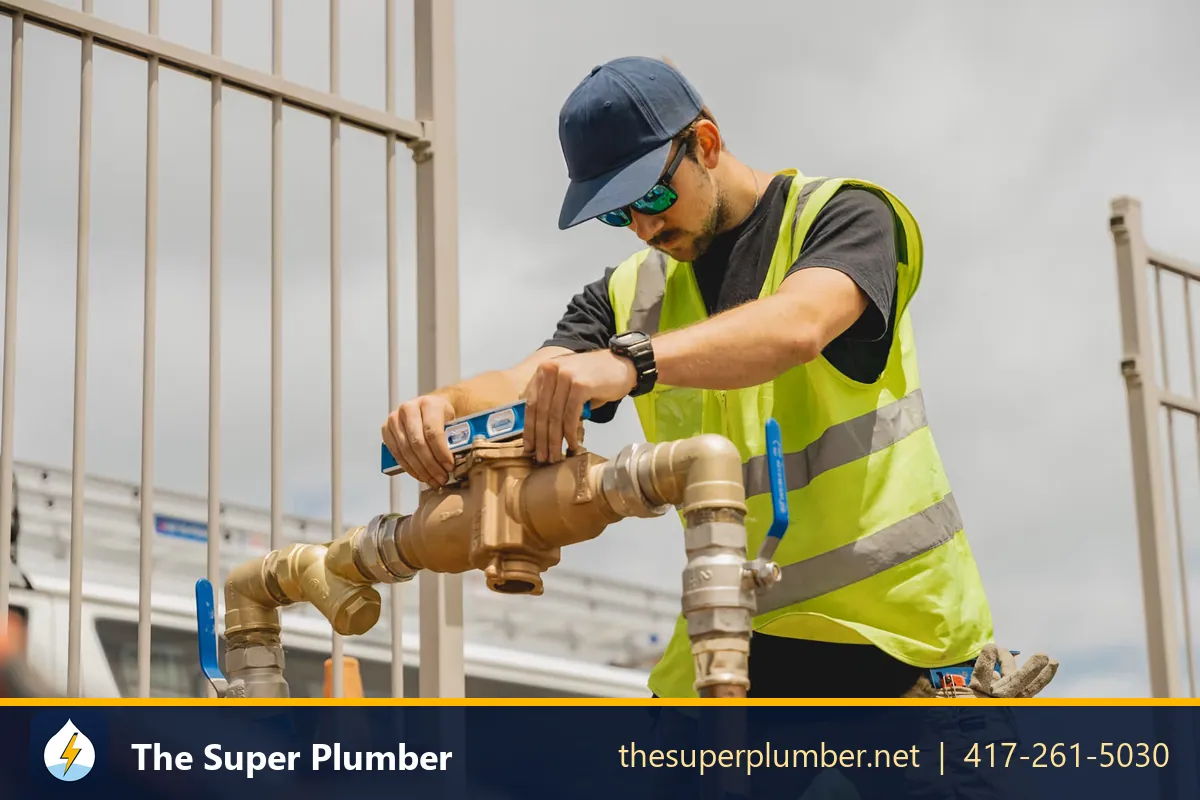
What does a backflow device look like depends on the type. Most are bronze or brass bodies about the size of a large fist to a forearm, with two shutoff valves, small test ports with brass caps, and sometimes a bell-shaped top. Many sit on a short run of pipe above ground near the house or the meter.
Where is it usually installed?
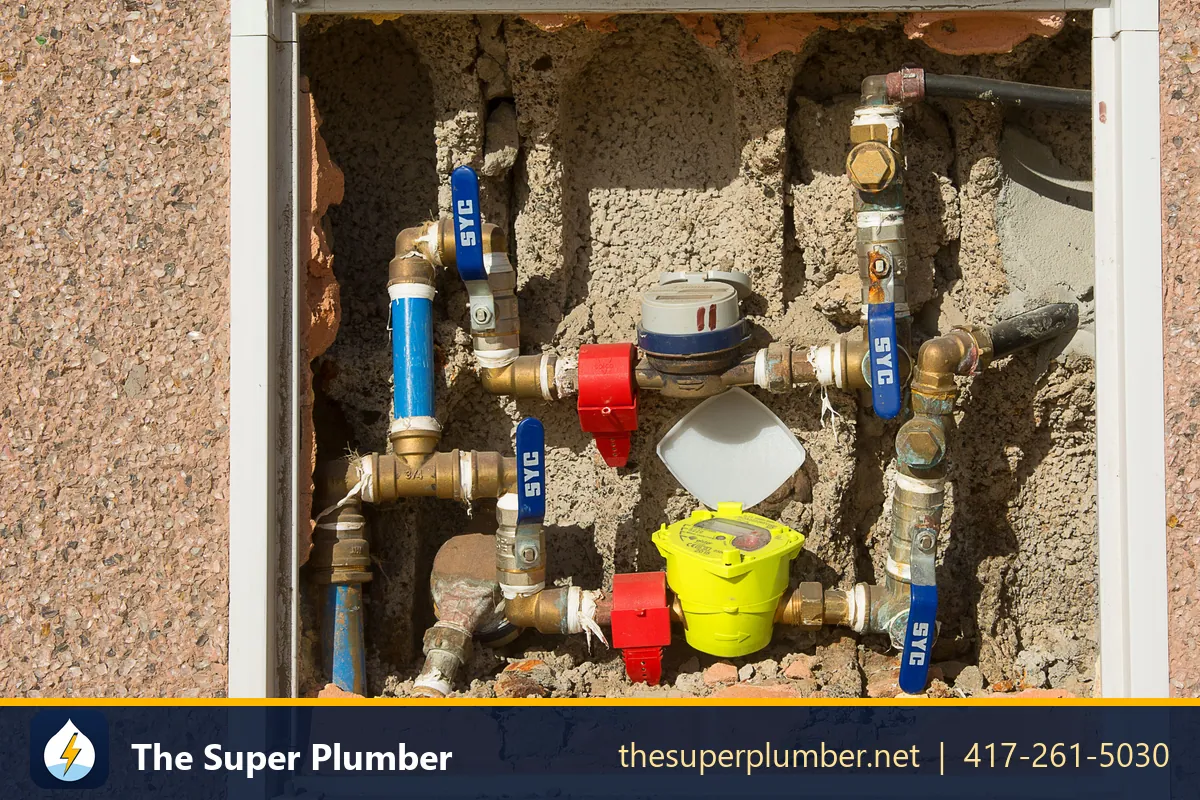
Expect to find it close to where the irrigation line branches off the main, on an outdoor wall, in a green plastic valve box, or inside a garage or basement where the line enters. A water line backflow preventer on the whole house, a home backflow preventer on a single fixture, and a plumbing backflow preventer inside a building can all look different, which is why a plumber identifies the exact model before touching it.
Have a plumbing problem right now? Call and describe it.
Call 417-261-5030Types of Backflow Preventers and Where Each Is Used
The right assembly depends on how hazardous the connected water is and where the device can physically go. The main types come next in rough order of protection.
- Atmospheric vacuum breaker (AVB): simple and low cost, used on a hose bib or a single zone, and it must sit above the highest sprinkler head.
- Pressure vacuum breaker (PVB): the common sprinkler system backflow preventer on homes, it works against back-siphonage but not backpressure and sits above ground.
- Double check valve assembly: two check valves in series, the usual double check valve backflow protection for lower-hazard lines and many fire systems.
- Reduced pressure zone (RPZ) assembly: two checks plus a relief valve that discharges when it senses trouble, used where the hazard is higher.
- Vertical backflow preventer: a type built to be installed in a vertical pipe run, used where a horizontal layout will not fit.
Backwater prevention valve is a different device
A backwater prevention valve belongs on a sewer line, not a water line. It keeps sewage from flowing back into a house through floor drains during a municipal backup. If that is the problem you are chasing, the sewer line section covers it.
Pool and other special connections
A pool backflow preventer guards the fill line from the pool water, and a well or booster pump may need a check valve backflow preventer in a different position, and well and sump pump work has its own rules. Which one is required is set by the local cross-connection rules, so ask before buying parts.
Irrigation Backflow: Sprinkler Systems in Detail
Irrigation backflow is the most common reason a homeowner deals with these devices. A lawn sprinkler is an ideal contamination route because the heads sit at ground level, surrounded by soil, fertilizer, and animal waste.
A backflow device irrigation system connection is typically installed after the irrigation shutoff and before the first zone valve. The backflow valve irrigation setup you see in most yards is a pressure vacuum breaker with a bonnet on top, while some regions use a double check assembly in a box or an RPZ where local rules ask for more protection.
Related searches such as sprinkler backflow valve, sprinkler backflow prevention valve, irrigation backflow preventer valve, irrigation system backflow preventer valve, and backflow prevention device for irrigation system all point to this same component.
Why placement matters
A pressure vacuum breaker must sit above the highest downstream head, as the manufacturer and code require, or it cannot vent properly. A low, wet box can defeat it.
Backflow Prevention Testing and Inspection
Backflow prevention testing is a timed check of the assembly's checks and relief valve using a calibrated gauge, and it is normally done by a tester the local water authority accepts. Backflow prevention inspection looks at the installation, the type, the height, and the shutoff valves to confirm the assembly matches the hazard.
Requirements vary by jurisdiction. Many water utilities require testing when an assembly is installed, repaired, or moved, and then on a repeating cycle, often once a year. Some cities require the test to be filed with the utility, and some accept only testers on a local list. Your water bill, a notice from the utility, or a call to the water department will tell you what your city expects.
What a tester actually does
A tester connects a differential pressure gauge to the test cocks, closes the shutoff valves in sequence, and reads how each check holds. Results are written on a report that lists the model, serial number, readings, and pass or fail. If the assembly fails, the tester or a plumber repairs it, then retests.
How to prepare for a test visit
- Clear brush, snow, and mulch so the test ports are reachable.
- Locate the irrigation shutoff.
- Have the last test report or the utility notice handy.
- Mention any past leaks, freezing, or relief-port discharge.
For people searching backflow plumber near me, backflow services near me, or backflow inspections near me, the useful question is whether the tester meets your local requirement. Availability and scheduling are confirmed when you phone.
Signs Your Backflow Preventer Needs Repair
Most failures show up as water where it should not be. A device that is working normally stays dry, apart from a relief valve that discharges by design on some types.
- Water dribbling from the vent or the bonnet of a pressure vacuum breaker after each cycle.
- Constant water dripping from the relief port on an RPZ assembly.
- Low pressure at the sprinkler heads or a rattling sound when the zones start.
- A cracked body, split bonnet, or pipe after a freeze.
- Rust-colored or discolored water near the assembly.
- A failed test report or a notice that testing is overdue.
Ready to get a quote? Availability and pricing are confirmed by phone.
Call 417-261-5030Why Backflow Preventers Fail
Debris trapped on a check valve seat keeps it from sealing, and small stones from a repair or a new line are a frequent culprit. Worn rubber seats, weak springs, and cracked discs come with age. Freezing splits bodies and bonnets, especially where the assembly sits above ground with no insulation or winterizing.
Do not ignore a leaking relief valve
On an RPZ, a discharging relief valve is a warning that a check has failed or pressure is fluctuating. Leaving it wastes water and floods the valve box. If water is pooling near the house or building, shut off the supply to the assembly and have a plumber look at it.
Repair, Rebuild, or Replace?
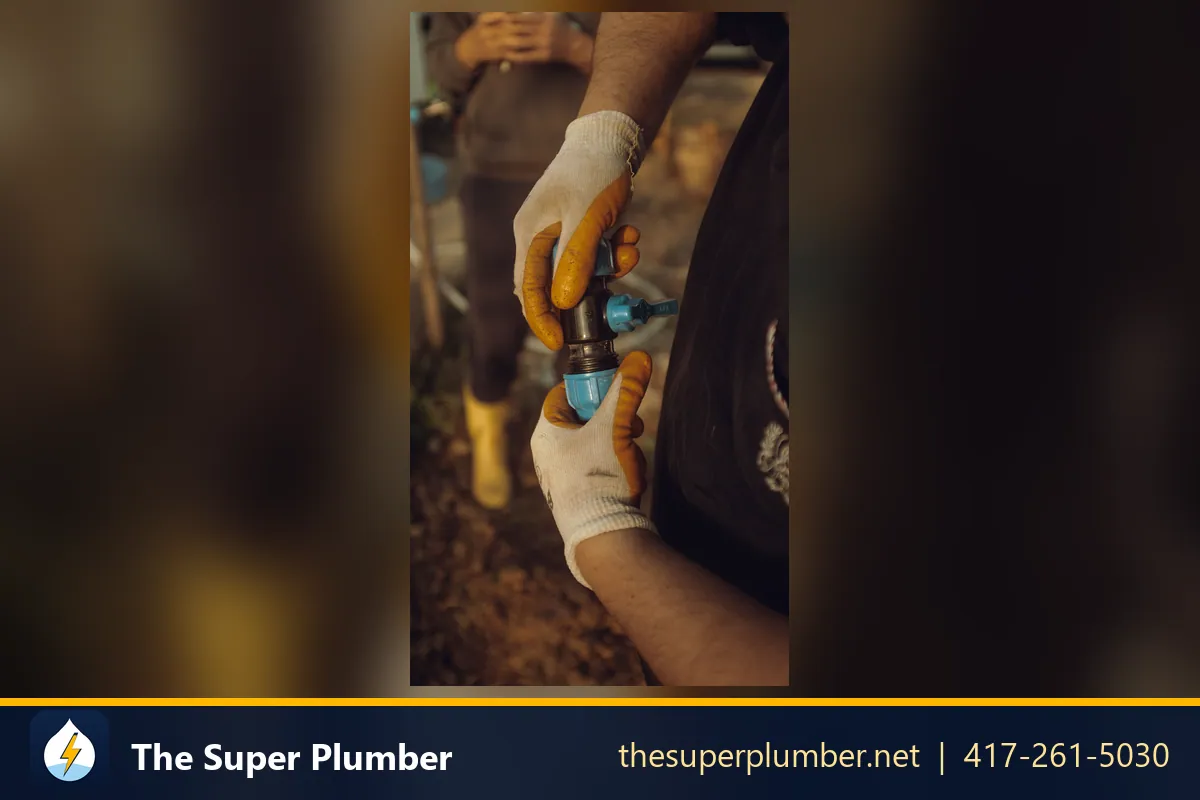
A repair usually means cleaning the check seats and replacing rubber parts, springs, or discs with a rebuild kit that matches the model. It is often the sensible choice when the body is sound and parts are available, followed by a retest.
Replace the assembly when the body is cracked, corroded through, discontinued, or the wrong type for the hazard. A replacement may also be a chance to move a low, flood-prone installation to a compliant height and to add unions so it can be serviced without cutting pipe. If the connected supply line itself is leaking, see underground water line repair.
Questions to ask before you approve the work
- Which type is on my property, and is it the type my utility requires?
- Is a rebuild kit available for this model, or does the body need to be replaced?
- Will the retest be filed with the utility, and by whom?
- What will the quote cover: parts, the test, permits, and the report?
Cost depends on the type and size of the assembly, access, whether a permit or filing is needed, and whether other pipe work is involved. See what plumbers charge and why for the general factors, and expect the price to be confirmed by phone.
Winterizing and Preventing Problems
An irrigation backflow preventer that sits above ground is one of the first parts of a plumbing system to freeze. In cold climates, the usual approach is to shut off the supply, drain the system, open the test cocks, and cover or insulate the assembly. A drained assembly does not split when the temperature falls.
Simple habits that help
- Shut off the irrigation supply and drain the assembly before the first hard freeze.
- Open the shutoff valves partway when you drain so trapped water can escape.
- Cover the assembly with an insulated bag or box designed for that purpose, not plastic that traps moisture.
- Open shutoffs slowly in spring to avoid water hammer, which slams checks and can damage them.
- Keep the area clear of soil, mulch, and weeds that cover the vent.
Springtime start-up checks
Look for drips, cracked parts, and stains before you turn the system back on. If the relief valve or bonnet leaks at restart, shut it off and schedule a repair. A hidden leak elsewhere on the property can be found with leak detection.
Homes, Landlords, and Businesses
Different properties have different exposure. A single-family home with a lawn sprinkler often has just one residential backflow preventer or residential backflow valve. A landlord may manage several assemblies across units, some inside a building, and want the test reports kept in one place.
Businesses and multi-unit buildings
Restaurants, medical offices, salons, car washes, and apartment buildings often carry higher-hazard assemblies and more paperwork. A plumbing contractor who handles general plumbing repair and commercial plumbing can identify which connections need protection, coordinate the test, and keep records.
New builds, remodels, and additions
A new irrigation system, a pool, a fire sprinkler line, or an outdoor kitchen can each trigger a requirement, and plumbing installation work is the usual time to add the device. If you are adding a fixture that connects to an outside water source, such as an ice maker or refrigerator supply, the device rules are usually different, but the principle of keeping the clean supply protected is the same.
Water still running or a smell of gas? Act first, then call.
Call 417-261-5030When It Becomes an Emergency
A leaking assembly is usually a scheduled repair, but some situations cannot wait.
- A cracked body or split pipe that is spraying water: shut off the supply at the irrigation shutoff or main valve.
- Flooding around the meter or inside a building: shut off the main and treat it as a plumbing emergency.
- Discolored or foul-smelling tap water after a pressure drop or a break: do not drink it, and tell your water utility and a plumber.
- A frozen assembly that has cracked: turn off the supply before it thaws.
What to do while you wait
Turn off the water to the assembly and photograph the damage for insurance. Never plug an RPZ relief port, since that defeats the safety feature. If a burst line is involved, the steps for burst pipe repair apply.
Where You Can Get Backflow Preventer Testing & Repair Help
Plumbing calls are taken for 21 states, 1,511 cities and 3,769 ZIP codes. Pick your state, or look at a sample city and ZIP for each state; coverage for your exact address is confirmed by phone.
- Arizona
- California
- Colorado
- Connecticut
- Florida
- Georgia
- Idaho
- Illinois
- Maine
- Massachusetts
- Michigan
- Minnesota
- Missouri
- New Hampshire
- New Jersey
- New York
- North Carolina
- Ohio
- Texas
- Virginia
- Washington
| City | ZIP codes and places |
|---|---|
| Tucson, AZ | 85701 near Skrappys; near Rialto Theatre 85702 near Hi Corbett Field; about 1 mile from Reid Park Zoo |
| Pasadena, CA | 91101 near Pacific Asia Museum; near Fuller Theological Seminary 91102 near Pasadena City Hall; near Fuller Theological Seminary |
| Broomfield, CO | 80020 about 1.9 miles from 1stBank Center; about 2.6 miles from Butterfly Pavilion 80021 about 1.6 miles from Rocky Mountain Metropolitan Airport; about 2 miles from 1stBank Center |
| Groton, CT | 06340 about 2.4 miles from United States Coast Guard Academy; about 2.6 miles from Mitchell College 06349 about 1.6 miles from Connecticut College; about 1.7 miles from Connecticut College Arboretum |
| Boca Raton, FL | 33427 near Eleanor R. Baldwin Arena; near FAU Stadium 33428 about 6 miles from Butterfly World; about 7 miles from Morikami Museum and Japanese Gardens |
| Gainesville, GA | 30501 near Brenau University; about 2.4 miles from Lee Gilmer Memorial Airport 30503 about 7 miles from Lake Lanier; about 8 miles from Brenau University |
| Boise, ID | 83701 near Idaho Aquarium; about 3.4 miles from Boise State University 83702 about 1.2 miles from Idaho Central Arena; about 1.2 miles from Jack's Urban Meeting Place |
| Carol Stream, IL | 60116 about 2.5 miles from Cosley Zoo; about 3.5 miles from Wheaton College 60122 near Judson University; about 4.9 miles from Now Arena |
| Biddeford Pool, ME | 04006 about 2.5 miles from University of New England; about 7 miles from Funtown Splashtown USA |
| Wakefield, MA | 02129 near Monument Square Park; near Thompson Square 02131 about 1.2 miles from Faulkner Hospital; about 1.3 miles from Bussey Institution |
| Center Line, MI | 48015 about 3.2 miles from Hazel Park Raceway; about 7 miles from University of Detroit Mercy |
| Maple Plain, MN | 55359 about 7 miles from Crown College; about 7 miles from Lake Minnetonka |
| Fenton, MO | 63026 about 4.6 miles from Endangered Wolf Center; about 7 miles from Ulysses S. Grant National Historic Site 63099 about 1.4 miles from Covenant Theological Seminary; about 2.9 miles from St Louis Country Club |
| Rochester, NH | 03839 about 3.1 miles from Skyhaven Airport; about 9 miles from Whittemore Center 03866 about 2.7 miles from Skyhaven Airport; about 10 miles from Powderhouse Hill |
| Jersey City, NJ | 07097 near Mana Contemporary; near Saint Peter's University 07302 near Hamilton Park; near Headroom LGBTQ+ Lounge |
| Old Westbury, NY | 11568 near State University of New York at Old Westbury; about 1.1 miles from Old Westbury Gardens |
| Kannapolis, NC | 28081 about 3.9 miles from CMC-NorthEast Stadium; about 11 miles from Charlotte Motor Speedway 28082 about 8 miles from Charlotte Motor Speedway; about 19 miles from Spectrum Center |
| Hamilton, OH | 45011 about 2.1 miles from Robinson-Schwenn Building; about 2.9 miles from Butler County Regional Airport 45012 about 3 miles from Robinson-Schwenn Building; about 9 miles from Western College for Women |
| Katy, TX | 77449 about 6 miles from Richard E. Berry Educational Support Center; about 7 miles from Bear Creek Pioneers Park 77450 about 8 miles from Don Coleman Coliseum; about 8 miles from Bear Creek Pioneers Park |
| Fredericksburg, VA | 22401 near University of Mary Washington; about 17 miles from Marine Corps Base Quantico 22403 about 1.4 miles from Stafford Regional Airport; about 8 miles from University of Mary Washington |
| Auburn, WA | 98001 about 4.7 miles from Surprise Lake; about 6 miles from Pacific Raceways 98002 about 1.8 miles from Auburn Municipal Airport; about 3.1 miles from Pacific Raceways |
Frequently Asked Questions
How often does an irrigation backflow preventer need to be tested?
It depends on where you live. Many water utilities require a test when the device is installed, repaired, or relocated, and then once a year, but requirements vary by jurisdiction. Check your utility notice or call the water department, then phone a plumber to schedule the test.
What does a backflow preventer do in plain terms?
It works like a one-way gate on your water line. Water can flow from the supply toward your sprinklers, pool, or equipment, but it cannot flow back the other way. Spring-loaded check valves close when pressure falls or reverses, and some models add a relief valve that dumps water to atmosphere if a check fails. The goal is protecting drinking water from contamination.
Why is my backflow preventer leaking water?
A small amount of dripping often means debris on a check seat, a worn rubber part, a weak spring, or a cracked bonnet after a freeze. On a pressure vacuum breaker, water from the vent after shutoff can mean a failing seal. On an RPZ, a constantly discharging relief valve is a sign a check has failed. Shut off the supply to the device and have a plumber test it.
Can I test my own backflow preventer?
In most places, no. Testing needs a calibrated gauge and a tester whom the local water authority accepts, and many utilities do not accept homeowner readings. You can do the visual checks yourself, such as looking for leaks, damage, and blockages, but the official test and any repair that opens the assembly should be done by a qualified plumber. Rules differ by location, so confirm with your utility.
What is the difference between a PVB, a double check, and an RPZ?
A pressure vacuum breaker guards against back-siphonage and sits above ground, high enough to vent. A double check assembly uses two check valves in series for lower-hazard connections and can sit in a valve box in many areas. An RPZ adds a relief valve between two checks for higher-hazard connections. Which one you need depends on the hazard and local code.
Do I need a backflow preventer for a home sprinkler system?
Almost always. Plumbing codes and water utilities generally require a backflow device on irrigation because the heads sit in soil and fertilizer that could contaminate the supply. A plumber who works with irrigation connections can tell you what your local rules call for and can install it.
What happens if a backflow preventer fails its test?
The tester records the failure and the assembly needs repair or replacement, followed by a retest. Repair often means cleaning the checks and replacing the rubber parts, while a cracked or obsolete body is replaced. Ask what the failed report requires in your area.
Can a backflow preventer freeze and how do I prevent it?
Yes. Above-ground assemblies are a common freeze casualty, and a split body or bonnet can leak all season before anyone notices. Before freezing weather, shut off the supply, drain the irrigation system, and open the test cocks so the assembly drains. If it has cracked, shut off the water before it thaws.
How much does backflow preventer repair or replacement cost?
Cost depends on the type and size of the device, access, whether a rebuild kit is available, permit or utility filing requirements, and how much pipe work is involved. A simple retest costs less than a full replacement with new piping. Price is confirmed by phone after the plumber learns the model and the problem.
Who can install and service a backflow preventer near me?
A plumber familiar with your local cross-connection rules can install, repair, and retest one, and some jurisdictions require that the tester be on a local list. When you phone, mention your city, the type of device, whether it is on an irrigation line, a pool, or a building, and whether you received a utility notice. Availability and coverage are confirmed by phone.
Ready to talk to a plumber? Call 417-261-5030.
Call 417-261-5030