
Quick links
- How water reaches your home: the line from meter to faucet
- Signs your water line needs attention
- Water line repair: what it involves and what shapes the approach
- Water main and underground water line repair
- Backflow prevention: protecting the drinking water
- Refrigerator water line: repair and installation
- Pressure problems: low, high and fluctuating
- Discolored, cloudy or bad-tasting water
- Related problems to rule out
- Myths about water lines
- Homeowners, landlords and businesses: who handles what
- Seasonal factors: freezing, thawing and dry spells
- Choosing a plumber for underground and backflow work
- Prevention and maintenance
- What to have ready when you call
- Where You Can Get Help
- Related Plumbing Help
- Frequently Asked Questions
Water line repair is the work of fixing or replacing the pipes that carry clean water to your property and through it: the underground line from the street, the main shutoff at the house, the branch lines to appliances and the backflow assemblies that keep dirty water from flowing the wrong way. Symptoms show up as low pressure, a wet patch in the yard, a spinning meter or discolored water, and the fix depends on where along that path the trouble sits.
This overview follows the path of the water from the utility connection to the faucet, explains what each part does, and shows when repair, water line replacement or testing is the right call. It also introduces detailed help on backflow preventer testing and repair, water main and underground water line repair, and refrigerator water line repair and installation.
How water reaches your home: the line from meter to faucet
Water arrives through a buried service line that connects the utility main to your property, passes a meter, and enters the building at a main shutoff valve. From there, smaller branch lines feed fixtures and appliances. Understanding this path tells you who is responsible for what and where a leak is likely to hide.
The service line, the meter and the main shutoff
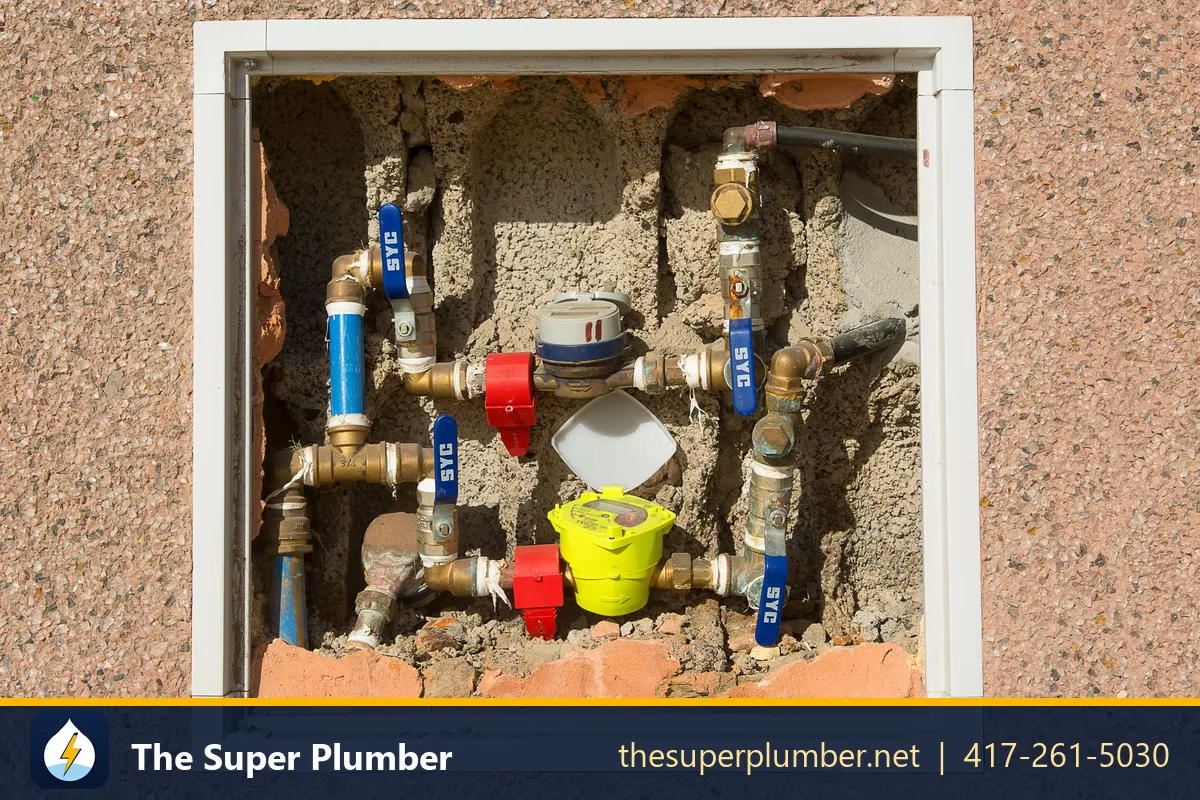
The service line is the underground pipe from the utility connection to your house. The water meter measures what passes through it, and the main shutoff valve stops the flow into the building. In many places, the owner is responsible for the pipe on the property side of the meter and the utility for the rest, but the dividing line varies, so ask your water provider before you dig or spend money.
Pressure regulation and branch lines
Many homes have a pressure reducing valve near the entry point that lowers street pressure to a level the fixtures can tolerate. Beyond it, branch lines run to the water heater, kitchen, bathrooms, laundry, hose bibs and appliances such as a fridge or ice maker. A failing pressure regulator can cause noisy pipes, dripping faucets and repeated leaks at once.
Materials you may find in an older or newer home
- Copper: long-lived and common in both service and interior lines.
- PEX: flexible plastic tubing widely used in newer interior plumbing and some service lines.
- HDPE or polyethylene: flexible plastic pipe used for many underground service lines.
- Galvanized steel: found in older homes; it corrodes from the inside and restricts flow.
- Lead: present in some very old service lines; your water utility can tell you what is known about your line.
Signs your water line needs attention
Water line trouble often shows up outside or in the pressure before it shows up on a bill or a ceiling. The key is noticing a change: something that used to be normal has shifted.
- Weak pressure at every fixture, not just one.
- A soggy or unusually green area over the line path, or a sinkhole-like dip.
- A water meter that keeps moving when all fixtures are off.
- Water bills that climb with no change in use.
- Muddy, rusty or cloudy water after a period of low flow.
- The sound of running water when nothing is on.
- Hissing near the main shutoff or meter.
A quick meter check
Turn off every fixture and appliance, then look at the meter's leak indicator, often a small triangle or dial. If it keeps turning, water is escaping somewhere. Close the main valve and check again. If the indicator stops, the leak is inside the house; if it keeps moving with the main closed, the meter itself may be at fault, and your utility should be told. If the leak is on the pipe run inside walls or floors, leak detection can pinpoint it without tearing into finished surfaces.
Ready to get a quote? Availability and pricing are confirmed by phone.
Call 417-261-5030Water line repair: what it involves and what shapes the approach
Water line repair ranges from a small clamp or coupling on a pinhole to cutting out a length of pipe and replacing it. The approach depends on the pipe material, the depth, the surroundings and how many failures the line has had. If you search for water line repair near me, expect a plumber to want the location, the age of the home, the pipe material and what you have seen before offering an estimate.
Repair versus replace
A single failure in a sound line can be repaired. When the pipe is old, has repeated breaks, is corroded inside or is made of a material that is being phased out, replacement usually makes more sense than repeated digging. Pipe replacement also becomes attractive when the line runs under a driveway, patio or landscaping that you would rather only open once.
What a plumber checks first
- Where the line enters the home and its material.
- Pressure at a hose bib, and the condition of the pressure regulator.
- Whether the meter moves with all fixtures closed.
- The route of the line, often located with a line locator.
- Signs of damage from roots, settling, freezing or nearby digging.
Emergency shutoff steps
If a line is broken and water is flowing, close the main shutoff valve at the house. If it will not close, or the leak is upstream of the valve, contact the utility, which can shut water at the street. See emergency plumbing for urgent situations, and note that availability, including for a "24 hour plumber," is confirmed when you call.
Water main and underground water line repair
The water main at your property is the buried supply pipe between the utility connection and your house, and a break there can waste large volumes of water and undermine soil. Because the pipe is buried, the work involves locating the leak, exposing the pipe and deciding between spot repair, replacement or a trenchless approach. The detailed process is covered in water main and underground water line repair.
Digging versus trenchless replacement
A traditional dig exposes the whole run and lets the plumber see and replace everything. Trenchless methods such as pipe bursting or pulling a new line through the path of the old one can limit surface damage where a lawn, walkway or driveway sits above the line. Whether it fits depends on the pipe, soil, depth, fittings and local rules; the same family of techniques for drains is explained in trenchless pipe repair.
Permits, utility locates and inspections
Underground work usually involves a call to the local utility locate service before digging, and many jurisdictions require permits and inspection for a new or replaced service line. Rules differ by city and county, so ask the plumber how permits are handled. These steps affect timing and cost, but they also protect other buried lines.
Water line replacement and its cost drivers
Water line replacement cost depends on length, depth, material, soil, surface restoration, permits, and whether the work is open trench or trenchless. There is no single price, and quotes are confirmed by phone. For more on how bills are built, see plumber cost factors.
Backflow prevention: protecting the drinking water
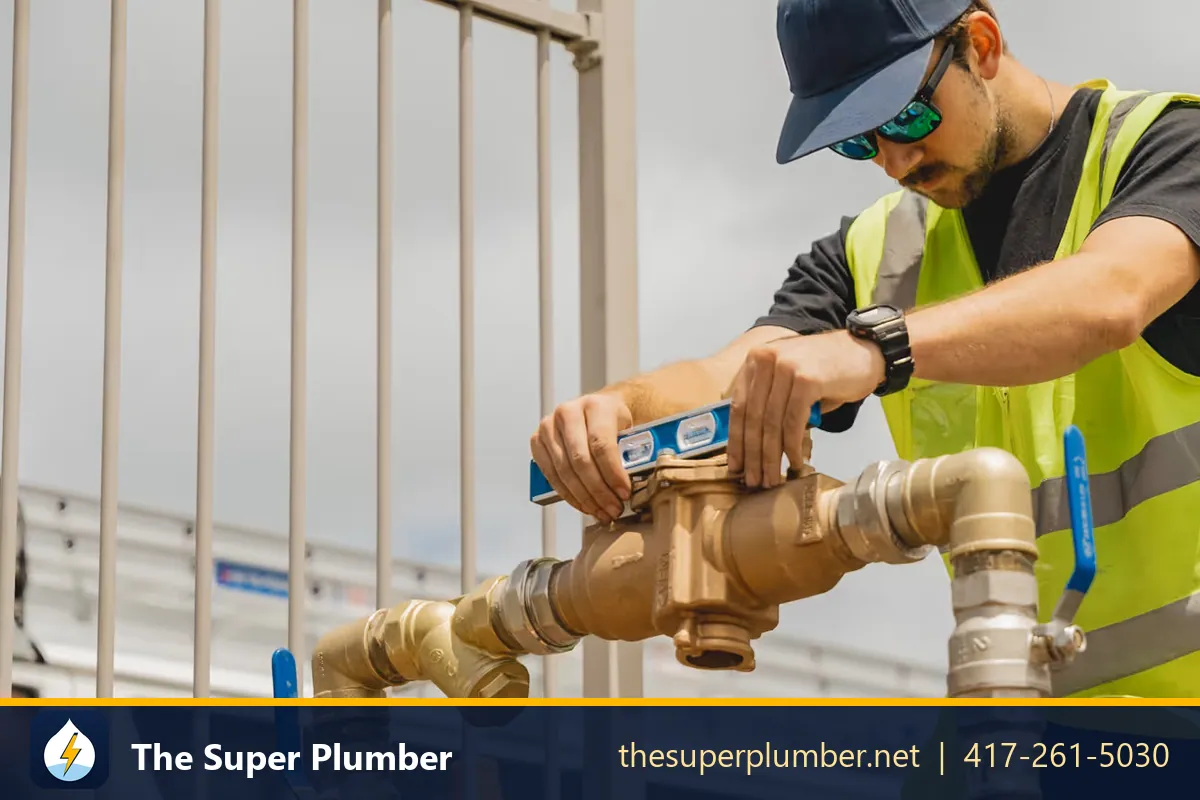
Backflow is water flowing backward in a system, which can pull contaminated water into the clean supply. A backflow prevention device is a valve or assembly installed where that risk exists, such as at an irrigation system, a fire line, a commercial building or a boiler connection. The full story on testing and repair is in backflow preventer testing and repair.
Backflow valve types in plain terms
A backflow valve comes in several designs, each for a different level of risk.
- Hose bib vacuum breaker: a small screw-on device for outdoor spigots.
- Atmospheric vacuum breaker: used on some irrigation and equipment lines.
- Pressure vacuum breaker: common on residential sprinkler systems, installed above the highest sprinkler head.
- Double check valve assembly: two check valves in series, used for lower-hazard connections.
- Reduced pressure zone assembly: a more protective device with a relief port, used where the hazard is greater.
Irrigation backflow preventer basics
An irrigation backflow preventer sits between the supply and the sprinkler system so lawn chemicals, fertilizer or standing water cannot be drawn into your drinking water. Many water providers require periodic testing and repair of these assemblies, and some ask for test reports to be filed. Rules vary by utility, so check locally.
Common backflow problems
- Water spraying from the relief port.
- A cracked body after freezing.
- Fouled check seats from debris.
- A device installed at the wrong height or position.
- Missing or overdue test paperwork.
If an assembly freezes in cold climates, leaks can start when it thaws. Draining or protecting it before winter is common practice, and a plumber can advise on the right approach for your device.
Refrigerator water line: repair and installation
A refrigerator water line is a small tube that supplies the ice maker and water dispenser, usually a quarter-inch line running from a cold supply behind the wall or under the floor. It fails through kinks, cracks, loose fittings and clogged filters. Details and repair options are in refrigerator water line repair and installation.
Fridge water line: common problems
- Ice maker makes little or no ice.
- Water dispenser flows slowly or sputters.
- Water on the floor behind or beneath the refrigerator.
- Kinked or crushed tubing after the fridge was pushed back.
- Off-taste from an old filter or stale line.
Water line installation for a fridge or ice maker
Water line installation for a refrigerator normally means running a small supply tube from a nearby cold line to a dedicated shutoff valve, then connecting the tube to the appliance with enough slack to pull it out for cleaning. Many plumbers favor a proper shutoff valve or ice-maker box over a clamp-on saddle valve, which can leak or clog. Check that the line is not routed where it can be kinked, and leave a service loop.
A warning about hidden leaks
A slow hidden leak from a refrigerator line can run for months behind the appliance and rot flooring. If the floor near the fridge is soft, stained or warped, stop using the line and call a plumber. Hardwood and laminate flooring can be damaged long before water becomes visible.
Water still running or a smell of gas? Act first, then call.
Call 417-261-5030Pressure problems: low, high and fluctuating
Low water pressure is a symptom rather than a diagnosis. It might come from a clogged aerator at one faucet, a partly closed valve, a corroded galvanized branch, a failing regulator, a leak on the service line or a utility-side issue.
Low pressure at every fixture
When pressure is poor throughout the house, look at the main shutoff, the regulator and the service line. A leaking underground line can drop pressure while the meter spins. If neighbors also report low pressure, contact the utility first.
High pressure and hammering pipes
Excess water pressure stresses fixtures, appliances and joints and shows up as banging pipes and leaky faucets. A pressure gauge on a hose bib will show the number, and the regulator may need adjustment or replacement.
Pressure that changes through the day
Fluctuating pressure can reflect neighborhood demand, a failing valve or a partly blocked filter. Note when it happens and tell the plumber; a pattern helps diagnosis.
Discolored, cloudy or bad-tasting water
Water that changes color, clarity or taste points to a specific cause more often than people expect. Notice whether it affects hot water only, cold water only, or both, and whether it clears after running the tap.
Rusty or brown water
Rust-colored water that clears after a minute often comes from corroding galvanized or iron pipe, or from disturbed sediment after a main repair or hydrant flushing nearby. If only hot water is discolored, the water heater tank may hold sediment or corrosion.
Cloudy or milky water
Water that looks milky but clears from the bottom up is usually air bubbles released after pressure changes. Water that stays cloudy, or that has a sharp smell, deserves a call to the utility and a plumber.
When to involve the utility
If the change affects neighbors, the utility should know. If it stays inside your home, a plumber can inspect the pipes, regulator and heater.

Myths about water lines
A few common beliefs lead people to wait too long or spend in the wrong place.
- Myth: a leak is always visible. Fact: a buried line can leak for a long time without a wet patch, especially in sandy or well-draining soil.
- Myth: high water bills mean the utility made a mistake. Fact: a hidden leak is a common cause, so check the meter first.
- Myth: new pipe never needs a check. Fact: poor fittings, damage during backfill or high pressure can cause early failures.
- Myth: backflow devices last forever. Fact: springs, seals and check seats wear and are commonly tested for that reason.
Not sure what you need? Call and we will point you to the right help.
Call 417-261-5030Homeowners, landlords and businesses: who handles what
Responsibility differs by property type, and sorting it out early prevents delays.
- Homeowners: usually responsible for the line from the meter to the house, but confirm with the utility.
- Landlords: typically arrange repairs to supply lines and backflow devices; tenants should report signs early.
- Condominiums and HOAs: shared mains and irrigation systems may fall to the association.
- Businesses: may face stricter backflow rules; see commercial plumbing for that side.
Seasonal factors: freezing, thawing and dry spells
Cold weather stresses exposed lines, outdoor spigots and backflow assemblies. In colder regions, service lines are buried below the local frost depth, but shallow sections, crawlspace pipes and exterior wall runs can still freeze. Shrinking or shifting soil in a dry spell, then heavy rain, can also stress buried pipe. A frozen pipe that splits is a matter for burst pipe repair.
Choosing a plumber for underground and backflow work
Look for a plumber who explains the plan for locating, digging or lining, and who talks about permits and utility locates without being asked. A local plumber who works on your kind of pipe and device will also know what nearby utilities expect. Ask about local plumbers near you or check the service areas by state to see where we take calls.
Questions worth asking
- How will you find the leak or the line route?
- Will the work be open trench, trenchless or a mix?
- Who pulls permits and schedules inspections?
- How will the yard, driveway or landscaping be restored, and what is included?
- What could change the estimate once the pipe is exposed?
Prevention and maintenance
- Locate your main shutoff and test it twice a year.
- Photograph your meter and write down the reading if you suspect a leak.
- Have a pressure gauge on a hose bib to watch for changes.
- Protect backflow devices and outdoor spigots before freezing weather.
- Keep deep-rooted trees away from the service line path.
- Replace kinked or brittle fridge line tubing before it splits.
- Note the location of your line before landscaping or digging projects.
What to have ready when you call
A plumber can plan the visit better when you describe what you have seen. Have this information ready:
- Where the symptom shows up and when it started.
- The age and material of the home's pipes, if known.
- Whether the meter moves with everything off.
- Where the main shutoff is and whether it closes fully.
- Photos of wet areas, the meter or the backflow device.
- Any recent digging, landscaping or construction.
Pricing, availability and scheduling are confirmed by phone. For other work that touches your supply, ask about all plumbing services.
Where You Can Get Water Line, Water Main & Backflow Services Help
Plumbing calls are taken for 21 states, 1,511 cities and 3,769 ZIP codes. Pick your state, or look at a sample city and ZIP for each state; coverage for your exact address is confirmed by phone.
- Arizona
- California
- Colorado
- Connecticut
- Florida
- Georgia
- Idaho
- Illinois
- Maine
- Massachusetts
- Michigan
- Minnesota
- Missouri
- New Hampshire
- New Jersey
- New York
- North Carolina
- Ohio
- Texas
- Virginia
- Washington
| City | ZIP codes and places |
|---|---|
| Gilbert, AZ | 85233 about 5 miles from Mesa Arts Center; about 6 miles from Wilkes University, Mesa 85234 about 5 miles from Mesa Arts Center; about 6 miles from Wilkes University, Mesa |
| San Diego, CA | 92102 about 1.8 miles from Balboa Park; about 2.1 miles from Petco Park 92103 about 1 mile from San Diego Zoo; about 1.3 miles from San Diego Museum of Art |
| Colorado Springs, CO | 80901 near Colorado Springs Fine Arts Center; about 1 mile from Colorado College 80906 about 1.4 miles from Broadmoor World Arena; about 1.6 miles from World Figure Skating Hall of Fame |
| Fairfield, CT | 06430 near Rafferty Stadium; about 2 miles from Fairfield University 06828 about 1.3 miles from Rafferty Stadium; about 2.2 miles from University of Bridgeport |
| Hialeah, FL | 33002 about 2 miles from Amelia Earhart Park; about 4.5 miles from Miami International Airport 33010 about 2.8 miles from Miami International Airport; about 3.7 miles from Amelia Earhart Park |
| Athens, GA | 30601 about 1.5 miles from University of Georgia; about 1.9 miles from Sanford Stadium 30602 near Georgia Museum of Art; near Sanford Stadium |
| Eagle, ID | 83616 about 8 miles from Idaho Aquarium; about 10 miles from Idaho Central Arena |
| Chicago, IL | 60601 near St. Regis Chicago; near Maggie Daley Park 60602 near Tribeca Flashpoint Media Arts Academy; near Chicago Opera House |
| Biddeford, ME | 04005 about 2.2 miles from Biddeford Municipal Airport; about 3.8 miles from Funtown Splashtown USA 04007 about 1.7 miles from Biddeford Municipal Airport; about 6 miles from University of New England |
| Litchfield, MA | 02464 about 1.4 miles from Crystal Lake; about 1.5 miles from William James College 02479 near McLean Hospital; about 2.8 miles from Harvard–Smithsonian Center for Astrophysics |
| Center Line, MI | 48015 about 3.2 miles from Hazel Park Raceway; about 7 miles from University of Detroit Mercy |
| Maple Plain, MN | 55359 about 7 miles from Crown College; about 7 miles from Lake Minnetonka |
| Fenton, MO | 63026 about 4.6 miles from Endangered Wolf Center; about 7 miles from Ulysses S. Grant National Historic Site 63099 about 1.4 miles from Covenant Theological Seminary; about 2.9 miles from St Louis Country Club |
| Atkinson, NH | 03811 about 5 miles from Canobie Lake Park; about 6 miles from Rockingham Park |
| East Orange, NJ | 07017 about 1.6 miles from Branch Brook Park; about 2.4 miles from New Jersey Institute of Technology 07019 about 1.5 miles from Branch Brook Park; about 2.2 miles from New Jersey Institute of Technology |
| Great Neck, NY | 11024 about 1.8 miles from Stepping Stones Light; about 2.6 miles from Manhasset Valley Park |
| Davidson, NC | 28035 near Davidson College; about 4.9 miles from Lake Norman 28036 about 3 miles from Davidson College; about 8 miles from Lake Norman |
| Columbus, OH | 43201 near Billy Ireland Cartoon Library & Museum; near Wexner Center for the Arts 43202 near Jesse Owens Memorial Stadium; about 1.3 miles from Historic Crew Stadium |
| Plano, TX | 75023 about 2.1 miles from John Clark Field; about 4.9 miles from University of Texas at Dallas 75024 about 1 mile from Children's Medical Center at Legacy; about 2.6 miles from Riders Field |
| Richmond, VA | 23226 near E. Claiborne Robins Stadium; about 1 mile from University of Richmond 23227 about 1.3 miles from GreenCity Arena; about 3 miles from Bryan Park |
| Kent, WA | 98030 about 1.4 miles from accesso ShoWare Center; about 4.2 miles from Highline College 98031 about 2.2 miles from accesso ShoWare Center; about 5 miles from Highline College |
Frequently Asked Questions
How do I know if my water line is leaking?
Watch for a spinning meter with every fixture off, sudden pressure loss, a wet or unusually green patch above the line, or a rising bill. Close the main valve and see whether the meter stops. If it keeps moving, the meter or the utility side may be involved. Otherwise, the leak is on your side and a plumber can locate it.
Who is responsible for the water line, me or the utility?
It depends on the location. In many places the owner is responsible for the pipe from the meter to the building and the utility for the portion up to the meter, but rules and property lines differ. Contact your water provider to confirm the boundary before hiring anyone.
What is the difference between a water main and a water line?
The water main is the utility's large supply pipe, usually under the street. The water line, or service line, is the smaller pipe branching from the main to your property. On a property, people often say "water main" to mean the line entering the house, which is why it helps to describe exactly where the problem is.
What is backflow, and why does it matter?
Backflow is the reverse flow of water that can draw contaminated water into the drinking supply, for example from a sprinkler system. A backflow prevention device stops this. Many utilities require certain devices to be tested regularly, so ask your provider what applies to your property.
Do I need to test my irrigation backflow preventer?
In many areas, yes. Utilities often require periodic testing and repair of irrigation backflow assemblies, and some ask for a filed report. Requirements vary by location and device type, so confirm with your water provider, then arrange the test with a plumber who works on backflow devices.
Can a water line be replaced without digging up my yard?
Sometimes. Trenchless methods such as pipe bursting can replace a line with limited digging at the ends, but they do not suit every pipe, depth or soil. A plumber needs to assess the line and site. Some jobs still need an open trench at certain points.
How long does water line replacement take?
It depends on the length, depth, soil, access, permits and inspection schedules, so no honest general figure fits every property. A short, accessible run is quicker than a long line under a driveway. Timelines are confirmed by phone after a plumber understands the route.
Why does my refrigerator water line leak?
Common causes are a loose compression fitting, a cracked or kinked tube, a failed valve at the wall or a fitting behind the fridge. Because leaks can be slow and hidden, check the floor around the appliance regularly. Shut the small valve, or the water supply, and call a plumber if you cannot find the source.
Is it safe to use a saddle valve for a fridge line?
Saddle valves are quick to install, but they can clog or leak, and some plumbing codes limit their use. Many plumbers prefer a proper shutoff valve or an ice-maker outlet box. Ask a plumber which approach suits your home and local rules.
What causes low water pressure throughout the house?
Typical causes include a partly closed main valve, a failing pressure regulator, corroded galvanized pipe, a leaking service line or a utility-side issue. Check whether neighbors have the same problem and whether the meter spins with everything off. A plumber can test pressure and trace the cause.
Should I turn off the main water valve if I see a leak?
Yes, if the leak is significant or you cannot isolate it at a fixture. Closing the main valve limits damage while you arrange a repair. If the valve will not close, or the leak is upstream of it, call your water utility so it can shut the supply at the street.
When is a water line problem an emergency?
It is urgent when water is gushing, flooding a basement or yard, undermining a driveway, or cannot be shut off. Close the main valve if you can and keep clear of electrical areas. Ask about urgent availability when you phone, since it is confirmed by call and can vary.
Ready to talk to a plumber? Call 417-261-5030.
Call 417-261-5030