Quick links
- Signs You May Need Main Water Line Repair
- Who Owns the Pipe, and When Is It an Emergency?
- How Plumbers Locate the Leak
- Repair vs Replacement: Which Is Right?
- Methods: Trench, Trenchless, and Spot Repair
- Pipe Materials for Service Lines
- Repair and Replacement Cost: What Drives the Price
- Installing or Connecting a New Water Service
- Commercial and Multi-Unit Properties
- What to Do Until the Plumber Arrives
- Preventing the Next Failure
- Where You Can Get Help
- Related Plumbing Help
- Frequently Asked Questions
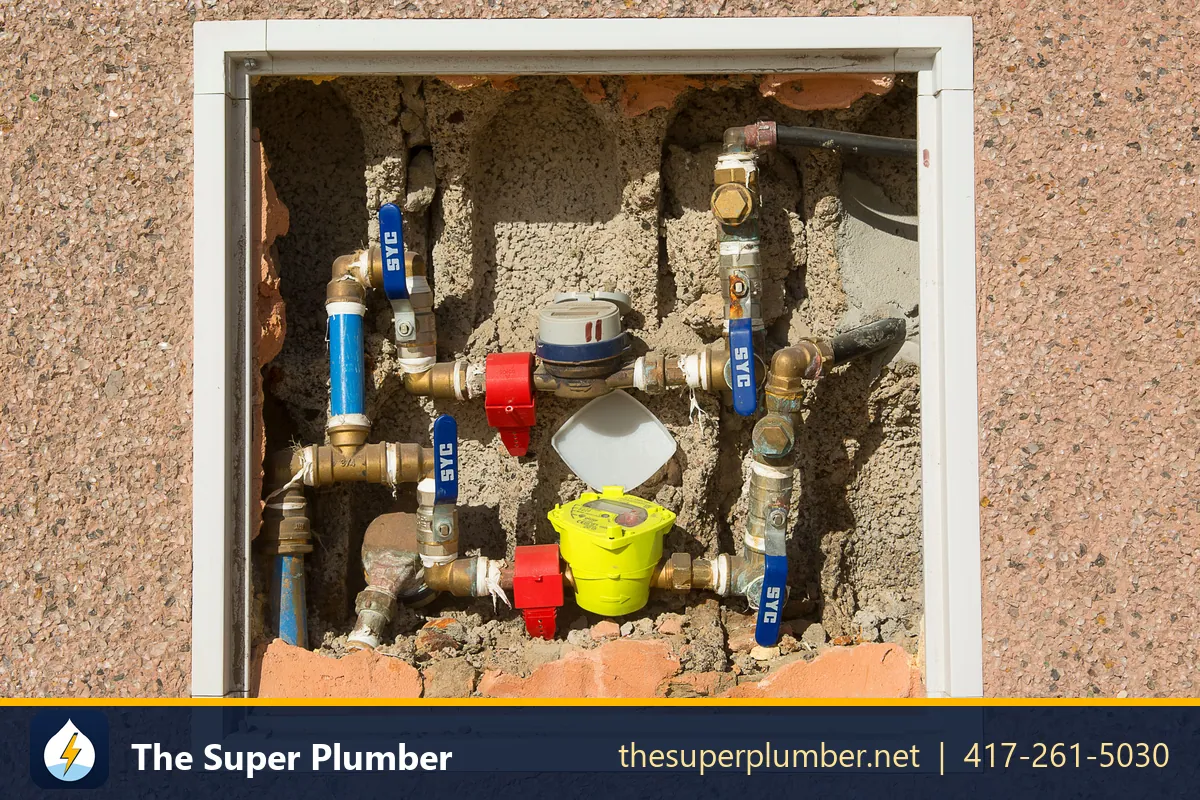
Water main repair means fixing the pressurized pipe that carries water from the utility's main, or from your meter, into your home. Depending on the damage, a plumber can patch a short section, replace the failed stretch, or replace the whole water service line. Signs include a sudden drop in pressure, a soggy patch in the yard, a running meter with every fixture off, or a jump in the water bill.
Repairs can be simple or involve excavation, so the first step is finding exactly where the pipe is failing. You will find the warning signs, how a break is located, the repair and replacement methods, and what shapes the price, all within the wider subject of water line, water main and backflow services.
Signs You May Need Main Water Line Repair
Outside warning signs
A main water line leak rarely announces itself indoors, because the pipe runs underground. Watch for changes outside and at the meter first.
- A wet, sunken, or unusually green patch of lawn, or a soft spot in the driveway.
- Water pressure that has dropped throughout the house, not at a single tap.
- The meter dial or low-flow indicator moving when every fixture is off.
- A main water line to house leaking at the entry point, with damp basement walls or a wet crawlspace.
- Muddy, discolored, or sandy water from the taps.
- The sound of running water in a quiet house.
- A water bill that rises with no change in habits.
Quick homeowner check
Turn off every tap and appliance, then watch the meter. If it still moves, water is going somewhere. Close the main shutoff valve at the house and check again: if the meter stops, the loss is inside the house, and if it keeps moving, the loss is in the buried pipe between the meter and the house, or between the street and the meter. Note which side of the meter the leak appears to be on, because responsibility can change there.
Who Owns the Pipe, and When Is It an Emergency?
In many places, the utility owns the pipe up to the meter and the homeowner owns the water service line from the meter to the house, but rules vary, so confirm with your water provider before assuming. That matters when someone else may need to repair or approve the work.
A gushing leak, flooding inside a building, or no water at all is a real emergency. Shut off the water at the main valve and call an emergency plumber. If the leak is in the street or on the utility side of the meter, call the utility as well. Whether a plumber can respond quickly is confirmed when you phone.
If the pipe has burst
A break that floods the yard or basement is similar to any burst pipe: stop the water, keep electrical devices away from standing water, photograph the damage, and call. Do not dig around the pipe yourself, since buried gas, electric, and communication lines may be nearby.
Not sure what you need? Call and we will point you to the right help.
Call 417-261-5030How Plumbers Locate the Leak
Digging blind is costly and messy, and plumbing repair is less disruptive when the fault is pinned down first, so a good underground water line repair starts with locating the fault. Plumbers commonly use acoustic listening equipment, pressure tests, and tracer or thermal methods to narrow the position before any excavation. The tools are explained in more detail under leak detection.
What a plumber will check
- Meter behavior with the house shut off and the main valve closed.
- Static and running pressure at an outdoor hose bib.
- The pipe material, entry point, and any visible corrosion where the line enters the building.
- The route of the line, so the dig is as short as possible.
Why a slab or under-driveway line is harder
A line under a driveway, patio, or slab is more expensive to reach and may call for a different method. If the leak is inside the footprint of the house, see also slab leak repair.
Repair vs Replacement: Which Is Right?
When a repair is enough
A short, isolated break in an otherwise sound pipe is often a water line repair. When the pipe is old, corroded, repeatedly leaking, or made of a material known for failure, water line replacement usually makes more sense than patching. Pipe replacement costs more up front but avoids paying for the same excavation twice.
A plumber usually compares the age and material, the number of previous repairs, the depth and route, and what the finished surface will be. Many homeowners searching fix water line or fixing main water line find that the honest answer depends on the condition of the pipe beyond the visible break.
Signs that replacement is the better choice
- Multiple leaks on the same run within a short time.
- Old galvanized steel, lead, or brittle plastic that is clearly deteriorating.
- Pressure loss caused by scale inside the pipe.
- Ground movement, root damage, or a shifted pipe that keeps failing.
Methods: Trench, Trenchless, and Spot Repair
Conventional open-trench work exposes the pipe, replaces it, and backfills the trench. Trenchless methods, such as pipe bursting or pulling in a new line, can replace a water line with much less digging where conditions allow. The ideas behind trenchless pipe repair apply here, although sewer and water lines differ in materials and pressure.
Common approaches
- Spot repair: cut out the damaged section and join new pipe with approved fittings.
- Open-trench replacement: dig the route, lay a new line, and restore the surface.
- Pipe bursting or pull-through: a new pipe is drawn through the old path with minimal surface disruption.
- Re-route: a new line is run along a shorter or safer path to avoid obstacles.
Pipe Materials for Service Lines
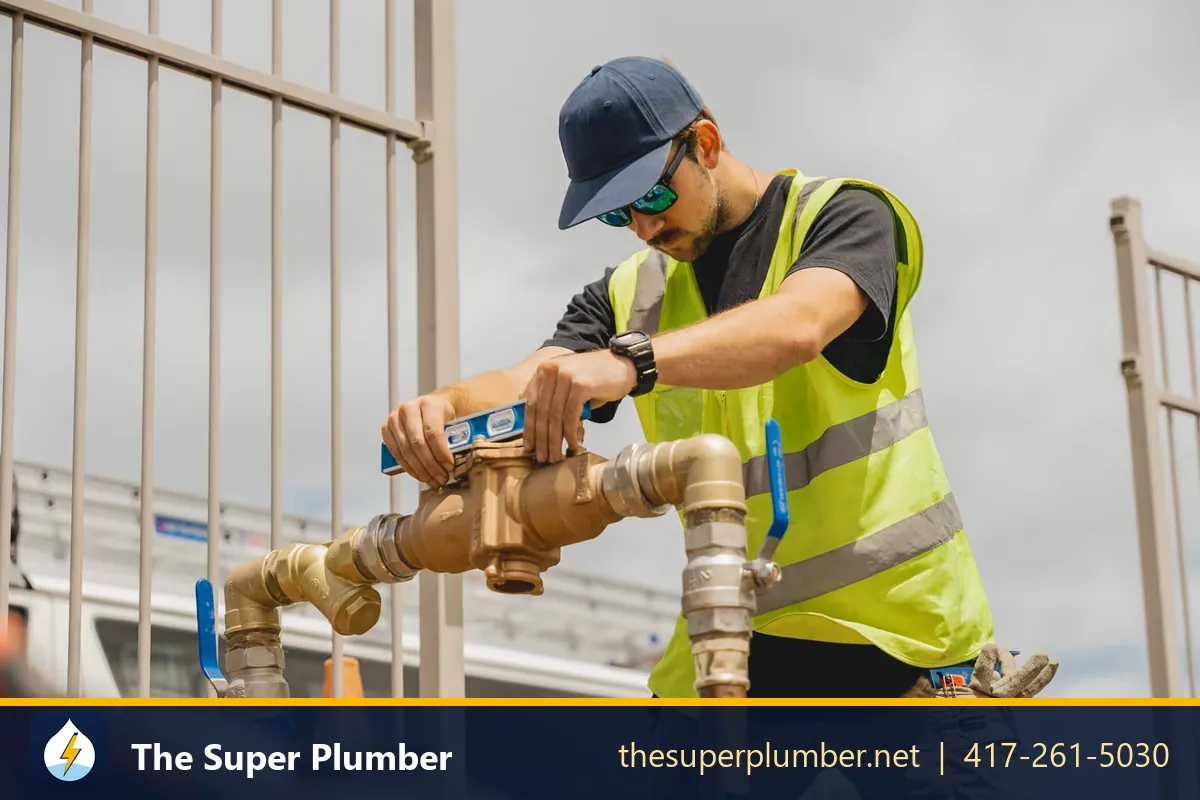
Copper, PEX, and HDPE are common for new service lines. The choice depends on local code, soil conditions, water chemistry, and what the utility allows. A cast iron or galvanized pipe in an older building may be part of the run inside the home too, so a search like cast iron pipe repair near me may relate to drain lines, where sewer line replacement or a sewer camera inspection applies, rather than the pressurized supply.
Need a plumber in your area? Call to confirm coverage.
Call 417-261-5030Repair and Replacement Cost: What Drives the Price
The water main repair cost depends on the situation, not a fixed number. ### What drives the price Anyone asking about water line repair cost, main water line repair cost, underground water line repair cost, or main water line leak repair cost should expect these factors to matter most.
- Depth of the pipe and how far the leak is from the house.
- Surface to restore: lawn, gravel, concrete, asphalt, or landscaping.
- Length of the section that needs to be replaced.
- Pipe size and material.
- Whether permits, utility marking, or a street cut are required.
- Soil conditions, rock, or a high water table.
- Whether trenchless work is possible.
Replacement pricing questions
People also ask about water line replacement cost, main water line replacement cost, water main replacement cost, and the cost to replace water service line. The honest answer is that one house may need a short run under lawn and another a long run under a driveway, so quotes are given after an inspection. For general pricing habits, see what plumbers charge. A cost to fix water leak in yard is affected by the same cost factors.
Installing or Connecting a New Water Service
How a service line connects
A water service line installation connects your building to the utility main, usually through a tap, a corporation stop, a curb stop, the meter, and a shutoff valve at the house. Homeowners who ask how to connect main water line to house are dealing with a job that involves utility approval, permits, and pressure testing, which is why it is usually left to a plumber.
What a new connection involves
- Utility approval and permits, where required by the local rules.
- Locating other buried utilities before digging.
- Correct pipe depth for the local frost line and code.
- A pressure test and disinfection where the local authority asks for it.
- Restoring lawns, walkways, and driveway edges afterward.
If you are adding water for an appliance, such as an icemaker, the smaller refrigerator water line is a different job with different materials.
Commercial and Multi-Unit Properties
A commercial water line repair involves larger pipe, meters, fire lines, and sometimes backflow devices that have to stay in service or be tested after work. ### Multi-unit buildings Multi-unit buildings often need shutoff planning so that tenants are not left without water longer than necessary. See commercial plumbing services and backflow preventer testing for the related requirements.
What to Do Until the Plumber Arrives
Immediate steps
Stop the water, protect what you can, and gather facts.
- Close the main shutoff valve and open a low tap to relieve pressure.
- Turn off the water heater if the house has been drained.
- Photograph wet areas, the meter, and any flooding for insurance.
- Note when the symptoms started and the meter reading.
- Keep children and pets away from soft, sunken ground.
Have a plumbing problem right now? Call and describe it.
Call 417-261-5030Preventing the Next Failure
- Know where the main shutoff is and test it once a year.
- Keep large trees away from the line where practical.
- Watch for bill changes and pressure changes, and act early.
- Have older galvanized or lead piping evaluated.
Where You Can Get Water Main & Underground Water Line Repair Help
Plumbing calls are taken for 21 states, 1,511 cities and 3,769 ZIP codes. Pick your state, or look at a sample city and ZIP for each state; coverage for your exact address is confirmed by phone.
- Arizona
- California
- Colorado
- Connecticut
- Florida
- Georgia
- Idaho
- Illinois
- Maine
- Massachusetts
- Michigan
- Minnesota
- Missouri
- New Hampshire
- New Jersey
- New York
- North Carolina
- Ohio
- Texas
- Virginia
- Washington
| City | ZIP codes and places |
|---|---|
| Mesa, AZ | 85203 about 1.4 miles from HoHoKam Stadium; about 1.5 miles from Fitch Park 85211 about 2 miles from HoHoKam Stadium; about 2.7 miles from Sloan Park |
| Pasadena, CA | 91101 near Pacific Asia Museum; near Fuller Theological Seminary 91102 near Pasadena City Hall; near Fuller Theological Seminary |
| Brighton, CO | 80601 about 8 miles from Denver International Airport; about 11 miles from Dick's Sporting Goods Park 80602 about 8 miles from Colorado National Speedway; about 11 miles from Dick's Sporting Goods Park |
| Stratford, CT | 06497 about 2.3 miles from Bridgeport Hospital; about 2.7 miles from Connecticut's Beardsley Zoo 06614 about 2.7 miles from Bridgeport Hospital; about 2.7 miles from Connecticut's Beardsley Zoo |
| Pompano Beach, FL | 33060 about 3.5 miles from Chase Stadium; about 3.5 miles from Lockhart Stadium 33068 about 3 miles from Inverrary Country Club; about 4 miles from Chase Stadium |
| Atlanta, GA | 30302 near Atlanta City Hall; near Georgia State University 30303 near Georgia State University; near GSU Sports Arena |
| Caldwell, ID | 83605 about 1.4 miles from College of Idaho; about 3.5 miles from Caldwell Industrial Airport 83606 about 8 miles from College of Idaho; about 10 miles from Caldwell Industrial Airport |
| Carol Stream, IL | 60116 about 2.5 miles from Cosley Zoo; about 3.5 miles from Wheaton College 60122 near Judson University; about 4.9 miles from Now Arena |
| Alfred, ME | 04002 about 5 miles from Goodall Park; about 13 miles from Wells National Estuarine Research Reserve |
| Barrington, MA | 02101 about 1.2 miles from Logan International Airport; about 1.8 miles from Boston Public Library 02106 near Fisher College; near Boston Public Garden |
| Sterling Heights, MI | 48310 about 2.6 miles from International Academy of Design & Technology – Detroit; about 4 miles from Walsh College of Accountancy and Business 48311 about 3.2 miles from Jimmy John's Field; about 4.9 miles from International Academy of Design & Technology – Detroit |
| Maple Plain, MN | 55359 about 7 miles from Crown College; about 7 miles from Lake Minnetonka |
| O Fallon, MO | 63366 about 4.9 miles from Midwest University; about 6 miles from Wentzville Ice Arena 63368 about 8 miles from Midwest University; about 8 miles from Wentzville Ice Arena |
| Dover, NH | 03820 about 4.2 miles from Whittemore Center; about 4.3 miles from University of New Hampshire 03821 about 4.5 miles from Powderhouse Hill; about 5 miles from Whittemore Center |
| Paterson, NJ | 07501 near Paterson City Hall; near Hinchliffe Stadium 07502 near Hinchliffe Stadium; about 1.6 miles from Garret Mountain Reservation |
| Mill Neck, NY | 11765 about 2.6 miles from Piping Rock Club; about 4.8 miles from Cold Spring Harbor Laboratory |
| Davidson, NC | 28035 near Davidson College; about 4.9 miles from Lake Norman 28036 about 3 miles from Davidson College; about 8 miles from Lake Norman |
| Westerville, OH | 43081 about 1.6 miles from Otterbein University; about 8 miles from Historic Crew Stadium 43086 near Huntington Park; near Nationwide Arena |
| Richmond, TX | 77406 about 9 miles from Constellation Field; about 23 miles from Reliant Stadium 77407 about 5 miles from Constellation Field; about 8 miles from Smart Financial Centre at Sugar Land |
| Newport News, VA | 23601 about 1.5 miles from The Mariners' Museum; about 1.6 miles from Virginia Living Museum 23603 about 1.1 miles from Endview Plantation Historic Site; about 4.2 miles from Busch Gardens Williamsburg |
| Puyallup, WA | 98371 about 3.3 miles from Surprise Lake; about 6 miles from Tacoma Dome 98372 about 3.2 miles from Surprise Lake; about 4.9 miles from Lake Tapps |
Frequently Asked Questions
How do I know if my main water line is leaking?
Look for a wet or sunken patch in the yard, a sudden loss of pressure, discolored water, or a water meter that keeps moving when every fixture is off. A higher bill with no change in use is another clue. Shut off the main valve at the house and watch the meter again. If it still moves, the leak is in the buried line.
Who is responsible for a broken water main, the homeowner or the utility?
It varies by location. ### Where responsibility usually splits In many places the utility owns the pipe up to the meter and the homeowner owns the line from the meter to the house. Some utilities own the line up to the house, and some offer optional line protection programs. Call your water provider before repair work so you know which portion is yours.
Can a water service line be repaired without digging up my yard?
Sometimes. Trenchless methods such as pipe bursting or pulling a new line through the old route reduce digging, but they need suitable conditions and access points. A short spot repair usually needs a small excavation. A plumber will decide after locating the leak and checking the pipe, its depth, and the surface above it.
What does a water line repair involve from start to finish?
A plumber confirms the leak with a meter test and locating equipment, marks utilities, shuts off water, exposes the pipe, replaces the damaged section or the run, and pressure-tests the new pipe. Then the trench is backfilled and the surface restored. Permits and utility approvals may be needed, depending on your area and the scope of the work.
When should the water line be replaced rather than repaired?
Consider replacement if the pipe is old, corroded, made of a failing material, or has leaked more than once. A single clean break in a sound pipe is often repairable. Replacing a long run costs more up front but can avoid repeat digging, repeat water loss, and repeat repair. A plumber can compare the options after inspecting the pipe.
How long does a water main repair take?
It depends on depth, length, surface, and permit or utility requirements. A short spot repair in an open lawn is much quicker than a long run under a driveway or a street cut. Shutting off water during the work is normal. Timing and scheduling are confirmed when you phone and describe the problem.
What causes underground water lines to fail?
Age and corrosion are common causes, especially with older galvanized steel or lead. Shifting soil, freezing, tree roots, heavy loads above the pipe, high pressure, and poor joints can also break a line. Water chemistry affects some materials over time. Finding the cause helps a plumber choose a repair that lasts.
What should I do right now if my water line is leaking?
Turn off the main shutoff valve at the house and open a faucet to relieve pressure. Keep electrical devices away from wet areas, photograph the damage, and call a plumber. If the leak is on the street side of the meter, call your water utility too. Do not dig near the line yourself, as other buried utilities may be close.
Does a water line repair need a permit?
In many areas it does, especially when a new line, a street cut, or a change to the meter connection is involved. Some places require an inspection or a pressure test as well. Rules vary by city and utility, so the plumber usually checks local requirements before starting.
How can I find water line repair near me?
When you call, give your city and ZIP, tell the plumber where you see water or pressure changes, and say whether you have already shut off the main. Ask whether they handle excavation and trenchless work, whether permits are included, and how the price is confirmed. Coverage and availability are confirmed by phone.
Ready to talk to a plumber? Call 417-261-5030.
Call 417-261-5030