Quick links
- Plumbing in Auburn, WA at a Glance
- Emergency Plumber in Auburn, WA: What Cannot Wait
- Sewer Line Repair in Auburn, WA: Diagnosis, Spot Repair, and Replacement
- Trenchless Sewer Repair in Auburn, WA: Lining and Pipe Bursting
- Drain Cleaning in Auburn, WA: Sinks, Tubs, Floor Drains, and Main Lines
- Hydro Jetting in Auburn, WA
- Storm Drains, Downspouts, and Sump or Sewage Pumps
- Water Heater Repair and Installation in Auburn, WA
- Leak Detection and Water Line Repair in Auburn, WA
- Pipe Repair and Repiping in Auburn, WA
- Gas Line Repair and Earthquake Shutoff Valves in Auburn
- Toilet, Faucet, and Garbage Disposal Repair in Auburn
- Commercial Plumbing in Auburn, WA
- What Is and Is Not Plumbing: Water Damage, Mold, Septic, and Electrical
- What Affects Plumbing Repair Cost in Auburn
- What to Expect on a Plumbing Visit
- Auburn ZIP Codes and Neighborhood Boundaries
- Call First: Plumber in Auburn, WA
- ZIP Codes We Serve in Auburn
- Related Plumbing Help
- Frequently Asked Questions
Finding a plumber Auburn WA homeowners and businesses can reach quickly matters most when water, sewage, or gas is involved. This covers Auburn's four ZIP codes: emergency plumbing, sewer lines, drain cleaning, hydro jetting, water heaters, leaks, gas lines, and commercial work. To talk to someone, call 417-261-5030. This is background reading only; availability and pricing are confirmed by phone.
What follows explains what a plumber in Auburn handles, what to say on the call, which problems cannot wait, and what to do in the first minutes of an emergency. Later sections go deeper on sewers, drains, water heaters, leaks, pipes, gas, fixtures, and commercial plumbing.
Plumbing in Auburn, WA at a Glance
Plumbing in Auburn covers everything that moves water, waste, or gas through a building. The wet Pacific Northwest season, mature trees, and a mix of older and newer homes shape most of the calls a plumber sees.
What a Plumber in Auburn Handles
A plumber in Auburn handles the supply, drain, and gas systems inside and just outside a building. That includes sewer line repair and replacement, camera inspections, drain cleaning, hydro jetting, and sewer backups.
The work also covers tank and tankless water heaters, leak detection, water line repair, burst or frozen pipes, repiping, gas lines, toilets, faucets, disposals, sump and sewage pumps, backflow devices, and commercial restroom plumbing. Work that belongs to other trades, such as electrical or drying out a flooded room, is a different job; the phone team can say what can be routed. For a broader overview, see plumbing services.
What to Tell the Phone Team When You Call
Three details help most when you call 417-261-5030. First, say Auburn, the street address, and the ZIP code. Second, describe what is happening: where the water is, which drains are slow, whether a heater is leaking, or what the fixture is doing.
Third, share what you know: the age of the home or building, where the main shutoff is, whether the heater runs on gas or electricity, and whether you have photos. A short description with these three items lets the phone team understand the situation and explain next steps, including what availability and pricing look like for your address.
Which Problems Need a Plumber Right Away
A problem needs a plumber right away when it is getting worse, damaging the building, or creating a safety risk. Waiting rarely makes plumbing cheaper or simpler.
Signs that should not sit:
- Water running that you cannot stop at a fixture shutoff
- Sewage coming up from a drain, tub, or floor drain
- A water heater leaking from the tank or discharging from the relief valve
- A gas smell, which means leaving the building first
- No water at all, with the main shutoff already checked
Slower issues, such as a dripping faucet or a toilet that runs, can usually wait for a normal conversation about scheduling.
Auburn ZIP Codes Covered
Auburn is served through four ZIP codes: ZIP 98001 (about 5 miles from Surprise Lake), ZIP 98002 (about 3 miles from Pacific Raceways), ZIP 98071 (about 4 miles from Pacific Raceways), and ZIP 98092 (about 3 miles from Pacific Raceways).
ZIP boundaries and mailing addresses do not always match city lines, so the exact street address matters more than the ZIP alone. For the wider picture, the Washington locations overview shows where service is offered in the state. Give the phone team your street and ZIP and they can confirm coverage.
Emergency Plumber in Auburn, WA: What Cannot Wait
An emergency plumber is what people search for when water, sewage, or gas cannot be controlled. Each situation has a short list of safe first steps, and what you do before the call often limits the damage.
Burst Pipe or Active Leak
A burst pipe or active leak is water escaping faster than a towel or bucket can handle, and the first move is closing the water supply. Shut off the fixture valve if the leak is at one fixture; otherwise close the main shutoff.
Open a faucet at the lowest point to relieve pressure, and keep electronics and cords away from wet areas. Do not climb into a flooded crawl space or basement where outlets or appliances may be live. Photos help the phone team judge the pipe type and location. More on repair methods is in burst pipe repair.
Sewage Backup in Drains, Tubs, or Floor Drains
A sewage backup means wastewater is returning up through the lowest drains because the main line is blocked or broken. Stop using water at once: no flushing, showers, laundry, or dishwasher.
Keep people and pets out of the affected area, and avoid touching wastewater. Do not pour chemical drain cleaners into standing water, since they are hazardous and complicate later work. Backups that hit several fixtures together usually point to the main line, and a camera inspection often follows. Details are covered under sewer line services.
No Hot Water, a Leaking Water Heater, or a Relief Valve Discharge
A water heater that is leaking or discharging from the relief valve needs attention quickly, while a simple loss of hot water is usually less urgent. A steady leak from the tank body often means the tank has failed.
If the heater is leaking, close the cold water inlet valve on top of the unit. For a gas heater, do not relight a pilot that keeps going out. For an electric heater, leave panel work to an electrician or plumber. A relief valve that keeps discharging can signal excess pressure or temperature, so describe it plainly on the call. See water heater repair and replacement for more.
Gas Smell or Suspected Gas Leak: Leave First
If you smell gas, leave the building first and call from outside. Do not flip switches, use a lighter, unplug devices, or start a vehicle in an attached garage.
Call the gas utility or 911 from a safe distance, and keep others away from the building. Gas lines, vent connections, and burners are plumber-only work, and a plumber should not be called to a suspected gas leak in place of the utility. After the utility clears the building, a plumber can inspect and repair the piping. Related background is in gas leak detection.
How to Shut Off the Water Before the Plumber Arrives
Shutting off the water means closing the main shutoff valve, which is commonly where the supply line enters the home or building. In many Auburn homes it sits in a crawl space, garage, utility room, or basement wall.
- Find the main valve before you need it; look near the water heater and along the foundation wall.
- Turn a round handle clockwise until it stops; turn a lever until it sits crosswise to the pipe.
- Open a low faucet to drain the lines.
- Turn off the water heater's power or gas control if water is leaking from it.
If the valve will not turn or leaks, say so on the call. A stuck main is itself a repair, covered in water main repair.
What Information Speeds Up an Emergency Call
A short, organized description helps the phone team decide what to ask next. When you call 417-261-5030, lead with the address and ZIP, then say what is happening and what you have already done.
Useful details:
- Which fixture, pipe, or appliance is involved
- Whether the water is clean, gray, or sewage
- Whether you have shut off the supply and where
- The fuel type of the water heater, if relevant
- Rough age of the home or building
- Photos of the problem, any labels, and the shutoff
Emergency availability is confirmed by phone, so describe what is urgent. The emergency plumbing overview explains how those calls are usually handled.
Not sure what you need? Call and we will point you to the right help.
Call 417-261-5030Sewer Line Repair in Auburn, WA: Diagnosis, Spot Repair, and Replacement
Sewer line repair in Auburn starts with finding out what is actually wrong underground. A plumber confirms the cause with a camera, matches the fix to the damage, and separates a simple cleaning from a true repair or replacement.
Signs of a Damaged Sewer Line
A damaged sewer line usually announces itself with slow drains in several fixtures, gurgling, and sewage odors, not just one stubborn sink. In an Auburn home, the clearest pattern is a main-line symptom that returns soon after cleaning.
- Toilets, tubs, and floor drains all drain slowly at the same time
- Gurgling in a drain when another fixture runs
- Sewage smell in the yard, crawl space, or garage
- Soggy or sunken patches over the sewer route
- Repeated backups after every cleaning
Any of these deserves a sewer line repair evaluation rather than another round of drain cleaner, which can damage older pipe and rarely reaches the real problem.
Sewer Camera Inspection in Auburn
A sewer camera inspection in Auburn shows the inside of the pipe on a live video feed, so the plumber can see roots, cracks, offsets, grease, and low spots instead of guessing. A sewer camera inspection normally follows a cleaning so the lens can see the pipe wall.
The camera also helps locate the problem along the run, which decides whether a short repair or a longer replacement is needed. Ask for the footage or a description of what was found, and mention the age of the home, because older pipe material often looks different on camera. A short written note of the defect type and rough location helps if you later need a second opinion.
Tree Roots and Heavy Rain: Why Auburn Sewer Lines Fail
Sewer lines in Auburn most often fail from roots entering joints and from saturated soil during the Pacific Northwest wet season. Roots look for moisture and slip through small gaps, then thicken until the line narrows.
Wet ground adds weight and shifting around older clay, concrete, or cast iron pipe, and heavy rain can overload older sewers and storm drainage in general. Mature trees near the line are a common contributor, though the pipe material and joint condition usually matter more than the tree alone. A camera view tells you which factor you are dealing with.
Cracked, Offset, Bellied, and Collapsed Sewer Pipe
Cracked, offset, bellied, and collapsed pipe are the four structural defects a camera most often finds, and each behaves differently. A crack lets roots and groundwater in, an offset is a joint that slipped out of line, and a belly is a sag that holds water and waste.
A collapse is a full break that blocks flow, and it is the most urgent of the four. Cleaning may restore flow briefly for cracks and bellies, but it does not correct the shape of the pipe. Knowing which defect you have, and how far along the run it sits, shapes the repair choice.
Sewer Cleaning Versus Sewer Line Repair
Sewer cleaning removes what is inside the pipe, while sewer line repair fixes the pipe itself. If a line is structurally sound but coated with grease or roots, sewer line cleaning may be all that is needed.
Heavy root growth or grease may call for hydro jetting first, which scours the pipe wall before the camera goes in. If the camera shows a break, offset, or belly, cleaning is temporary and the clog will return. A good sign that repair is due is a backup that comes back within weeks of a cleaning. Ask the plumber to explain which category your line falls into before approving work.
Spot Repair or Full Sewer Line Replacement
A spot repair replaces one failed section, while full sewer line replacement renews the whole run from the house to the connection point. Spot repair often makes sense when a camera shows one isolated defect and the rest of the pipe is sound.
Replacement is commonly chosen when the pipe shows damage along most of its length, when it is a material known to deteriorate, or when repairs keep recurring. The decision rests on camera evidence, access, and depth, so a plumber should explain what they saw before recommending one path.
Private Side Sewer, Public Main, and Permits
Commonly, the property owner is responsible for the private side sewer from the house to the connection with the public main, and the City of Auburn handles the main itself. That boundary can vary by situation, so confirm responsibility with the City of Auburn before assuming.
Sewer repair and replacement commonly require a permit, and some work may need inspection. The plumber can explain what usually applies, but confirm the current requirements with the City of Auburn. When you call 417-261-5030, mention whether the backup affects only your property or seems wider.
Trenchless Sewer Repair in Auburn, WA: Lining and Pipe Bursting
Trenchless sewer repair in Auburn fixes or replaces a damaged line with little digging, using access points at each end of the run. The two main methods are pipe lining and pipe bursting, and a camera inspection decides whether either fits.
How Cured-in-Place Pipe Lining Works
Cured-in-place pipe lining creates a new pipe inside the old one. A resin-soaked liner is pulled or inverted into the cleaned host pipe, inflated against the wall, and cured until it hardens.
The result is a smooth, jointless interior that seals cracks and keeps roots out. Lining works best when the existing pipe still holds its basic shape and has no collapse or severe sag. It is part of broader trenchless pipe repair, and the line must be cleaned and inspected first so the liner can seat properly.
Pipe Bursting: When a New Pipe Follows the Old Path
Pipe bursting pulls a new pipe through the old one while a bursting head breaks the old pipe outward into the soil. It suits lines that are too damaged for lining, including some collapsed or badly offset runs, as long as the route is reasonably straight.
Pits are usually dug at each end instead of a continuous trench. The new pipe is commonly a continuous plastic material, which means fewer joints for roots to find later. Bursting needs enough clearance and an understanding of what else lies near the route, so the plumber checks the path before proposing it.
When Trenchless Is Not the Right Answer
Trenchless is not the right answer when the pipe has a severe belly, a full collapse that cannot be cleared, many sharp bends, or connections that need replacing. Lining a sagging pipe would simply preserve the sag.
Some lines also need changes in depth or slope that only open digging can achieve. A plumber should be willing to say when trenchless will not hold up, and to explain why. Ask what the camera showed and why one method was ruled out, because that reasoning matters as much as the method.
Open-Trench Sewer Replacement and Yard Restoration
Open-trench sewer replacement digs along the old line, removes it, and lays new pipe at the correct slope. It is often the most direct fix for a collapsed, bellied, or very shallow line, and it lets the plumber inspect the bedding and connections.
Yard restoration varies from job to job, and it is worth asking about before work begins. Expect the plumber to discuss where the trench will run, what may be disturbed, and how the ground is backfilled and compacted. Landscaping, driveways, and mature trees affect planning, so describe what sits over the line when you call. A plumber can also explain what other trades, such as a landscaper or paving contractor, may handle afterward.
Drain Cleaning in Auburn, WA: Sinks, Tubs, Floor Drains, and Main Lines
Drain cleaning in Auburn means clearing a blockage and then finding out why it formed. The right method depends on which fixtures are slow, how often it happens, and whether the clog sits in a branch or the main line.
Kitchen Sink and Garbage Disposal Drain Clogs
A kitchen sink clog in an Auburn home is most often grease, food scraps, and soap residue packed into the trap arm or the first stretch of horizontal pipe. Grease cools and coats the pipe wall, so the opening shrinks over months.
A plumber typically removes the trap, cables the line past the blockage, and checks whether the disposal outlet is part of the problem. Avoid pouring more liquid drain cleaner into a standing sink, because it sits against the clog and can harm fittings. See garbage disposal repair when the unit hums or jams.
Bathroom Sink, Tub, and Shower Drain Clogs
A slow bathroom sink, tub, or shower drain in Auburn is usually hair and soap scum wrapped around the stopper, pop-up linkage, or the first few inches of the trap. Hair is the dominant cause in tubs and showers.
Homeowners can lift the stopper and clear visible hair by hand, or use a small plastic drain tool. Stop if water backs up from a second fixture, because that points to a branch or main line. Chemical openers, forced plunging on a loose overflow, and metal snakes in old tubs can all damage finishes and fittings.
Main Drain Blockages and Several Fixtures Backing Up
A main drain blockage in Auburn shows up as more than one fixture misbehaving at once: a toilet gurgling when the shower drains, or a tub filling when the washer discharges. The shared line is restricted somewhere downstream.
This is the point to stop running water and call. A plumber usually opens the line at a cleanout, cables through the blockage, and often runs a camera to see roots, grease, or a broken section. Learn how sewer line cleaning differs from clearing a single fixture. Give the phone team your street, ZIP, and which fixtures are affected.
Drain Snaking Versus Hydro Jetting
Snaking pokes a hole through a clog with a rotating cable, while hydro jetting scours the pipe wall with high-pressure water. Snaking is fast and fits a fresh, localized blockage in a sink or branch line.
Jetting suits buildup that keeps returning, because it removes grease, scale, and soft root hair instead of only opening a channel. A plumber chooses based on pipe material, age, and what a camera shows. Neither method fixes a cracked or collapsed pipe; those need repair. The drain cleaning overview explains the options in more detail.
Recurring Clogs and Drain Repair
A drain that clogs again within weeks usually has a physical cause: a belly where water pools, a rough joint, an offset, roots, or heavy buildup. Clearing it repeatedly only treats the symptom.
A camera inspection shows whether the pipe needs cleaning on a schedule or a section needs plumbing repair. In older Auburn homes with clay or cast iron lines, scale and cracks are common culprits. Photos, the age of the home, and a list of which drains recur help a plumber plan the visit before arriving.
Floor Drains, Basement Drains, and Crawl Space Drains
A floor drain is a safety outlet for a basement, garage, or utility room, and it should stay clear and keep water in its trap. When it backs up, the blockage is often in the line it shares with the home's main drain.
Dry traps let sewer odor rise, and the fix may be as simple as pouring water in. Crawl space drains and low points near a water heater or laundry are worth checking before the wet season, when heavy rain loads drainage. If water is rising from a floor drain, stop using fixtures and call 417-261-5030 with the street and ZIP.

Hydro Jetting in Auburn, WA
Hydro jetting uses a hose with a rotating nozzle and high-pressure water to clean the inside of a drain or sewer pipe. In Auburn it is most useful for grease, scale, and root hair that a cable leaves behind.
What Hydro Jetting Does and Does Not Fix
Hydro jetting removes grease, soap scale, sludge, silt, and fine roots from the inside wall of a pipe, restoring most of its working diameter. It works best on sound, fully connected pipe.
It does not repair a crack, a collapsed section, a bad joint, or a belly in the line. A plumber usually runs a camera first so the pressure is not applied to a pipe that is already failing. Read more about hydro jetting and what pipe condition it needs.
When a Plumber Recommends Hydro Jetting
A plumber in Auburn commonly recommends hydro jetting after repeated clogs, slow main drains, greasy kitchen lines, or heavy buildup seen on camera. It also helps before relining a pipe, since lining needs a clean surface.
Signs that point toward jetting include gurgling after every cable visit, a main that clears and then slows again, and roots that regrow along the same stretch. Older lines may be too fragile for strong pressure, so ask what the camera showed. A camera view comes from a sewer camera inspection.
Commercial Hydro Jetting, Grease, and Restaurant Lines
Commercial hydro jetting in Auburn targets grease and food solids that build up in restaurant, cafeteria, and shared-kitchen drain lines. Grease traps and interceptors help, but the lines downstream can still coat over.
Property managers often schedule jetting as maintenance for kitchens, restrooms, and multi-unit buildings so a main does not back up during business hours. Details on the building's lines, trap or interceptor type, and where the cleanouts are help a plumber plan the work. See commercial plumbing for other business needs, and call 417-261-5030 with the building address.
Need a plumber in your area? Call to confirm coverage.
Call 417-261-5030Storm Drains, Downspouts, and Sump or Sewage Pumps
Wet-season rain in the Pacific Northwest tests every drainage path around a home. Knowing which pipe carries what, and which pump is lifting it, keeps rainwater out of the sewer and the house.
Storm Drain Versus Sanitary Sewer: Why the Difference Matters
A storm drain carries rainwater from roofs, yards, and driveways, while a sanitary sewer carries wastewater from toilets, sinks, and showers. The two are separate systems, and mixing them can cause backups or violations.
Downspouts and foundation drains should not connect to the household sewer line, because heavy rain can overload it. Whether a property is allowed to tie into a given storm system is a City of Auburn question, so confirm with the City of Auburn and your plumber. A plumber can trace which pipe goes where and fix a wrong connection.
Sump Pump Repair and Replacement
A sump pump collects groundwater in a pit and pushes it away from the house, which matters for basements and low crawl spaces during heavy rain. Common failures include a stuck float switch, a clogged inlet screen, a failed check valve, and a worn motor.
Test the pump before the wet season by pouring water into the pit and watching it start and discharge. A plumber can repair or replace it and check the discharge line. Electrical supply faults are an electrician's work. See sump pump repair for more.
Sewage Pump and Ejector Pump Problems
A sewage or ejector pump lifts wastewater from a basement bathroom, laundry, or low fixture up to the main sewer line. Because it handles solids, it fails differently from a sump pump.
Warning signs include a loud alarm, slow drains in the lowest bathroom, a sewer odor near the basin lid, and a pump that runs without moving water. Do not use the fixtures once the alarm sounds. Wipes, rags, and grease often jam the impeller. When this happens, call 417-261-5030 and describe the alarm, the fixtures served, and the basin location.
Water Heater Repair and Installation in Auburn, WA
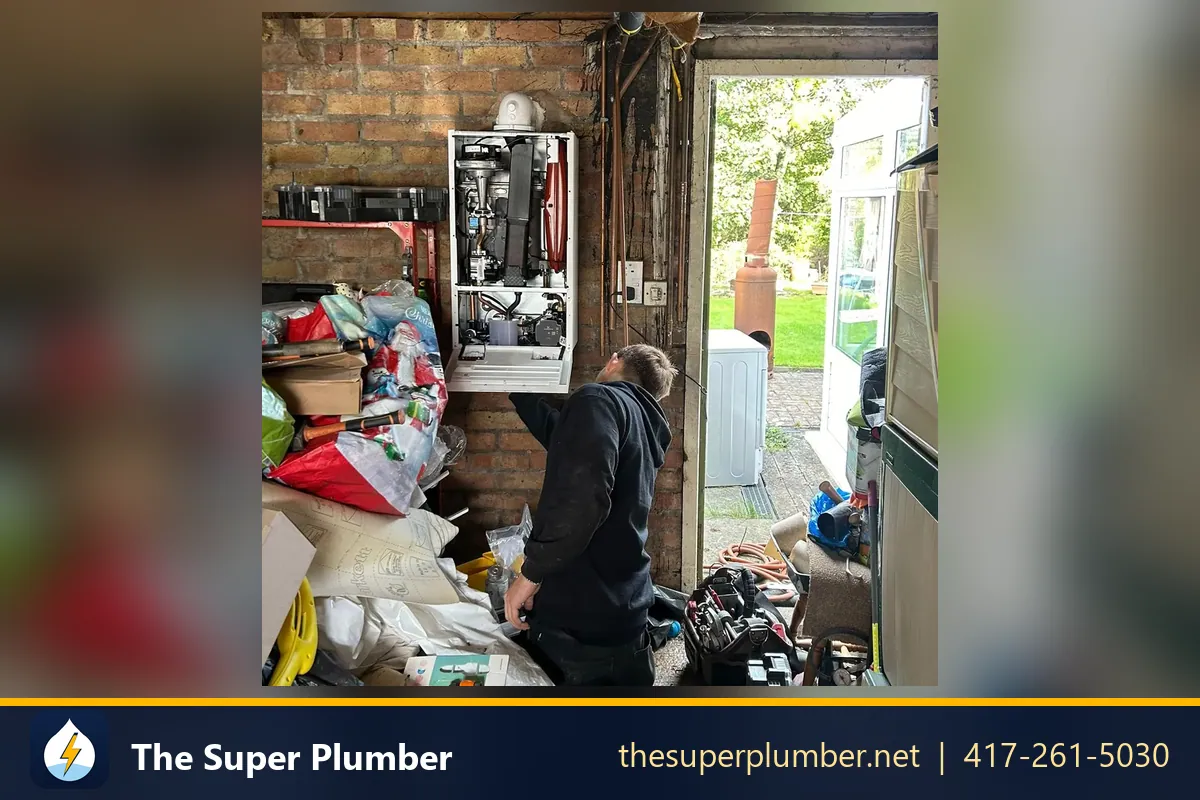
Water heater work in Auburn covers tank and tankless units, gas and electric, from a failed part to a full replacement. The sections here explain what a plumber checks first and how repair and replacement are decided.
No Hot Water or Not Enough: Tank Heater Checks
A tank water heater that gives no hot water, or runs out fast, usually has a failed heating element, a gas supply or ignition fault, a tripped safety, or a sediment-clogged tank. A plumber in Auburn typically checks the power or gas supply, the thermostat, the burner or elements, and the dip tube, which can break and mix cold water into the outlet. Sediment also cuts capacity over time. Homeowners can safely confirm the breaker has not tripped. Opening panels, relighting burners, and touching wiring stay with a plumber. When you phone, say how long the hot water lasts and how old the unit is.
Water Heater Leaking: Source and First Steps
A leaking water heater in Auburn is either a fitting or valve leak that can be repaired, or a failed tank that means replacement. Water at the top often comes from a loose connection, an inlet or outlet nipple, or the temperature and pressure relief valve. Water pooling at the base can be a drain valve, condensation, or the tank itself. First steps are to shut off the cold supply valve above the heater, turn off the gas control or the breaker, and protect the floor. A tank leaking from the shell cannot be patched. Send the phone team a photo of where the water appears.
Gas and Electric Water Heater Problems
Gas and electric tank heaters fail in different ways, so the symptom points toward the cause. Gas units commonly have a pilot or igniter that will not stay lit, a dirty flame sensor, a weak thermocouple, or a venting problem that shuts the burner down. Electric units commonly have a failed upper or lower element, a bad thermostat, or a tripped high-limit reset. Gas supply, venting, combustion, and wiring are plumber-only work. A gas smell means leave the building, avoid switches and flames, and call the gas utility or 911 from outside. See water heater repair and service options for more detail.
Tankless Water Heater Repair: Error Codes, Scale, and Flow Faults
Tankless water heater repair starts with the error code on the display, because it points toward ignition, flow, venting, or sensor faults. Brands homeowners may already own, such as Rinnai, Navien, or Noritz, each use their own code lists, so the model label matters. Common causes include a scaled heat exchanger, a clogged inlet filter, low flow that fails to trigger the burner, a blocked condensate drain, or a vent problem. A flush with isolation valves is a plumber task. Read more on tankless water heater repair, and have the code and model ready when you call 417-261-5030.
Tankless Water Heater Installation in Auburn
A tankless water heater installation in Auburn replaces a storage tank with a wall-mounted unit that heats water on demand, and it often needs changes beyond the swap itself. A plumber sizes the unit to the fixtures running together, checks gas line capacity or the electrical supply, plans venting and a condensate drain, and adds isolation valves for future flushing. Electrical work belongs to an electrician. Permits commonly apply, so confirm with the City of Auburn and your plumber. Compare tankless water heater cost factors and the electric tankless option before choosing a fuel.
Water Heater Replacement and Installation: Repair or Replace
Repair makes sense when the tank is sound and the failed part is a simple swap, while replacement makes sense when the tank leaks, the anode rod is long gone, or repairs keep recurring. A plumber weighs the age of the unit, the condition of the tank, the fuel type, and whether the venting and gas line still suit the new heater. A new installation often adds a drain pan, an expansion tank, new flex connectors, and a seismic strap, commonly recommended in earthquake regions. Confirm permit needs with the City of Auburn. Read about water heater replacement and water heater installation first.
Leak Detection and Water Line Repair in Auburn, WA
Hidden leaks waste water and damage framing long before a stain shows. This part covers the signs, the methods a plumber uses to locate a leak, and repairs to the water line, shutoff, and pressure regulator.
Signs of a Hidden Water Leak
A hidden water leak in Auburn often shows up as a water meter that keeps moving when every fixture is off, a rising water bill, or the sound of running water in a quiet house. Other signs include damp or warped flooring, a musty smell in a crawl space, peeling paint, warm spots on a floor, and unexpected low pressure. A simple check is to turn off all fixtures and watch the meter dial for movement. Do not open walls yourself. Tell the phone team where you notice dampness.
Leak Detection Methods
Leak detection is the process of locating a leak without tearing out finished surfaces, using pressure tests, acoustic listening, thermal imaging, and moisture readings. A plumber may isolate sections of pipe with shutoff valves and watch a gauge to see which run holds pressure. Listening equipment picks up escaping water through floors and slabs, and thermal imaging shows temperature differences from hot water lines. Results narrow the opening needed for repair. Learn how leak detection works and how a plumber handles leak repair once the source is found. Give the phone team your ZIP and the area affected.
Water Line and Main Shutoff Repair
A water line repair fixes a failed section of pipe between the meter and the house, or a main shutoff valve that leaks or will not close. Signs include a wet patch in a yard that is not rain-related, a sudden pressure drop, or a valve that spins loosely. Old gate valves often seize, and a ball-valve replacement gives a more reliable shutoff in an emergency. Work near the meter can involve the utility, so confirm with the City of Auburn what the owner may do. See water main repair and water line services for how repairs are scoped.
Low Water Pressure and Pressure Regulator Problems
Low water pressure in an Auburn home usually comes from a partly closed valve, a clogged aerator or cartridge, a corroded galvanized line, a hidden leak, or a failing pressure regulator. High pressure is a separate risk, because it strains fixtures and the water heater. A regulator typically sits near where the main enters the house, and a plumber can test it with a gauge. Note whether low pressure affects one fixture or the whole house, and whether hot and cold are both weak. That single detail shortens diagnosis.
Slab Leaks and Under-Floor Leaks
A slab leak is a leak in a water line under a concrete floor, while an under-floor leak sits in a crawl space or beneath a raised floor, which many Auburn homes have. Slab leak signs include a warm patch on the floor, the sound of running water, and a meter that keeps turning. A plumber locates the leak first, then discusses options such as a spot repair, a reroute through the walls or attic, or repiping the affected line. See slab leak repair for the options. Describe the floor type and any warm spots when you phone.
Pipe Repair and Repiping in Auburn, WA
Supply pipes in Auburn homes range from older galvanized and copper to newer PEX, and each fails in its own way. A plumber in Auburn repairs a single failed section when the rest is sound and recommends replacement when it is not.
Burst and Leaking Pipe Repair
A burst pipe repair in Auburn starts with stopping the water, then finding the failed section, cutting out the damaged length, and joining new pipe with fittings suited to the material. Pinhole leaks, split joints, and failed compression fittings are all handled the same way: isolate, cut, replace, pressure-test.
Wet drywall, a stained ceiling, or a meter that keeps moving with every fixture off usually points to a leak behind a wall or under a floor. A plumber keeps access cuts as small as practical. For related repair work, see burst pipe repair.
Frozen Pipes When a Freeze Comes
Frozen pipes are most likely in crawl spaces, exterior walls, garages, and hose bibs when a hard freeze arrives after a mild stretch. A frozen pipe can split without leaking until it thaws, so the damage often shows up only once the water starts flowing again.
Homeowner-safe steps:
- Shut off the water at the main if you see a bulge, frost, or no flow.
- Open the faucet nearest the frozen section so thawing water has somewhere to go.
- Warm the area gently with a hair dryer or by raising the room temperature.
- Never use an open flame, a torch, or a heat gun on any pipe.
If a pipe has already split, leave the water off and give the phone team the location of the main shutoff and where the frozen run is.
Copper, PEX, PVC, and Galvanized Pipe Problems
Each pipe material has a typical weak point, and knowing it helps a plumber decide between repair and replacement. Copper commonly develops pinholes or corroded joints with age. PEX can fail at crimp or clamp fittings and is damaged by prolonged sunlight. PVC is common for drains and can crack from impact or poor joints. Galvanized steel rusts from the inside, narrowing the pipe and causing low pressure and discolored water.
A plumber in Auburn typically checks the material, the age of the house, and how many leaks have already appeared. A pattern of repeated leaks in the same material is a stronger signal than one isolated failure.
Whole-House Repiping: When It Makes Sense
Whole-house repiping replaces the supply piping throughout a home, and it makes sense when leaks keep returning, pressure stays poor after other fixes, or the pipe material is known to be failing. It is a larger project than a spot repair, so a plumber usually walks through the access points, the fixture count, and what wall or ceiling openings are needed.
Questions to ask before approving a repipe:
- Which pipe material is proposed, and why?
- Where will walls or ceilings need to be opened?
- Is a permit needed, and who arranges it? Confirm with the City of Auburn.
- Will the water be off for part of a day or longer?
Give the phone team the age of the home and the material you suspect, and call 417-261-5030 to talk through repiping. Related reading: water line repair.
Have a plumbing problem right now? Call and describe it.
Call 417-261-5030Gas Line Repair and Earthquake Shutoff Valves in Auburn
Gas work is plumber-only work. If you smell gas, leave the building first, avoid switches and flames, and call the gas utility or 911 from outside before calling anyone else.
Gas Line Repair and Gas Line Installation
A gas line repair in Auburn covers leaking fittings, corroded black iron, damaged flexible connectors, and appliance hookups that need to be moved or replaced. Gas line installation adds a new run for a range, dryer, furnace, water heater, fireplace, or outdoor appliance, and a plumber commonly sizes the pipe to the combined load of the appliances it serves.
Gas work commonly involves a permit and an inspection, so confirm with the City of Auburn and your plumber. Never test a suspected leak with a flame. A plumber uses approved leak-detection solution and gauges instead. For more on this work, see gas line installation and gas leak detection.
Automatic Gas Shutoff and Earthquake Valve Questions
An earthquake shutoff valve is a gas valve that closes automatically when it senses strong shaking, and in a seismic region such as Auburn it is commonly recommended. Many homeowners also ask about flexible gas connectors on water heaters and ranges, which tolerate movement better than rigid pipe.
A plumber can explain which valve type suits the meter setup and whether it is installed at the meter or inside the home. Rules on who may install and when a valve is required vary, so confirm with the City of Auburn and your plumber. After any valve trips, do not reset it yourself if you smell gas.

Toilet, Faucet, and Garbage Disposal Repair in Auburn
Fixture problems are often small but constant: a running toilet, a dripping spout, a jammed disposal. A plumber in Auburn can usually tell from the symptom whether a part swap or a full replacement is the sensible path.
Toilet Repair and Installation
A toilet that runs, rocks, leaks at the base, or clogs repeatedly usually has a worn flapper, a bad fill valve, a failed wax ring, or a partial drain restriction. Replacing those parts is routine plumbing work. A new toilet installation involves setting the flange height, the wax seal, supply line, and shutoff valve.
If a toilet backs up and other drains gurgle, the problem may be farther down the line than the bowl. Read more about toilet repair and what a plumber checks first.
Faucet Repair and Fixture Installation
A dripping faucet in Auburn usually means a worn cartridge, washer, or O-ring, and a plumber matches the replacement part to the faucet type. Persistent low flow often traces back to a clogged aerator or a failing shutoff valve under the sink.
Fixture installation covers kitchen and bathroom faucets, shower valves, and outdoor spigots. A plumber checks supply lines, shutoffs, and drain connections at the same time, since old stop valves commonly seize when turned. For repair details, see faucet and sink repair.
Garbage Disposal Repair and Replacement
A garbage disposal that hums but will not spin is usually jammed, while one that is silent may have tripped its reset button or lost power. Leaks come from the sink flange, the dishwasher inlet, or the drain outlet, and a plumber decides whether reseating the seals is enough or the unit has worn out.
Never put a hand into a disposal, and keep the breaker or switch off while you check anything. Wiring faults are an electrician's work, so ask the phone team what can be routed. Related repairs are covered under garbage disposal repair.
Commercial Plumbing in Auburn, WA
Commercial buildings add higher fixture counts, shared drain lines, and code-driven requirements. A plumber working on a business in Auburn plans the work around operating hours and keeps the affected area as small as possible.
Restaurants, Offices, Retail, and Restroom Plumbing
Commercial plumbing in Auburn covers restaurant kitchens, office restrooms, retail spaces, and multi-unit buildings. Common calls include clogged floor drains, grease-laden lines, flushometer toilets that will not reset, leaking urinals, and water heaters that cannot keep up with demand.
Restaurants usually need attention to grease interceptors and kitchen drains, and offices tend to see repeated restroom clogs from heavy traffic. Tell the phone team the type of business, the fixture count, and whether you own or lease the space. More on commercial plumbing is available.
Backflow Testing and Commercial Water Lines
Backflow prevention keeps water that has entered a building's plumbing from flowing back into the public supply. Commercial properties with irrigation, fire lines, boilers, or food service commonly have backflow assemblies that need periodic testing, and the City of Auburn can confirm which assemblies apply.
A plumber also repairs commercial water lines, main shutoffs, and pressure problems. If an assembly fails a test, it typically needs repair or replacement before the test is passed. Give the phone team the assembly location and any notice you received, then call 417-261-5030. See backflow preventer testing for details.
What Is and Is Not Plumbing: Water Damage, Mold, Septic, and Electrical
A plumbing failure often starts a chain of other problems, and not all of them belong to a plumber. This section separates the work a plumber in Auburn does from the work that goes to a different trade.
Water Damage and Restoration After a Plumbing Failure
A plumber in Auburn stops and repairs the plumbing cause of water damage, but does not perform water extraction, drying, or rebuilding. Fixing a burst supply line, a failed water heater connection, or a leaking drain comes first, because drying a room while the source still runs accomplishes nothing.
After the plumbing is repaired, a restoration company handles standing water, wet drywall, and flooring. Ask the phone team what can be routed. Keep photos of the damage and the failed part, since they help with any insurance conversation.
Mold After a Leak
Mold usually follows a leak that stayed damp for a long stretch, and the plumbing fix is what keeps it from returning. A plumber locates and repairs the leaking pipe, drain, or fixture, and can often point out where moisture is still reaching framing or a crawl space.
Mold testing, removal, and remediation are separate specialties and are not plumbing work. In the Pacific Northwest wet season, a slow leak under a sink or around a tub can stay hidden for a long time, so early leak detection matters. Tell the phone team how long the area has been wet.
Septic Systems Versus City Sewer
A septic system is different from a city sewer line, and the repair path depends on which one a property has. A city sewer line carries waste from the house to a public main, while a septic system treats waste on the property in a tank and drain field.
Plumbers handle the house drains, cleanouts, and sewer line sections that connect to a city main. Septic tank pumping, repair, installation, and inspection are not offered. Say which system you have on the call so the phone team can tell you whether the problem is something a plumber can address.
Electrical, Gutters, and Supply Needs
Plumbers do not perform electrical work or gutter cleaning and installation, and they do not run a showroom. When a plumbing problem touches those areas, the plumber's view is to fix the water or gas problem and recommend the right trade for the rest.
Common examples include a water heater that needs a new circuit, a sump pump with a tripping breaker, or a downspout that dumps water against a foundation. An electrician handles the wiring, and a gutter contractor handles the roofline. Mention these details on the call, and ask the phone team what can be routed.
What Affects Plumbing Repair Cost in Auburn
Plumbing cost depends on what is wrong, where it is, and how the repair is done. Because those facts vary house to house, the number is set after the problem is understood rather than guessed from a description.
Why Pricing Is Confirmed by Phone
Plumbing pricing in Auburn is confirmed by phone because the same symptom can come from a small fix or a major one. A slow drain might be a trap clog or a collapsed section of sewer, and a cold shower might be a failed thermocouple or a failed tank.
The phone team asks about the fixture, the age of the home or building, and what you have already noticed, then explains how pricing is determined and what can be arranged. Call 417-261-5030 and describe the problem as plainly as you can. See plumber cost factors for general background reading.
Access, Depth, Method, Fuel Type, and Permit Items
Several factors commonly drive the scope of a plumbing job in Auburn. These are the items a plumber weighs when explaining a repair.
- Access: a water heater in a crawl space or a pipe inside a finished wall takes more labor than an exposed one.
- Depth and length: a deep or long sewer run changes the method, equipment, and time involved.
- Method: trenchless sewer repair and open-trench replacement are different jobs.
- Fuel type: gas, electric, and tankless units have different parts and code requirements.
- Permits: sewer, water heater, and gas work commonly need one, so confirm with the City of Auburn.

What to Expect on a Plumbing Visit
A plumbing visit follows a predictable order: find the cause, explain the options, get approval, fix it, and test it. Knowing that order helps you ask good questions and avoid surprises.
Diagnosis, Written Scope, and Approval
A plumber begins a visit by confirming the symptom, inspecting the fixture or line, and explaining what is failing and why. For hidden problems, that can mean a pressure test, a moisture check, or a sewer camera inspection.
Before work begins, you should be able to see the scope of the repair and the pricing that goes with it, and approve it. Ask what is included, whether a permit is needed, and whether any part of the work could change once walls, soil, or pipe are opened. Do not feel rushed into approving anything you do not understand.
Repair, Testing, and Cleanup
After approval, the plumber makes the repair, then tests it: running water, checking for leaks at new connections, confirming drainage, and verifying that a water heater or gas appliance operates correctly. Gas work gets a pressure test and a leak check before it is put back in service.
Cleanup usually covers the work area, removed parts, and debris. Ask the plumber to show you the old part and explain what to watch for in the coming days, such as a slow drain, a damp spot, or a pilot that goes out.
Auburn ZIP Codes and Neighborhood Boundaries
Auburn is served through four ZIP codes, and those ZIP codes do not always match city boundaries or the way neighbors describe their area.
ZIP Codes 98001 and 98002
ZIP 98001 (about 5 miles from Surprise Lake) and ZIP 98002 (about 3 miles from Pacific Raceways) cover parts of Auburn with a mix of older and newer homes. Older houses may have galvanized or aging cast iron lines, while newer ones usually have PEX and PVC.
Boundaries and mailing addresses overlap, so a house can have an Auburn mailing address without sitting where you expect. Give the phone team your full street address, because the ZIP alone may not tell them how a house is connected to utilities.
ZIP Codes 98071 and 98092
ZIP 98071 (about 4 miles from Pacific Raceways) and ZIP 98092 (about 3 miles from Pacific Raceways) round out the Auburn ZIP codes. Both include residential areas, condos, and commercial properties, so plumbing needs range from a single faucet to a restaurant grease line.
Mailing addresses and city limits overlap here as well, which can affect permits and which utility serves a sewer or water line. Confirm with the City of Auburn, and tell the phone team the street and ZIP.
Why You Give the Exact Street Address
The exact street address lets the phone team understand a home's age, lot, and likely sewer and water setup, and decide whether the call fits what a plumber in Auburn can handle. A ZIP code alone is too broad, since addresses near a boundary can sit in a different utility area.
Give the street, the ZIP, what is happening, and anything you know, such as the shutoff location, fuel type, or building age. Call 417-261-5030 with those details ready, and the conversation moves much faster. If the property is a unit in a larger building, mention that too.

Call First: Plumber in Auburn, WA
If you need a plumber in Auburn, call 417-261-5030 and give three things: Auburn plus your street and ZIP, what is happening, and what you know, such as the home's age, the water shutoff location, the fuel type, and any photos. Availability, pricing, and what can be routed are confirmed on the phone.
For urgent situations, read about emergency plumbing first, and for cost background see the plumber cost overview. More coverage is on the Washington plumbing locations list. Readers near that area can also read about sewer repair in Tacoma or Tacoma water heater repair.
ZIP Codes We Serve in Auburn, WA
Auburn coverage includes 4 ZIP codes. Look up yours in the table.
| ZIP code | Area | Nearby landmarks | County |
|---|---|---|---|
| 98001 | Auburn area | ▸ About 4.7 miles from Surprise Lake ▸ About 6 miles from Pacific Raceways ▸ About 6 miles from Lake Tapps | King |
| 98002 | Auburn area | ▸ About 1.8 miles from Auburn Municipal Airport ▸ About 3.1 miles from Pacific Raceways ▸ About 4.5 miles from Lake Tapps | King |
| 98071 | Auburn area | ▸ About 1.4 miles from Auburn Municipal Airport ▸ About 4 miles from Pacific Raceways ▸ About 5 miles from Lake Tapps | King |
| 98092 | Auburn area | ▸ About 3.1 miles from Pacific Raceways ▸ About 3.4 miles from Norman Grier Field ▸ About 5 miles from Lake Tapps | King |
Other Washington Cities and ZIP Codes We Serve
Calls are also taken for other Washington cities, 25 in all. Every city is covered in plumbing services across Washington.
| City | ZIP codes and places |
|---|---|
| Steilacoom | 98388 about 1.3 miles from Fort Steilacoom; about 2.2 miles from Chambers Bay Golf Course |
| Bonney Lake | 98391 about 7 miles from Lake Tapps; about 10 miles from Surprise Lake |
| Fife | 98424 about 2.9 miles from Surprise Lake; about 3.2 miles from Tacoma Dome |
| Camp Murray | 98430 about 13 miles from Lake Tapps; about 22 miles from Mount Rainier |
| Mcchord Afb | 98438 about 2 miles from University of Washington Tacoma; about 2.1 miles from Tacoma Dome |
| University Place | 98467 near Chambers Bay Golf Course; about 1.7 miles from Fort Steilacoom |
| Roy | 98580 about 9 miles from Northwest Trek Wildlife Park; about 11 miles from Fort Lewis |
| West Richland | 99353 about 3.3 miles from Richland Airport; about 5 miles from Washington State University Tri-Cities |
Frequently Asked Questions
How do I find a plumber Auburn WA homeowners can trust, and what should I ask?
Ask whether the plumber holds the required Washington licensing, carries insurance, pulls permits when the work calls for them, and explains the scope in writing before starting. Confirm those answers by phone instead of assuming them. Reading about plumbing services is background only; the phone team confirms what applies to your property and your street.
What affects the cost of plumbing work in Auburn?
Cost depends on access, pipe depth and material, the repair method, fuel type, fixture or equipment choice, and whether permits or a camera inspection are involved. Two clogs that look alike can need very different work. Pricing is confirmed by phone once the phone team hears your street, ZIP, and what the plumbing is doing. The plumber cost overview lists the factors.
Can I get an emergency plumber in Auburn at night or on a weekend?
People do search for an emergency plumber or a 24 hour plumber when water is spreading or sewage is backing up, but availability is not assumed here. Availability and response time are confirmed when you phone. Shut off the water or fixture first if you can, then call 417-261-5030 and describe what is happening.
What should I do first when a pipe bursts?
Shut off the main water valve, open a cold faucet at the lowest point in the house to relieve pressure, and switch off the water heater's power or gas supply if water is near it. Keep electrical items away from standing water. Then phone for a plumber to repair the burst section. See burst pipe repair for more detail.
What should I do when sewage backs up into a tub or floor drain?
Stop using every drain and toilet in the house, because more water only pushes more sewage out. Keep people and pets away from the affected area and avoid touching it without gloves. A plumber then finds the blockage, often with a camera, and clears or repairs the line. Cleanup of affected materials is a different trade.
What are the signs of a broken sewer line?
Common signs include repeated backups in more than one fixture, gurgling drains, slow drains throughout the house, sewage odors indoors or in the yard, and soft or sunken ground along the line's path. These signs can also come from a simple clog, so a sewer camera inspection is the reliable way to tell the difference.
Who is responsible for the sewer line between my house and the street?
The private side sewer is commonly the property owner's responsibility, while the public main belongs to the utility. Where one ends and the other begins can vary by property, so confirm with the City of Auburn before assuming. A plumber can show you on camera where the problem sits and whether it falls on the private portion.
What is the difference between trenchless lining, pipe bursting, and digging?
Lining places a resin-saturated liner inside the existing pipe, pipe bursting pulls a new pipe through as the old one is broken apart, and open-trench work digs the line out and replaces it. Which one fits depends on how damaged, shifted, or collapsed the pipe is. See trenchless pipe repair for when each applies.
What is hydro jetting?
Hydro jetting is cleaning a drain or sewer line with high-pressure water from a specialized nozzle that scours the pipe wall. It clears grease, scale, silt, and root growth that a basic cable often leaves behind. It cleans a pipe but does not repair a cracked or collapsed one, so a camera check usually comes first. Read more on hydro jetting.
Is snaking or hydro jetting better for a clogged drain?
Snaking suits a single, simple clog such as hair or a small blockage in one fixture's drain. Jetting suits heavy buildup, grease, roots, or clogs that keep coming back in a main line. Neither is better in every case; the right choice depends on the pipe and what the camera shows. A plumber can recommend one after hearing the symptoms.
Should I repair or replace my water heater?
Repair often makes sense for a failed thermostat, element, igniter, or relief valve on a heater that is otherwise sound. Replacement is commonly considered when the tank itself is leaking, the unit is old, or repairs keep recurring. Tell the phone team the age, fuel type, and symptoms. Compare options under water heater replacement.
What do tankless water heater error codes mean?
Error codes point to a category of fault, such as ignition, flame sensing, venting, water flow, a temperature sensor, or scale buildup in the heat exchanger. The exact meaning depends on the manufacturer and model. Write down the code and the model number, then phone, because gas, venting, and sealed internal parts are plumber-only. See tankless water heater repair.
How can I tell if I have a hidden water leak?
Warning signs include a water meter that keeps moving when every fixture is off, an unexplained rise in the water bill, damp spots, musty smells, stained ceilings, warm patches on a floor, or the sound of running water in quiet rooms. A plumber confirms the location with detection methods before opening anything. See leak detection.
What should I do about frozen pipes when a freeze comes?
Open the faucet slightly, keep the home warm, and let a frozen section thaw slowly with gentle indoor warmth. Never use an open flame, and shut off the main water if a pipe has split or is dripping. A frozen pipe can crack even if it looks fine, so a plumber should check it once it thaws.
When does whole-house repiping make sense?
Repiping is commonly considered when galvanized pipes are corroded, when leaks keep appearing in different spots, or when water is discolored or pressure has dropped across the house. A single leak alone usually calls for a spot repair instead. A plumber can look at pipe material and age before suggesting a full replacement. See water lines for related work.
Do you handle water damage restoration, mold removal, septic pumping, or electrical work?
No. The plumbing work stops at finding and fixing the cause, such as the leak, the backup, or the failed pipe. Restoration, mold work, septic service, and electrical repair belong to other trades. Ask the phone team what can be routed, and say whether you have a septic system or a city sewer line when you call 417-261-5030.
Ready to talk to a plumber? Call 417-261-5030.
Call 417-261-5030