Quick links
- What to do if you smell gas
- What gas plumbing includes
- Gas line installation and repair
- Repair or replace: gas pipes and fittings
- Gas leak detection: how leaks are found
- Gas plumber near me: what people usually need
- Boiler installation and gas-fired heating
- Water heaters and gas
- Natural gas versus propane
- Gas plumbing in remodels, additions and outdoor living
- Signs of a gas problem besides smell
- Property types: homes, rentals, condos and businesses
- Cost factors for gas plumbing
- Choosing a gas plumber and what to ask
- Preparing for a gas line visit
- Seasonal and everyday gas safety
- Myths about gas plumbing
- Where You Can Get Help
- Related Plumbing Help
- Frequently Asked Questions
If you smell gas right now, leave the building immediately, do not touch light switches or start anything that could spark, and call your gas utility or 911 from outside. Everything else on gas can wait; that cannot. Gas line plumbers handle the pipe, fittings, shutoffs and pressure testing that carry natural gas or propane to your furnace, boiler, water heater, range, dryer, fireplace or grill, and they are the people to call once the immediate danger has been handled.
Gas work is not a place for shortcuts, which is why this overview explains what gas plumbing includes, how leaks are found, what installation involves, and what you can safely do yourself. It also introduces detailed help on gas line installation and repair and gas leak detection and gas leak detectors.
What to do if you smell gas
Natural gas and propane are odorless until a harmless additive is put in, which is what gives the rotten-egg smell. If you smell it, treat it as real until a qualified responder says otherwise.
- Stop what you are doing and get everyone, including pets, out of the building.
- Do not turn lights or appliances on or off, do not use a garage door opener, and do not light matches or lighters.
- Do not use a phone inside the building; use it once you are outside and away.
- Call the gas utility's emergency line or 911 from outside.
- Stay away until the utility or fire department says it is safe to return.
What not to do
- Do not search for the leak with a flame.
- Do not try to tighten fittings or repair a gas pipe yourself.
- Do not assume a smell that faded is gone; gas can drift or collect.
- Do not re-enter to grab belongings.
After the emergency
Once the utility has made the area safe, they may shut off service until the source is fixed and tested. A plumber can then repair or replace the piping, and the utility restores service. Your area's process and what is required for reconnection are explained by the utility. For other urgent problems, see emergency plumbing.
What gas plumbing includes
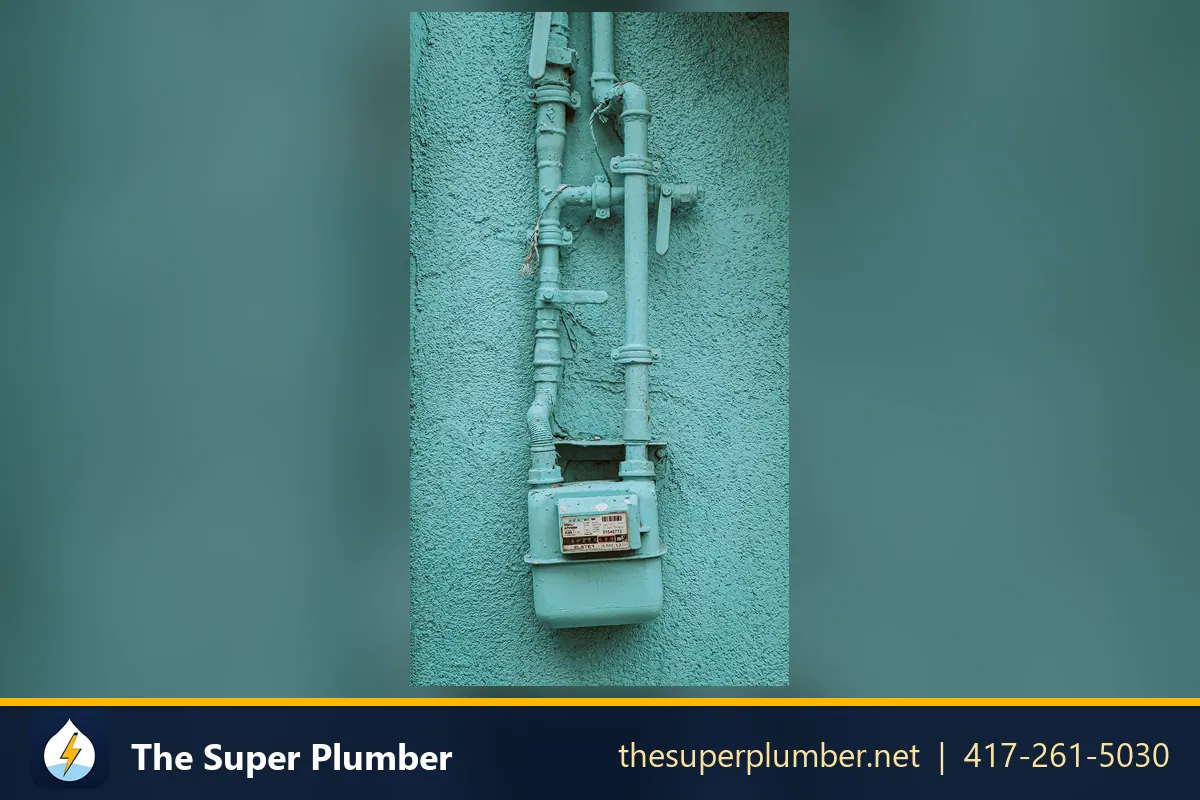
Gas plumbing is the piping that delivers fuel from the meter (natural gas) or tank (propane) to each appliance, plus shutoffs, regulators, connectors and vents where needed. The work is regulated more tightly than water plumbing because a mistake can cause fire, explosion or carbon monoxide.
Common gas-plumbing jobs
Here is what people most often call about.
- Running a new line to a range, dryer, fireplace, grill or generator.
- Extending a branch to a garage heater, pool heater or outdoor kitchen.
- Repairing or replacing a leaking pipe, fitting or flex connector.
- Replacing an appliance shutoff valve.
- Connecting a new water heater or boiler to the gas supply.
- Pressure testing after any change.
- Locating and fixing a leak that a detector or utility has flagged.
Where plumbers and the utility divide the work
The utility usually owns the gas meter and the piping up to a certain point, and a plumber or qualified gas fitter works on the property side of that point, where rules apply locally. If you are unsure who owns what, ask the utility before you plan a project.
Water still running or a smell of gas? Act first, then call.
Call 417-261-5030Gas line installation and repair
Gas line installation means designing, running, connecting and testing a new pipe to serve an appliance or a new part of the home. Gas line repair covers fixing corrosion, damaged fittings, worn connectors or sections that were poorly made. The details are on gas line installation and repair, and most large jobs also fall under broader plumbing installation.
How a new gas line is planned
A plumber checks the total load of the appliances the pipe will serve, the length of the run, the pipe material, the available pressure and the routing. Undersized gas pipe starves appliances, and a pipe that runs too long may need a larger size. Local codes decide what materials, supports and protection are allowed.
Pipe materials in gas plumbing
- Black iron: threaded steel pipe used widely inside homes.
- CSST: flexible corrugated stainless tubing that must be electrically bridged and grounded according to the manufacturer and local code.
- Copper: allowed in some areas and for some gases, and prohibited or restricted in others.
- Polyethylene: plastic pipe used underground for many outdoor runs.
- Appliance connectors: flexible connectors between the shutoff and the appliance, which should be used as directed and replaced when damaged.
Permits, inspection and pressure testing
Many jurisdictions require permits and inspections for new or altered gas piping, and the pipe is typically pressure tested before it is placed in service. Ask the plumber how permits and testing are handled; the details vary by city.
Repair or replace: gas pipes and fittings
Gas line repair depends on what is wrong. A loose fitting may be corrected with proper reassembly and testing, while corroded, damaged or improperly installed pipe is usually replaced.
- Rust, scaling or pitting on iron pipe.
- Flexible connectors that are kinked, cracked or very old.
- Fittings that show bubbles in a leak-test solution.
- Piping that was altered without permits or testing.
- Underground lines with damage from digging or shifting soil.
Do not wrap, tape or seal a leaking gas pipe as a fix. A plumber will shut off the supply to the affected section, repair or replace it, and test before restoring gas.
Gas leak detection: how leaks are found
Gas leak detection uses the sense of smell, electronic detectors, soap-bubble solution, pressure decay tests and, in some cases, specialized equipment. The right method depends on where the suspected leak is. See gas leak detection and gas leak detectors for the full explanation.
Gas leak detector versus gas detector
A gas leak detector for a technician is a handheld instrument that senses combustible gas at very low concentrations. A homeowner gas detector is a plug-in or wall-mounted alarm. They are not the same as a carbon monoxide alarm, which senses a different gas from incomplete combustion. Homes with fuel-burning appliances often need both types of protection, and each has its own placement rules.
Where detectors go
Natural gas is lighter than air and tends to rise, so alarms for it are commonly placed higher on a wall or near a ceiling. Propane is heavier than air and tends to settle low, so those alarms are usually placed near the floor. Always follow the manufacturer's instructions and local code for placement.
What a gas leak plumber does
A gas leak plumber checks the appliance connections and the pipe with a detector, tests joints with solution or pressure, and finds the source. The work includes shutting off the affected supply, repairing or replacing the faulty part and retesting. If the plumber finds an unsafe condition, the appliance or the line stays off until it is corrected.
Gas plumber near me: what people usually need
People searching for a gas plumber near me typically have one of a few needs. Naming yours when you call gets the right conversation started.
- A gas smell or a detector alarm.
- A gas line for a new appliance, such as a range, dryer or fireplace.
- A pilot light or appliance that will not stay lit, when gas supply is suspected.
- A new water heater or boiler connection.
- A pipe replaced during a remodel or addition.
- Leak testing before buying or selling a home.
- A landlord needing a gas safety check on a rental.
Availability and scheduling are confirmed by phone, and if a situation feels like an emergency, hang up and contact the utility or 911 first. To find help closer to home, see local plumbers.
Not sure what you need? Call and we will point you to the right help.
Call 417-261-5030Boiler installation and gas-fired heating
Boiler installation near me searches come from homeowners whose old boiler has failed or who are switching heating systems. A boiler heats water or makes steam for radiators or radiant floors; a gas-fired one needs a gas supply, a vent, a water connection, a condensate drain in high-efficiency models, a pressure relief valve and controls. Boiler installation services typically involve sizing, removing the old unit, piping, venting and testing.
What a gas boiler job includes
- Checking the gas supply size and adding or upgrading a line if needed.
- Setting the boiler and connecting supply and return piping.
- Installing a safe vent path and combustion air.
- Connecting a relief valve, expansion tank and drain.
- Testing the gas connection, combustion and safety controls.
Some of this work needs a heating specialist or a qualified gas fitter, depending on local rules, and permits may apply. Ask who will handle each part.
Why the gas line matters
A new boiler or furnace may need more gas than the old one, and a supply pipe sized for a smaller unit can starve it. Combustion depends on stable gas pressure and proper venting, and the plumber should check both.
Water heaters and gas
A gas water heater has a gas control valve, burner, flue and a shutoff at the supply line. Problems that look like water heater failures, such as a pilot that will not stay lit, may involve gas supply or venting. The bigger picture is covered in water heater repair and replacement, and a change to a different unit can be part of a water heater installation project. Propane models for on-demand heating are discussed in propane tankless water heater information.
Natural gas versus propane
The main difference is how the fuel arrives and what the piping and regulators must do. Natural gas comes from a utility main and meter; propane is stored in a tank on the property and delivered by a supplier.
- Natural gas: delivered by pipe, lighter than air, lower pressure at appliances.
- Propane: delivered in a tank, heavier than air, and used with different regulators and appliance orifices.
- Conversion: appliances are made for one fuel or come with a conversion kit, and conversion must be done by qualified people.
- Tanks and regulators: propane systems have extra parts to inspect.
Never assume a gas appliance can run on either fuel; check the label and instructions.

Gas plumbing in remodels, additions and outdoor living
New projects are the most common reason for a planned gas job, and gas should be part of the design early rather than an afterthought.
Kitchen remodels and ranges
Moving a range, adding a cooktop or changing an island layout often means extending or relocating the gas stub. The shutoff must stay accessible, and the connector must not be pinched behind the appliance. Kitchen and bath renovations that touch several systems are covered in bathroom remodel plumbing, and the same planning logic applies to kitchens.
Grills, fire pits and outdoor kitchens
Outdoor gas lines run underground or along a wall and are sized for the burners they feed. Buried polyethylene or protected metal pipe is common, and the route should avoid future digging areas. A quick-connect at a patio lets a grill be moved without disturbing the pipe.
Generators and pool or spa heaters
Standby generators and pool heaters draw a lot of gas, and adding one can overload a line built for a stove and furnace. A plumber checks the meter capacity and the pipe size before the equipment is ordered.
Buying or selling a home
A gas check before a sale can reveal old connectors, missing shutoffs or unpermitted pipe. If leaks or corrosion are found, the repair can be scheduled before closing rather than after.
Need a plumber in your area? Call to confirm coverage.
Call 417-261-5030Signs of a gas problem besides smell
Smell is the classic sign, but there are others, and any of them warrants attention.
- A hissing sound near a pipe, meter or appliance.
- Dead or dying vegetation over a buried line.
- Bubbles in standing water or wet soil near a line.
- A pilot light that burns yellow or orange rather than blue.
- Soot or staining around an appliance.
- Headaches, nausea or dizziness that improve when you leave the house, which can point to carbon monoxide; leave and call emergency services.
Property types: homes, rentals, condos and businesses
The right approach depends on who owns the piping and how many appliances share it.
Single-family homes
The homeowner is responsible for piping on the property side, and older houses may have added gas lines over time without testing. A whole-house check can be part of a remodel or a sale.
Rentals and multifamily buildings
Landlords typically handle gas repairs, and tenants should report smells, hissing and detector alarms immediately. Multifamily buildings may have shared risers and meters, so an odor can come from another unit.
Businesses and restaurants
Commercial kitchens have higher gas loads and stricter rules; see commercial plumbing for that side of the work.
Cost factors for gas plumbing
Gas jobs are priced by the work involved, not by a flat rate, and pricing is confirmed by phone after you describe the project. The main drivers are:
- Length and route of the pipe.
- Material and the number of fittings.
- Pipe size needed for the appliance load.
- Access through walls, floors, attics or trenches.
- Permit, inspection and testing requirements.
- Appliance connection and shutoffs.
- Whether existing piping must be upgraded.
For general context on quotes, see what affects plumber cost.
Choosing a gas plumber and what to ask
Because the stakes are high, ask questions before work starts. A good plumber answers plainly and does not rush past testing.
Questions worth asking
- Are you qualified to work on gas piping here, and how are permits handled?
- How will you size the pipe for my appliances?
- What testing will you do before gas is turned back on?
- Will the utility need to shut off or restore service?
- What could change the estimate once walls or soil are opened?
Red flags
Be wary of anyone who skips a pressure test, suggests sealing a leak with tape, offers to work without a permit where one is required, or cannot explain the pipe size they plan to use. Availability, including for an urgent "gas leak plumber" request, is confirmed by phone.
Preparing for a gas line visit
- Decide where the appliance will go and its fuel type.
- Have the appliance model and its gas input rating on hand.
- Clear access to the meter, the shutoff and the work area.
- Note any past gas repairs and any smells or alarms.
- Secure pets and plan for a short gas shutoff.
Seasonal and everyday gas safety
Heating season is when gas appliances work hardest and problems surface. Cold snaps push furnaces and boilers to run for long stretches, and a marginal connection or blocked vent shows up under that load. Before winter, keep vents and flues clear of snow, leaves and nests, keep the space around appliances free of stored items, and make sure alarms have fresh batteries. After a storm or flood, do not relight appliances that were under water; have them inspected first.
Myths about gas plumbing
- Myth: a faint smell is nothing. Fact: any gas smell deserves a call to the utility.
- Myth: you can fix a small leak with tape. Fact: tape or putty is not a safe repair on gas piping.
- Myth: a gas detector replaces annual appliance checks. Fact: detectors warn but do not fix or find poor installations.
- Myth: carbon monoxide alarms detect gas leaks. Fact: they sense a different gas.
Ask about our other plumbing services if your project touches more than one system, and about water lines if new gas piping shares a route with supply lines. A gas smell mixed with water damage may mean a wider leak and pipe repair problem, and tankless upgrades are compared in electric tankless water heater information. We take calls across the country, including your service locations area.
Where You Can Get Gas Plumbing Help
Plumbing calls are taken for 21 states, 1,511 cities and 3,769 ZIP codes. Pick your state, or look at a sample city and ZIP for each state; coverage for your exact address is confirmed by phone.
- Arizona
- California
- Colorado
- Connecticut
- Florida
- Georgia
- Idaho
- Illinois
- Maine
- Massachusetts
- Michigan
- Minnesota
- Missouri
- New Hampshire
- New Jersey
- New York
- North Carolina
- Ohio
- Texas
- Virginia
- Washington
| City | ZIP codes and places |
|---|---|
| Tempe, AZ | 85280 about 1.3 miles from Biodesign Institute; about 1.4 miles from Center for Meteorite Studies 85281 near Biodesign Institute; near Desert Financial Arena |
| San Francisco, CA | 94102 near Asian Art Museum of San Francisco; near University of California College of the Law, San Francisco 94103 near Slim's; near California Institute of Integral Studies |
| Fort Collins, CO | 80521 about 1.2 miles from Canvas Stadium; about 1.3 miles from Colorado State University 80524 about 2 miles from Glenn Morris Field House; about 2 miles from Colorado State University |
| Stratford, CT | 06497 about 2.3 miles from Bridgeport Hospital; about 2.7 miles from Connecticut's Beardsley Zoo 06614 about 2.7 miles from Bridgeport Hospital; about 2.7 miles from Connecticut's Beardsley Zoo |
| Hialeah, FL | 33002 about 2 miles from Amelia Earhart Park; about 4.5 miles from Miami International Airport 33010 about 2.8 miles from Miami International Airport; about 3.7 miles from Amelia Earhart Park |
| Gainesville, GA | 30501 near Brenau University; about 2.4 miles from Lee Gilmer Memorial Airport 30503 about 7 miles from Lake Lanier; about 8 miles from Brenau University |
| Eagle, ID | 83616 about 8 miles from Idaho Aquarium; about 10 miles from Idaho Central Arena |
| Naperville, IL | 60540 near Benedetti–Wehrli Stadium; near North Central College 60563 about 1.7 miles from North Central College; about 1.8 miles from Benedetti–Wehrli Stadium |
| Alfred, ME | 04002 about 5 miles from Goodall Park; about 13 miles from Wells National Estuarine Research Reserve |
| Lawrence, MA | 01840 near Campagnone Common; near Great Stone Dam 01841 near Campagnone Common; near Great Stone Dam |
| Warren, MI | 48088 about 6 miles from Hazel Park Raceway; about 12 miles from Detroit Institute of Arts 48089 about 4.5 miles from Hazel Park Raceway; about 8 miles from Detroit Institute of Arts |
| Maple Plain, MN | 55359 about 7 miles from Crown College; about 7 miles from Lake Minnetonka |
| Saint Louis, MO | 63124 near St Louis Country Club; about 3.5 miles from Francis Olympic Field 63132 about 1.7 miles from St Louis Country Club; about 3.8 miles from Francis Olympic Field |
| Atkinson, NH | 03811 about 5 miles from Canobie Lake Park; about 6 miles from Rockingham Park |
| Mahwah, NJ | 07430 about 2.1 miles from Campgaw Mountain Reservation; about 9 miles from William Paterson University 07495 about 4 miles from Campgaw Mountain Reservation; about 7 miles from Lake Sebago |
| Manhasset, NY | 11030 near Manhasset Valley Park; about 1.3 miles from Flower Hill Village Park |
| Gastonia, NC | 28052 about 1.8 miles from CaroMont Health Park; about 3.1 miles from Sims Legion Park 28053 about 1.4 miles from CaroMont Health Park; about 1.7 miles from Sims Legion Park |
| Columbus, OH | 43201 near Billy Ireland Cartoon Library & Museum; near Wexner Center for the Arts 43202 near Jesse Owens Memorial Stadium; about 1.3 miles from Historic Crew Stadium |
| Plano, TX | 75023 about 2.1 miles from John Clark Field; about 4.9 miles from University of Texas at Dallas 75024 about 1 mile from Children's Medical Center at Legacy; about 2.6 miles from Riders Field |
| Hampton, VA | 23661 about 1.9 miles from Bluebird Gap Farm; about 1.9 miles from Hampton Coliseum 23663 about 1 mile from Hampton Convocation Center; about 1 mile from Hampton University |
| Puyallup, WA | 98371 about 3.3 miles from Surprise Lake; about 6 miles from Tacoma Dome 98372 about 3.2 miles from Surprise Lake; about 4.9 miles from Lake Tapps |
Frequently Asked Questions
What should I do first if I smell natural gas?
Leave the building at once with everyone inside, and avoid light switches, appliances, flames or anything that could spark. From outside, call the gas utility's emergency number or 911. Do not go back in until responders say it is safe. A plumber can help with repairs only after the emergency response has made the area safe.
Can I repair a gas leak myself?
No. Gas piping should be repaired only by qualified professionals, with proper testing afterward. Leave the building, call the utility or 911, and wait for guidance. Tape, putty or tightening a fitting can make matters worse, and leak-checking with a flame is dangerous.
What does a gas line plumber do?
A gas line plumber installs, repairs and tests the piping that carries natural gas or propane to appliances. That includes new runs, shutoff valves, flexible connectors, leak tracing and pressure testing. The plumber also coordinates with the utility and local inspectors when permits or service restoration are involved.
How is a gas leak found?
Technicians use electronic detectors, soap-bubble solution on joints and pressure tests. They check appliance connections, valves and piping runs, and locate the source before shutting off and repairing the affected section. Smell alone is not a reliable way to locate a leak.
Do I need a gas leak detector at home?
A gas detector can add a layer of warning if you have gas appliances. It does not replace a carbon monoxide alarm, which senses a different hazard, and it is not a substitute for a professional inspection. Place them according to the manufacturer's directions and the fuel type.
Is natural gas or propane heavier than air?
Propane is heavier than air and tends to settle low, while natural gas is lighter and tends to rise. That is why alarm placement differs. Always follow the manufacturer's guidance, and remember that a smell of gas in either case calls for leaving the building and contacting emergency services.
How long does gas line installation take?
It depends on the length, materials, access and inspection scheduling. A short branch to an accessible appliance is a smaller job than a long run through finished walls or a trench. Time estimates are confirmed by phone after the plumber knows the route.
Do gas lines need a permit?
In many places, yes. New gas piping or changes to existing piping often need a permit and an inspection, and the pipe is commonly pressure tested before use. Requirements vary by city and county, so the plumber should tell you how they are handled locally.
What size gas line do I need?
It depends on the total appliance load, the length of the run, the pipe material and the supply pressure. Sizing tables and local code decide the choice, and a plumber calculates it. An undersized line can starve appliances, so do not guess.
Can a plumber install a gas boiler?
Many plumbing contractors handle boiler work or coordinate with heating specialists, depending on the job and local rules. The project includes the gas supply, venting, water piping, relief valve and testing. Ask who is responsible for each part and whether permits are needed.
How often should gas connectors be replaced?
There is no single interval that suits every appliance. Replace a flexible connector if it is kinked, cracked, corroded or has been disturbed, and follow the appliance maker's guidance. A plumber can inspect connectors during another visit and flag any that look worn.
Is a gas smell an emergency even if it is faint?
Treat it as one. Leave the building, avoid switches and flames, and call the gas utility or 911 from outside. A faint or intermittent smell can still signal a leak, and it is not worth the risk to wait and see.
Ready to talk to a plumber? Call 417-261-5030.
Call 417-261-5030