Quick links
- Water Heater Repair in Tacoma, WA: What Gets Repaired Before You Call
- Emergency Water Heater Repair in Tacoma: What Cannot Wait
- Tankless Water Heater Repair in Tacoma, WA: Codes, Scale, and Flow Faults
- Tank Water Heater Repair in Tacoma: Heat, Leaks, Noise, and Anode Rods
- Gas Water Heater Repair in Tacoma, WA
- Electric Water Heater Repair in Tacoma, WA
- Water Heater Replacement and Installation in Tacoma, WA
- Water Heater Maintenance in Tacoma
- Does Tacoma Have Hard Water? What It Means for Your Water Heater
- Water Leak Detection and Water Line Repair in Tacoma, WA
- Water in the Basement or After a Leak: What a Plumber Fixes and What Restoration Covers
- What Affects Water Heater Repair and Replacement Cost in Tacoma
- What to Expect on a Water Heater Repair Visit
- Tacoma ZIP Codes and Nearby Cities for Water Heater Service
- Call First: Water Heater Repair in Tacoma
- ZIP Codes We Serve in Tacoma
- Related Plumbing Help
- Frequently Asked Questions
Water heater repair Tacoma WA starts with a phone call: describe what the heater is doing, and a plumber works out whether the fault is a part, a leak, a gas or electric supply problem, or a unit at the end of its life. This covers Tacoma's ZIP codes and every common type, tank, tankless, gas and electric. To start, call 417-261-5030. Everything here is background reading; availability, pricing and response time are confirmed by phone.
What follows explains what gets repaired, what a plumber looks at first, what to say on the call, and which problems cannot wait. Later sections go deeper on tankless, tank, gas and electric units, replacement, maintenance, leaks and cost.
Water Heater Repair in Tacoma, WA: What Gets Repaired Before You Call
Most heater faults come down to a short list: heat that is missing or weak, water where it should not be, noise, odor, or a safety device that keeps tripping. Knowing which one you have makes the call faster and the diagnosis cleaner.
Residential Water Heater Repair in Houses, Condos, and Rentals
A water heater repair in a home usually means replacing a worn part rather than the whole unit. Typical jobs include a thermocouple or thermopile, a heating element or thermostat, a gas control, a drain valve, a relief valve, or a leaking fitting. In Tacoma, heaters often sit in a basement, garage, crawl space, or utility closet, and condo and rental units may share a closet with other equipment. Landlords and tenants should agree on who calls, because access and permission matter. A tank that is leaking from the shell itself is generally a replacement, not a repair. For a deeper look at that decision, see water heater replacement.
What a Plumber Checks First on a Water Heater
A plumber starts with safety and supply before touching any part. Gas smell, scorch marks, water on the floor, or a tripped breaker get dealt with first.
- Confirm the fuel supply: gas shutoff handle, or breaker and disconnect for electric.
- Check the temperature setting and any display or blinking code.
- Inspect the relief valve, discharge line, and drain pan for signs of discharge.
- Look at fittings, unions, and the cold inlet and hot outlet for drips or corrosion.
- Test heating: burner, igniter and flame sensor on gas, elements and thermostats on electric.
Many problems turn out to be one failed part found in the first few minutes. Anything involving gas, venting, or live wiring stays with the plumber.
What to Tell the Phone Team About Your Water Heater
Give three things: your Tacoma street address and ZIP, what the heater is doing, and what you know about the unit. For location, areas such as the Stadium District are generally served through ZIP 98403 (Stadium District, about 1 mile from Stadium Bowl), while the Proctor District is generally served through ZIP 98406 (Proctor District, about 1 mile from University of Puget Sound). Give the exact street, because boundaries and mailing addresses overlap.
- Brand, model, and age from the label, if you can read it
- Fuel type: natural gas, propane, or electric
- Where it sits: garage, closet, basement, crawl space, or attic
- Any error code, and whether the shutoff is closed
When you phone, you can ask about plumbing repair options for the whole house at the same visit. Pricing and availability are confirmed on the call.
Emergency Water Heater Repair in Tacoma: What Cannot Wait
Some heater problems are comfort issues; others put your safety or your home at risk. Sort them by what is happening right now, and use the steps below while you wait for help.
No Hot Water, Pilot Out, or a Heater That Stopped
A heater that stopped is usually an urgent but not dangerous problem. On gas models, a pilot that has gone out often points to a worn thermocouple, a draft, or a failing gas control. On electric units, a tripped high-limit reset, a dead element, or a breaker is common. Check that the gas valve or breaker is on, and read any blinking code. Relight a pilot only if the label shows how and you smell no gas; otherwise stop. Cold winter incoming water makes a failing heater feel worse, because it has more temperature to make up. A plumber can confirm the failed part and whether tankless water heater repair rules apply to your unit.
Water Heater Leaking or Flooding a Basement or Closet
A leaking heater is an emergency when water is spreading, even if the leak is small. First find where it comes from: fittings, the relief valve, the drain valve, or the tank itself. Water from the bottom or shell usually means a failed tank. Shut off the cold supply and the fuel, then protect belongings and photograph the area. In a finished basement or closet, a drain pan and discharge line limit damage, but they do not fix the cause. If you think the leak may be in a line and not the heater, leak detection can pinpoint it. Asking for an emergency plumber is reasonable here; availability is confirmed when you phone.
Gas Smell, Burning Smell, and Relief Valve Discharge
If you smell gas, leave the building immediately. Do not touch switches, light flames, or use a phone inside. Call the gas utility or 911 from outside, and have a plumber check the line afterward; see gas leak detection. A burning smell on a new or idle heater is often dust or scorched insulation, but a persistent smell needs a plumber. Water running from the relief valve or its discharge pipe can mean high pressure, thermal expansion, or a failing valve. Do not cap or plug it. Shut off fuel if you can do so safely and call.
When to Shut the Heater Down and What to Do Before the Plumber Arrives
Shut the heater down if you smell gas, see flooding, hear loud banging, or find the relief valve discharging steadily. Then work through a short list.
- Turn the gas control to off, or switch off the breaker for electric units.
- Close the cold water supply valve at the heater.
- Keep people and pets away from any wet floor and nearby outlets.
- Take photos for insurance and record the brand and model.
Do not open pressurized lines or work on gas or wiring. When you are ready, call 417-261-5030 and give your address, ZIP, symptom, and shutoff status. For wider coverage in the state, see Washington plumbing.
Need a plumber in your area? Call to confirm coverage.
Call 417-261-5030Tankless Water Heater Repair in Tacoma, WA: Codes, Scale, and Flow Faults
A tankless heater makes hot water only while water is moving, so nearly every fault traces back to flow, scale, gas, venting or a sensor. Here is how each failure shows up and where tankless water heater repair becomes plumber-only work.
How a Tankless Heater Fails and Why Cold Incoming Water Matters
A tankless heater fails when something stops it from sensing flow, lighting, or moving heat into the water. The flow sensor, igniter, flame sensor, exhaust path and heat exchanger are the usual suspects.
Tacoma's wet, cool climate means incoming water is colder in winter, so the unit must raise the temperature further and can hit its output limit when several fixtures run at once. That can feel like a failing heater when it is really a demand problem. Many units hang in garages, utility closets or basement walls, where damp air and cold drafts add stress. A simple checklist helps: note how many fixtures were running, whether the problem is worse on cold mornings, and whether the display shows anything. Tell the phone team the fuel type, whether it is a propane tankless water heater or natural gas, and where it is mounted.
Tankless No Hot Water and Cold Water Sandwich
When a tankless unit gives no hot water, a safety has often tripped, flow is too low, gas or power is off, or scale is choking the heat exchanger. A cold water sandwich is a burst of cold between two hot spells.
It happens when you close a tap briefly and reopen it: water left in the pipe cools while the unit restarts. Very low flow can also fall under the minimum the unit needs to fire. A plumber reads the display, measures flow at several fixtures, and checks the inlet screen and gas supply. Safe first steps are confirming the gas valve and power are on and trying a stronger flow at one tap. If it keeps shutting off, stop and phone.
Error Codes, Ignition Failure, and Flame Faults
An error code names the system that failed, and the same number can mean different things between Navien, Rinnai, Noritz and other units. Read the code and the model label before anyone guesses.
Ignition and flame faults commonly come from a dirty flame sensor, a weak igniter, low gas pressure, a blocked intake or exhaust, or a failed control board. Do not open the cabinet or keep resetting a code that returns, because repeated lockouts can hide a gas or venting problem. If you smell gas, leave the building, avoid switches and flames, and call the gas utility or 911 from outside; gas leak detection is its own urgent job. When you call 417-261-5030, give the code, the model, and what the unit did just before it stopped.
Flow Sensor, Inlet Screen, and Isolation Valve Problems
If a tankless heater will not fire at a low-flow tap, the flow sensor or inlet screen is a common cause. The unit must confirm moving water before it ignites.
Sediment or scale can clog the inlet screen, and a fouled sensor may read wrong even with good pressure. A partly closed isolation valve, a clogged aerator or a pressure drop elsewhere in the house can imitate a faulty unit. A plumber compares flow at several fixtures, cleans or replaces the screen, and tests the sensor. The screen sits where the cold supply enters the unit, so debris from plumbing work or a disturbed supply line often collects there first. Cleaning the screen means shutting off water and opening connections on a unit with gas and electrical parts, so many owners leave it to a plumber.
Scale, Descaling, and Flushing
Scale is mineral deposit that coats the heat exchanger, narrows passages and triggers overheating or flow codes. It builds faster where water is harder, and hardness varies by supply and area.
Flushing runs a descaling solution through the unit using the isolation valves, then rinses the system. How often depends on water quality and use, so ask a plumber rather than following a fixed schedule; the local utility's water quality report, from Tacoma Public Utilities, shows what your supply carries. Skipping flushing is a common reason units lose output over time. Ignored scale may end in a damaged heat exchanger, which pushes the decision toward replacement. Mention any past descaling or a softener when you describe the problem. Never pour descaler or other chemicals into a unit without the maker's instructions, since the wrong product or a skipped rinse can damage seals and fittings.
Venting, Intake, Condensate Trap, and Gas Supply Problems
Tankless units need clean air in, exhaust out, and a gas line sized for the load. A blocked vent, a clogged condensate trap or a gas supply that is too small can each shut the unit down.
Condensing models drain acidic condensate through a trap that can clog and trip a fault. Exhaust terminations can be blocked by debris, nests or leaves, and cold, wet weather can complicate outdoor vents. Replacing an older tank with a tankless often raises gas demand, so the line size matters and an undersized pipe can starve the burner at peak demand; see gas line installation for the supply side. Venting, combustion and gas work are plumber-only, and permits commonly apply, so confirm with the City of Tacoma and your plumber.
Tankless Repair or Replacement
Repair usually makes sense when the fault is a sensor, igniter, screen, trap or a scaled unit that is otherwise sound. Replacement is worth weighing when the heat exchanger is damaged or repairs keep recurring.
Unit age, parts availability, repeated error codes, and how much scale damage exists all shape the decision. If you are comparing options, tankless water heater cost factors and water heater replacement steps help frame the choice. Electric units add breaker and wiring questions; the electric tankless water heater overview explains them. Tell the phone team the age, model, fuel and every code you have seen, and the phone team can talk through realistic next steps for your situation.

Tank Water Heater Repair in Tacoma: Heat, Leaks, Noise, and Anode Rods
A tank water heater stores and heats a fixed volume of water, so most faults come down to heat input, sediment, corrosion, or pressure. Here is how each common complaint is usually traced and what is repaired versus replaced.
Not Enough Hot Water or Slow Recovery
A tank that runs out fast usually has sediment, a failed element or burner problem, a broken dip tube, or a unit that is simply too small for the household. In the cool, wet Tacoma climate the incoming water is colder in winter, so recovery slows and a marginal heater shows its limits sooner. A plumber checks the thermostat setting, tests the elements or burner, inspects the dip tube that sends cold water to the bottom, and drains a sample to look for sediment. Lukewarm water often points to one dead element or a weak flame. Give the phone team the heater's age, fuel type, and how long a tank of hot water now lasts.
Leaking From the Top, Bottom, or Fittings
A leak at the top is often a loose fitting, supply connector, or relief valve, while water pooling underneath may come from the drain valve or from the tank itself. Fittings and valves are repairable. A leak from the tank shell or bottom seam means the inner steel has failed, and the usual answer is water heater replacement rather than a patch. Do not assume the leak is small because the floor looks only damp; stored water can empty quickly. Shut off the cold supply and the fuel or power, then photograph the spot. Tell the caller where the heater sits, since basement and crawl space units hide slow leaks.
Rumbling, Popping, and Sediment Buildup
Rumbling or popping means sediment has settled on the tank bottom and trapped water is boiling under it. Minerals in the supply settle out as the tank heats, and scale builds faster where water is harder, which varies by supply and area. A plumber flushes the tank through the drain valve, checks the elements or burner for scale, and judges whether the drain valve itself is clogged. Heavy buildup in an old tank can make flushing risky, because loosened scale may clog the valve or reveal pinhole leaks. Mention the noise, its timing, and when the tank was last flushed.
Rusty Water, Rotten Egg Smell, and the Anode Rod
Rust-colored hot water means either the pipes or the tank are corroding, and the anode rod is the clue. This sacrificial rod corrodes in place of the steel tank, so a worn rod leaves the shell exposed. A rotten egg smell in hot water only is commonly a reaction between the rod, the water chemistry, and bacteria in warm water; a plumber may swap the rod or advise flushing and a different rod type. If cold water is also rusty, the cause is more likely the supply piping. Rust at the bottom of a tank can signal it is nearing the end of its life, so say how old the unit is.
Relief Valve, Expansion Tank, and Drain Pan Problems
The T&P relief valve opens to protect the tank from excess heat or pressure, so a dripping valve needs diagnosis, not a cap. Causes include high household pressure, thermal expansion with no expansion tank, a failed valve, or an overheating tank. A plumber tests the valve, checks incoming pressure, and inspects the expansion tank and the discharge line. A drain pan with a pipe to a safe spot matters in basements and finished spaces, since it catches seepage early. Never plug a relief outlet. If water shows up somewhere you cannot trace to the heater, ask about leak detection when you phone the team.
Gas Water Heater Repair in Tacoma, WA
A gas heater adds fuel, ignition, and venting to the list of things that can fail. Combustion, gas valves, and vent work are plumber-only, and any gas odor means leave the building first.
Pilot Light Keeps Going Out: Thermocouple, Draft, and Gas Control
A pilot that will not stay lit is commonly caused by a worn thermocouple or thermopile, a draft that blows the flame out, or a faulty gas control valve. The thermocouple senses the pilot flame and tells the valve to keep gas flowing, so a weak signal shuts the gas off. Relight only if the label instructions allow it and you smell no gas; otherwise stop. If the pilot returns and dies again, a plumber checks the sensor, the flame shape, the air supply, and the gas control. The Bradford White ICON System uses a millivolt control with flash diagnostics, so note any blinking pattern. If you smell gas, leave and call the gas utility or 911 from outside, and read about gas leak detection.
Burner, Ignition, and Flammable Vapor Lockout
A heater that clicks, lights briefly, or will not fire at all often has a dirty burner, failed igniter, or a flammable vapor lockout. Many Rheem and Bradford White gas tanks include flame arrestors and air inlets that clog with lint and dust, which shuts the heater down on purpose to prevent ignition of vapors. Gas valves usually blink status codes whose patterns vary by model, so read the label and write the pattern down. A plumber cleans the inlet, inspects the burner and igniter, and confirms the gas supply. Keep flammable products and stored items away from the heater, and tell the caller what the indicator light is doing.
Venting and Backdrafting Checks
Venting carries exhaust out of the building, and a blocked or poorly pitched vent can push combustion gases back toward the living space. Backdrafting signs include soot at the draft hood, scorch marks, a burning smell, or a heater that keeps shutting down. Plumbers check the vent connections, slope, draft, and clearance from the roof or wall, and they look at air supply in tight closets. Never tape over or reseal a vent yourself. If anyone feels dizzy or a carbon monoxide alarm sounds, get out and call 911 from outside. For a new unit or a re-vent, ask about gas water heater installation and what vent type the space needs.
Electric Water Heater Repair in Tacoma, WA
An electric tank heats with one or two resistance elements and controls them with thermostats. Panel and wiring work is plumber-only here, and water plus electricity is a hazard.
Heating Elements, Thermostats, and the High-Limit Reset
When an electric tank gives no hot water or only lukewarm water, a failed element or thermostat is the usual culprit. Most tanks have an upper and a lower element; the upper element heats first, so a dead upper one can leave the whole tank cold, while a dead lower one shortens supply. The high-limit reset button trips when the tank overheats, and pressing it once is reasonable only after the power is off. A plumber tests the elements for continuity, checks the thermostats, and looks for scale coating. Describe the symptoms, the age, and whether the reset button keeps popping.
Tripped Breakers and Wiring Faults
A breaker that trips repeatedly usually means a shorted element, a damaged wire, or moisture reaching the electrical compartment. Do not keep resetting a breaker that trips again; that is a warning, not an inconvenience. Switch the heater off at the breaker, keep the access panel closed, and never touch wiring if the floor or heater is wet. A plumber tests the elements for a short to ground, inspects the connections, and confirms the heater matches its circuit. Panel or circuit upgrades are outside plumbing, so ask the phone team what can be routed and tell them what the breaker did.
Electric Heater Leaks and Temperature Swings
Electric tanks leak at the same places as gas ones: fittings, relief valve, drain valve, and shell. Water at an element gasket is repairable, but a shell leak ends the tank. Swings from hot to lukewarm often trace to a failing thermostat, a worn element, or sediment insulating the elements from the water. Check for a drain pan and a clear discharge line, and shut off the power before inspecting anything wet. If the unit is old, the plumber may compare a repair with a new tank or a heat pump, and an electric tankless water heater is another route. Call 417-261-5030 and describe the symptoms and the unit's age.
Have a plumbing problem right now? Call and describe it.
Call 417-261-5030Water Heater Replacement and Installation in Tacoma, WA
Replacing a heater is a decision about fuel, size, venting, and space as much as the unit itself. In Tacoma's cool, wet climate, the choice also has to account for cold incoming water and where the heater sits in the building.
Repair or Replace: A Decision Framework
Repair makes sense when the failed part is inexpensive to fix and the tank or heat exchanger is sound. Replacement makes sense when the shell leaks, the unit is old and failing in more than one way, or repeated repairs are stacking up.
A plumber usually weighs four things: where the leak is (a fitting or valve versus the tank shell or bottom seam), the age shown on the label, the condition of the anode rod and sediment level, and whether parts are still available. A leaking shell is not repairable. If you are unsure, water heater replacement is a conversation to have after a diagnosis, not before one.
Tank, Tankless, Heat Pump, Gas, or Electric: Choosing the Next Unit
The next unit usually follows what the home already has, because changing fuel type means new gas, venting, or electrical work.
- Tank heaters are the simplest swap and store a fixed volume, which suits steady household use.
- Tankless units heat on demand and need adequate gas supply and venting, so read about tankless water heater cost factors first.
- Electric tankless units draw heavy electrical load; see electric tankless water heaters before assuming the panel can handle one.
- Heat pump heaters are efficient but commonly need open space and airflow around them, so ask whether your closet or crawl space suits one.
Tell the phone team your current fuel, the room, and what you want to change.
Gas Water Heater Installation, Venting, and Gas Line Questions
A gas water heater installation is more than setting a tank in place: the gas connection, shutoff, flex connector, and venting must all be right, and these are plumber-only tasks.
Common questions include whether the existing vent is the right size and slope, whether combustion air is adequate in a closed utility closet, and whether the gas line can support a larger or tankless unit. Tankless conversions often need a bigger gas line, which is covered under gas line installation. Propane homes have their own supply and sizing questions; see propane tankless water heaters. If you ever smell gas, leave the building, avoid switches and flames, and call the gas utility or 911 from outside.
Sizing, Seismic Strapping, Drain Pans, and Permits in Tacoma
Sizing starts with how many people live in the home, how many fixtures run at once, and how cold the incoming water gets in winter, since cold supply slows recovery.
Several code items commonly come into play on a Washington replacement:
- Seismic strapping is commonly required for tank heaters; confirm with the City of Tacoma and your plumber.
- Permits commonly apply to replacement and gas work; confirm with the City of Tacoma which one fits your job.
- Drain pans and discharge lines matter most in finished basements, closets, and upper floors.
- Expansion tanks and relief valve piping are checked at the same time.
Removal of the old unit is part of a normal swap. Give the phone team the street address, ZIP, current heater type, and photos of the label and the space; for the broader scope, see water heater installation.
Water Heater Maintenance in Tacoma
Maintenance is mostly small, scheduled checks that catch sediment, wear, and blocked passages before they turn into a failure. The right cadence depends on the unit, how much it runs, and local water conditions.
Tank Flushing, Anode Rod, and Relief Valve Checks
Flushing a tank removes loose sediment that otherwise insulates the water from the burner or element and causes rumbling. A plumber attaches a hose to the drain valve, runs the water until it clears, and checks that the valve closes without dripping.
The anode rod is the sacrificial part that corrodes in place of the tank steel, so inspecting it tells you how much life the tank has left. The temperature and pressure relief valve should be checked for corrosion, weeping, or a discharge line that is missing or kinked. How often depends on use and the water; ask a plumber. For repairs that go beyond upkeep, see plumbing repair.
Tankless Descaling and Vent Inspection
Tankless units are maintained by flushing the heat exchanger through the isolation valves, cleaning the inlet screen, and inspecting the vent and condensate trap.
Mineral scale narrows the heat exchanger passages and can trigger error codes or temperature swings. Descaling frequency depends on water hardness and use, so ask a plumber rather than guessing. The intake and exhaust should be clear of debris and nests, and the condensate drain should run freely. If a code is already showing, see tankless water heater repair and have the display code and model ready when you phone.
Does Tacoma Have Hard Water? What It Means for Your Water Heater
Hardness varies by supply source and by area, so there is no single answer that fits every Tacoma address. What matters is how much scale your own water leaves behind in the heater.
How to Check Water Hardness Where You Live
The most reliable check is the water quality report from Tacoma Public Utilities, which a utility normally publishes for customers; confirm with them what applies to your area.
You can also look for signs at home: white crusty buildup on faucets and showerheads, cloudy film on glassware, or scale flakes in aerators. A plumber can look inside a drained tank or at the tankless heat exchanger and tell you how much mineral has built up. Because boundaries and supply sources can differ from street to street, give the phone team your Tacoma street address and ZIP, and they can discuss what is worth checking.
Scale, Sediment, and Shorter Heater Life
Scale builds faster where water is harder, and it affects heaters in predictable ways.
- In tank units, sediment settles at the bottom, causes popping and slow recovery, and can overheat the tank floor.
- In electric heaters, scale can coat elements and shorten their life.
- In tankless units, scale narrows the heat exchanger and flow paths, triggering codes and reducing output.
- Anode rods wear based on water chemistry as well as time.
None of this means every heater fails early; it means the maintenance interval should match the water, not a calendar. Regular flushing and descaling are the usual defense.
Water Softeners and What the Phone Team Can Route
Water softener installation is not something offered directly here, so ask on the call whether it can be routed. A softener treats hardness before the water reaches the heater, which is why the question comes up.
If you already own one, tell the phone team, because it affects how a plumber reads scale and sediment. Water wells and septic systems are not offered either; say so early if your home uses them. For a heater that needs attention now, describe the symptom, the unit, and its location, and the phone team can talk through next steps and emergency plumbing options.
Water Leak Detection and Water Line Repair in Tacoma, WA
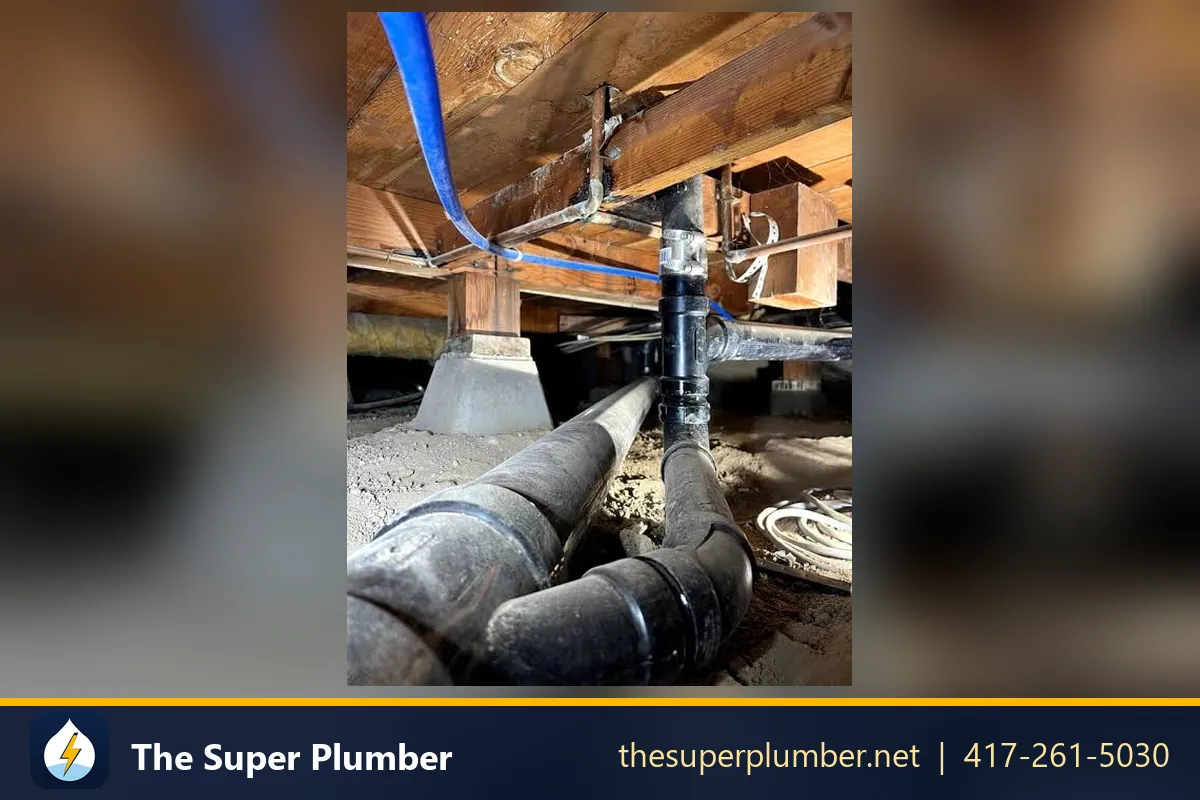
A hidden leak is water escaping from a supply pipe, fitting, or water heater connection where you cannot see it. A plumber finds it by measuring pressure and flow first, then opening as little finish work as possible.
Signs of a Hidden Water Leak: Bills, Sounds, and Pressure Drops
The clearest sign is a water bill that climbs while household habits stay the same. Other clues include the sound of running water with every fixture off, a meter that keeps turning, and low water pressure that appears suddenly.
Look for physical evidence too:
- Warm spots on a floor, which can point to a leaking hot line
- Musty smells in a closet, basement, or crawl space
- Stained ceilings, bubbling paint, or lifting baseboards
- Damp soil or a soft patch in the yard between the meter and the house
A water heater that refills often or a relief valve that weeps can also look like a house leak.
Meter Test and Leak Detection Methods
A meter test is the simplest way to confirm a leak: with every fixture and appliance off, a moving meter dial or flow indicator means water is going somewhere. Homeowners can watch the meter, but opening the meter box is for the utility, so confirm with Tacoma Public Utilities what you may touch.
Once a leak is confirmed, leak detection narrows down the location. Common methods include:
- Isolating the house from the street side by closing the main shutoff and watching for a pressure drop
- Testing hot and cold lines separately
- Listening with acoustic ground microphones along the line
- Thermal imaging, which can show warm water behind a wall or under a floor
- Pressure testing a section of pipe
The goal is a marked spot, so the repair opens one small area. Leaks under a concrete floor follow the same logic, and a slab leak calls for extra care because of the access work involved.
Water Line Repair and Main Line Shutoff Problems
The water line is the pipe that carries city water from the meter to your house, and it is usually the homeowner's responsibility from the meter onward. Confirm with the City of Tacoma and Tacoma Public Utilities where their part ends and yours begins.
Signs of trouble include a wet yard with no rain, a dip in pressure at every tap, and a shutoff valve that will not close or drips from its stem. Old gate valves can seize or fail when turned, so do not force one that resists. A stuck main shutoff is itself a repair worth scheduling before a pipe bursts.
Depending on the pipe material and depth, work may mean a short spot repair or a full water main repair or replacement. Corroded galvanized steel and older copper are common reasons for replacing a line instead of patching it. Pressure regulators and backflow assemblies sit on the same run, so ask about them when the water line is open.
Leaking and Burst Pipe Repair
When a pipe is actively spraying, close the main shutoff first and open a faucet at the lowest point to drain the line. A burst pipe in a cold snap often hides in a crawl space or exterior wall, so check those areas once the water is off.
A plumber then cuts out the damaged section and rebuilds it with new copper, PEX, or another approved material, depending on the pipe already in the house. Pinhole leaks in aging copper tend to repeat, so a plumber may suggest replacing a longer run. See burst pipe repair for how that process works and leak repair for slower drips.
If the leak is next to the heater, shut off the heater's cold supply and, for electric units, the breaker. For gas units, leave the gas control alone beyond what the label describes, and smell for gas: if you notice it, leave the building and call the gas utility or 911 from outside. Tell the phone team your Tacoma street address and ZIP, where the water is showing, and whether the main is off. Call 417-261-5030 for a plumber, and availability and pricing are confirmed on the call.
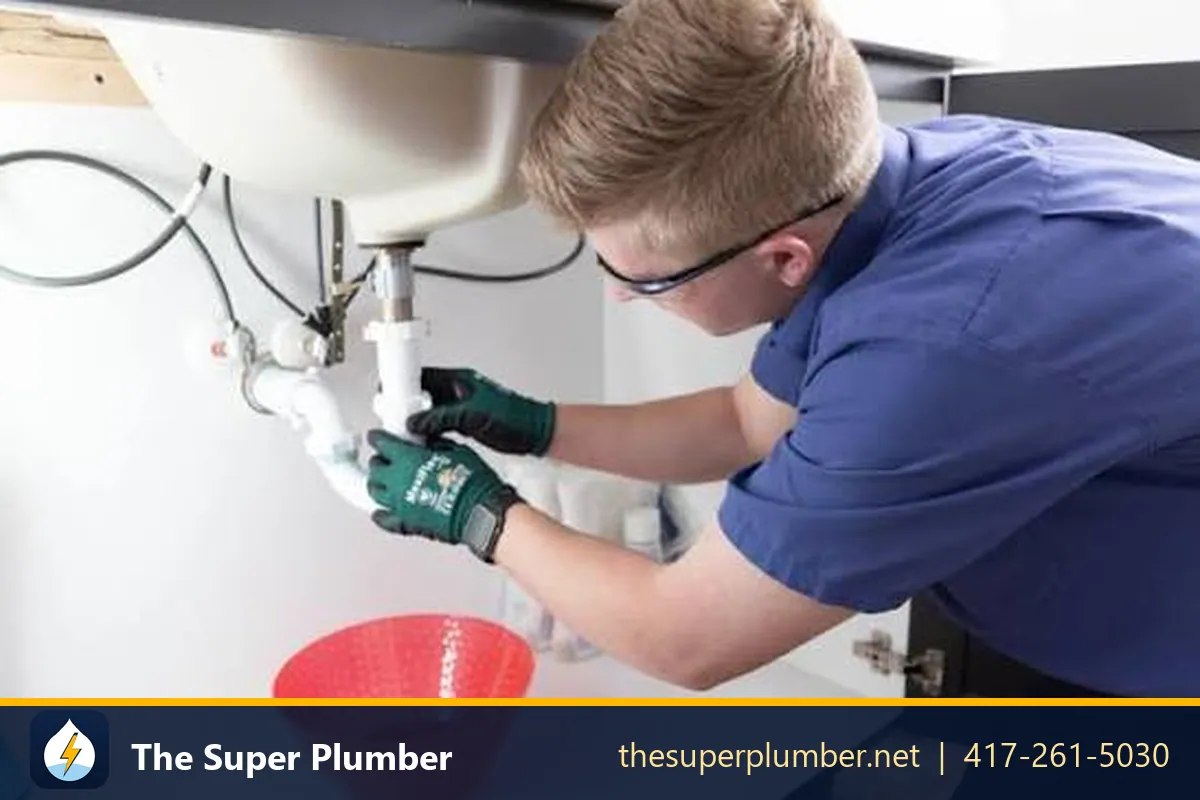
Ready to get a quote? Availability and pricing are confirmed by phone.
Call 417-261-5030Water in the Basement or After a Leak: What a Plumber Fixes and What Restoration Covers
A plumber stops the water, finds the source, and repairs the pipe, fixture, or heater that caused it. Cleanup, drying, and rebuilding afterward are a different kind of work.
Stop the Water and Find the Source First
Water standing in a basement, garage, or utility closet needs one question answered fast: where is it coming from? Start with the main shutoff if you suspect a supply line or heater, and stay out of standing water if outlets, panels, or a plugged-in appliance are near it.
Common sources include:
- A failed water heater tank, relief valve discharge, or loose supply connection
- A burst or corroded supply pipe
- A leaking washer hose or fixture supply line
- A failed sump pump, or groundwater seeping through walls or the slab
- A backed-up drain or sewer line
Rainwater and groundwater do not come from plumbing and will not stop when you close the main. If the water keeps rising after the supply is off, say so on the call.
Extraction, Drying, and Rebuild Are Restoration Work
Removing standing water, running drying equipment, treating mold, and rebuilding walls or flooring is restoration work, and it is not part of a plumbing visit here. The plumber's job ends when the leak is fixed and tested.
Ask the phone team what can be routed for those steps. The sequence matters: restoration crews prefer a stopped, repaired source before they start, and a plumber who has made the repair can often say what was found, which helps them scope the job.
Photos, Insurance Notes, and Fixing the Cause Before Rebuilding
Take photos before anything is moved, and keep the failed part if you can. Insurance claims commonly ask for evidence of what failed and when, so write down when you noticed the water and what you shut off.
A useful record includes:
- Wide and close photos of damage and the leaking fitting
- The make, model, and age of any heater or appliance involved
- A short note of each step you took
- The plumber's description of the cause
Confirm with your insurer what documents they need. Do not rebuild or close up a wall until the cause is repaired and pressure-tested, or you may be paying to open it again.
Sump Pumps and Basement Water Entry
A sump pump collects groundwater in a pit and pushes it out through a discharge line, so a failed float switch, stuck check valve, or dead pump can flood a basement in a wet season. Tacoma's wet, cool climate makes this a fair concern in many homes with basements or crawl spaces.
Test the pump by lifting the float or pouring water into the pit, and make sure the discharge line is not frozen or clogged. A battery backup helps during outages, which tend to coincide with heavy storms. For pump repair or replacement, see sump pump repair.
For a mix of leak, heater, and sump questions, plumbing repair covers the general scope, and emergency plumbing explains what people ask for in urgent cases. When you call, give your Tacoma address and ZIP, what you see, and whether the water is still running; an old tank may call for replacement instead of repair.
What Affects Water Heater Repair and Replacement Cost in Tacoma
Water heater cost depends on what is wrong, what kind of unit you own, and how hard it is to reach. A plumber cannot responsibly name a number without those details.
Why Pricing Is Confirmed by Phone
Pricing is confirmed by phone because two heaters with the same symptom can need very different work. A tank that will not heat might need a thermostat or element; a leaking tank may need a new unit.
Ask what any service fee covers before you approve anything, and what promotions, if any, apply. For a wider look at how quotes are built, read about what plumbers charge and why. When you call 417-261-5030, give the symptom and unit details so the phone team can describe the likely scope.
Unit Type, Fuel, Access, Venting, and Permit Items
The unit itself and the space around it shape most quotes:
- Unit type: tank, tankless, or heat pump models carry different parts and labor; the cost of a tankless water heater is a separate question from a repair.
- Fuel and venting: gas and electric units fail differently, and a larger gas line or new vent path adds work; gas line installation is plumber-only.
- Access: a basement, crawl space, garage, closet, or attic changes removal and setup time.
- Code items: seismic strapping commonly applies in Washington, and permits, drain pans, discharge lines, and expansion tanks may be needed. Confirm with the City of Tacoma and your plumber.
If replacement looks likely, see how water heater replacement and water heater installation work.
What to Expect on a Water Heater Repair Visit
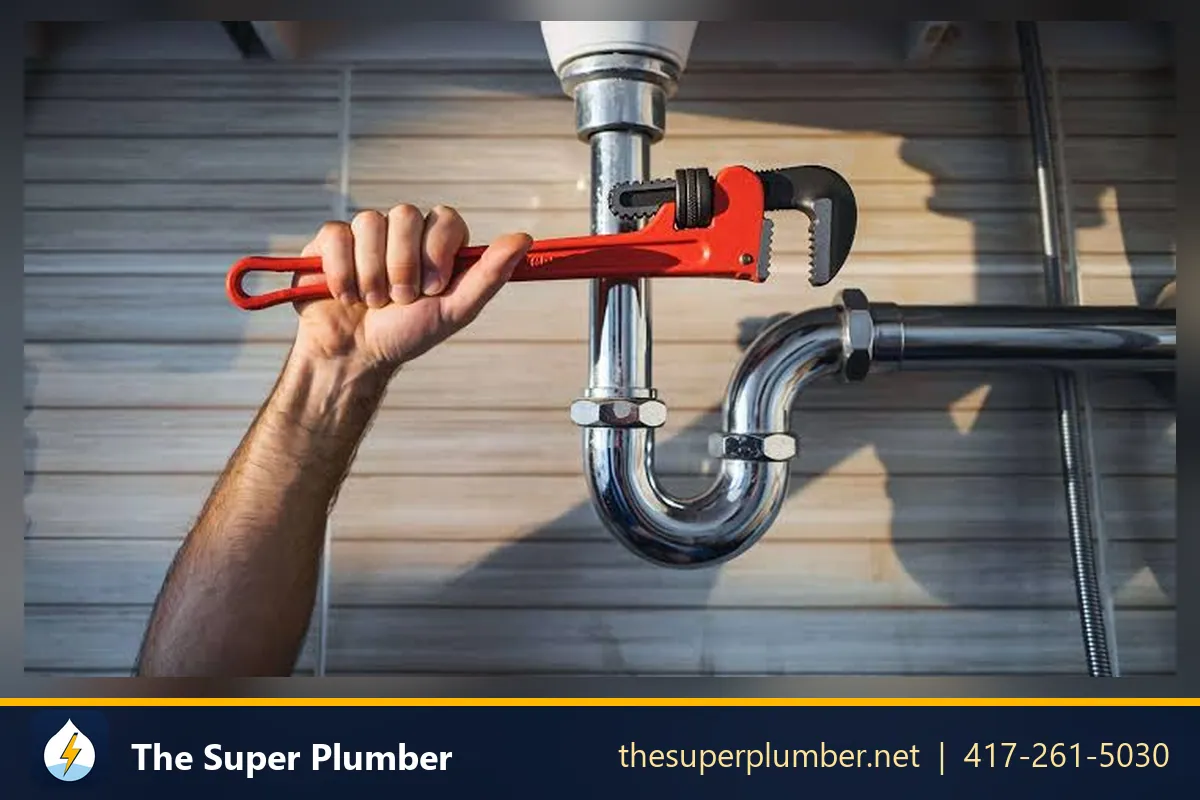
A repair visit follows a predictable order: look, explain, get your approval, fix, test.
Diagnosis, Written Scope, and Approval
Diagnosis comes first, and the plumber should explain what failed before work starts. Expect checks of the shutoff valves, the supply, the thermostat or controls, the relief valve, the connections, and any tankless error code.
Then ask for the scope in plain terms: what is repaired or replaced, and what it will cost. Ask for licensing and insurance details on the call, before you approve work.
Repair, Testing, and Cleanup
After approval, the plumber replaces the failed part, such as a thermostat, element, thermocouple, valve, or connector, then restores water and gas or power in the right order. Gas, venting, combustion, electrical, and sealed components are plumber-only work.
Testing follows: leak checks at every fitting, confirming the burner or element runs, and hot water at a tap. If a leak damaged floors or walls, photograph it for insurance. The plumber fixes the source; drying and rebuilding are restoration work, so ask the phone team what can be routed.
Tacoma ZIP Codes and Nearby Cities for Water Heater Service
Give your street address along with the ZIP, because mailing boundaries and neighborhood names overlap. Coverage by location is confirmed when you call.
Stadium District, North Slope, and Proctor District Area ZIP Codes
Areas such as the Stadium District, North Slope, and Proctor District are generally served through these ZIPs; give the exact street because boundaries and mailing addresses overlap:
- ZIP 98402 (Stadium District, about 1 mile from Tacoma Art Museum)
- ZIP 98403 (Stadium District, about 1 mile from Stadium Bowl)
- ZIP 98405 (North Slope, about 1 mile from University of Puget Sound)
- ZIP 98406 (Proctor District, about 1 mile from University of Puget Sound)
- ZIP 98407 (Proctor District, about 2 miles from University of Puget Sound)
- ZIP 98413 (Stadium District, about 1 mile from Tacoma Art Museum)
- ZIP 98415 (Stadium District, about 1 mile from Tacoma Art Museum)
- ZIP 98416 (Proctor District, about 1 mile from University of Puget Sound)
Leak detection helps when a basement heater leak has an unclear source.
Other Tacoma ZIP Codes
These Tacoma ZIPs are labeled by distance rather than neighborhood, so quote them with the street address:
- ZIP 98404 (about 5.9 miles from McChord Field)
- ZIP 98408 (about 5 miles from McChord Field)
- ZIP 98409 (about 4.6 miles from McChord Field)
- ZIP 98418 (about 6.1 miles from McChord Field)
- ZIP 98421 (about 2 miles from Tacoma Dome)
- ZIP 98422 (about 2 miles from Browns Point Light)
If a heater sits in a damp basement, see sump pump repair.
Independent Nearby Cities: University Place, Lakewood, Fife, Puyallup, Federal Way, Spanaway, Steilacoom, Gig Harbor, and Milton
These are independent cities, not Tacoma neighborhoods, each confirmed separately by phone:
- University Place: ZIP 98467 (about 6.1 miles from Joint Base Lewis-McChord)
- Lakewood: ZIP 98439 (about 2.7 miles from Joint Base Lewis-McChord)
- Fife: ZIP 98424 (about 3 miles from Tacoma Dome)
- Puyallup: ZIP 98371 (about 3 miles from Surprise Lake)
- Federal Way: ZIP 98003 (about 5 miles from Highline College)
- Spanaway: ZIP 98387 (about 5.9 miles from McChord Field)
- Steilacoom: ZIP 98388 (about 4 miles from Joint Base Lewis-McChord)
- Gig Harbor: ZIP 98332 (about 5 miles from Point Defiance Zoo & Aquarium)
- Milton: ZIP 98354 (about 1 mile from Surprise Lake)
For the wider state, see plumbing across Washington.
Call First: Water Heater Repair in Tacoma
Call 417-261-5030 and tell the phone team three things: Tacoma plus your street address and ZIP; the symptom or the error code on the display; and what you know about the unit, including brand, model, age, fuel type, where it sits (garage, closet, basement, crawl space, or attic), and whether the water or gas is shut off.
Availability, pricing, and response time are confirmed by phone. If the situation is urgent, read about emergency plumbing first, and if you smell gas, leave the building and call the gas utility or 911 from outside. For drain trouble, see sewer repair in Tacoma.
A water heater call often turns up other plumbing problems, so mention them while you are on the phone: a wet spot that may need slab leak repair, a running fixture that calls for toilet repair, a jammed garbage disposal repair, a slow drain that needs drain cleaning or hydro jetting, or a backup that points to sewer line repair and a sewer camera inspection. Pressure trouble at the street side may be a water main issue, and a small remote sink is sometimes served by a point-of-use water heater. The full list of plumbing services helps if you are unsure which category fits.
A broader plumbing overview for the Auburn, Washington ZIP codes is in Auburn water heater and plumbing help.
ZIP Codes for Water Heater Calls in Tacoma, WA
Water heater calls cover 26 Tacoma ZIP codes, grouped by area in the text above. The complete ZIP-by-ZIP table is on the plumber in Tacoma page, and coverage for your exact address is confirmed by phone.
- 98402
- 98403
- 98404
- 98405
- 98406
- 98407
- 98408
- 98409
- 98413
- 98415
- 98416
- 98418
- 98421
- 98422
- 98443
- 98444
- 98445
- 98446
- 98447
- 98448
- 98464
- 98465
- 98466
- 98471
- 98481
- 98490
Nearby Tacoma-Area Cities and ZIP Codes
The same phone line also takes calls for 9 nearby cities with 22 more ZIP codes. Tell the phone team the city and ZIP and coverage is confirmed for your address.
| City | ZIP codes and places |
|---|---|
| University Place | 98467 near Chambers Bay Golf Course; about 1.7 miles from Fort Steilacoom |
| Lakewood | 98439 about 1.7 miles from McChord Field; about 2.5 miles from American Lake 98496 about 2.5 miles from McChord Field; about 2.7 miles from Fort Steilacoom 98497 about 2.2 miles from Fort Steilacoom; about 3.1 miles from McChord Field 98498 about 1.6 miles from Fort Steilacoom; about 2.1 miles from American Lake 98499 about 2.4 miles from McChord Field; about 3 miles from Fort Steilacoom |
| Fife | 98424 about 2.9 miles from Surprise Lake; about 3.2 miles from Tacoma Dome |
| Puyallup | 98371 about 3.3 miles from Surprise Lake; about 6 miles from Tacoma Dome 98372 about 3.2 miles from Surprise Lake; about 4.9 miles from Lake Tapps 98373 about 6 miles from Pacific Lutheran University; about 7 miles from McChord Field 98374 about 7 miles from Surprise Lake; about 8 miles from Lake Tapps 98375 about 6 miles from Pacific Lutheran University; about 8 miles from McChord Field |
| Federal Way | 98003 about 4.7 miles from Highline College; about 5 miles from Surprise Lake 98023 about 3.9 miles from Browns Point Light; about 6 miles from Tacoma Dome 98063 about 4.6 miles from Highline College; about 5 miles from Surprise Lake 98093 about 1.6 miles from Pacific Raceways; about 1.9 miles from Norman Grier Field |
| Spanaway | 98387 about 5 miles from Pacific Lutheran University; about 6 miles from McChord Field |
| Steilacoom | 98388 about 1.3 miles from Fort Steilacoom; about 2.2 miles from Chambers Bay Golf Course |
| Gig Harbor | 98329 about 10 miles from Point Defiance Zoo & Aquarium; about 13 miles from University of Puget Sound 98332 about 5 miles from Point Defiance Zoo & Aquarium; about 8 miles from Browns Point Light 98335 about 4.1 miles from Point Defiance Zoo & Aquarium; about 6 miles from University of Puget Sound |
| Milton | 98354 near Surprise Lake; about 5 miles from Tacoma Dome |
Other Washington Cities and ZIP Codes We Serve
Calls are also taken for other Washington cities, 25 in all. Every city is covered in plumbing services across Washington.
| City | ZIP codes and places |
|---|---|
| Dupont | 98327 about 2.6 miles from Fort Lewis; about 3.4 miles from Joint Base Lewis-McChord |
| Graham | 98338 about 8 miles from Northwest Trek Wildlife Park; about 12 miles from McChord Field |
| Bonney Lake | 98391 about 7 miles from Lake Tapps; about 10 miles from Surprise Lake |
| Camp Murray | 98430 about 13 miles from Lake Tapps; about 22 miles from Mount Rainier |
| Mcchord Afb | 98438 about 2 miles from University of Washington Tacoma; about 2.1 miles from Tacoma Dome |
| Roy | 98580 about 9 miles from Northwest Trek Wildlife Park; about 11 miles from Fort Lewis |
| West Richland | 99353 about 3.3 miles from Richland Airport; about 5 miles from Washington State University Tri-Cities |
| Kent | 98030 about 1.4 miles from accesso ShoWare Center; about 4.2 miles from Highline College 98031 about 2.2 miles from accesso ShoWare Center; about 5 miles from Highline College 98032 about 1.1 miles from Highline College; about 2.2 miles from accesso ShoWare Center |
Frequently Asked Questions
How much does water heater repair cost in Tacoma?
Pricing is confirmed by phone because it depends on the symptom, unit type, fuel, and how easy the heater is to reach. Ask what any service fee covers before you approve work.
What should I do first in a water heater emergency?
If the heater is leaking, shut off its cold water supply. For a gas unit, if you smell gas, leave the building and call the gas utility or 911 from outside, touching no switches or flames. Then call the phone team and describe what you see.
What does a tankless error code mean?
An error code points to a fault category such as ignition, flow, venting, or a sensor, but the meaning varies by brand and model. Read the code and the model number on the label, then give both to the phone team. Gas or vent faults need a plumber.
Why does my pilot light keep going out?
Common causes include a worn thermocouple or thermopile, a draft, a dirty pilot assembly, or a failing gas control. Relight a pilot only per the label and only if you smell no gas; otherwise phone a plumber.
Should I repair or replace a leaking tank?
It depends on where the water comes from. A leak at a fitting, valve, or connector is often repairable. Water seeping from the tank shell or bottom seam usually means the tank has failed and needs replacement.
Why is my electric water heater not heating?
Common causes are a tripped breaker, a tripped high-limit reset, a failed heating element, or a bad thermostat. Check the breaker only if the area is dry. Elements and wiring are plumber work.
When is replacement better than repair?
Replacement often makes sense when the tank shell leaks, repairs keep recurring, parts are hard to find, or the unit is old and heavily scaled. Repair is usually reasonable for one failed part on an otherwise sound heater.
Do I need a permit to install a gas water heater?
Permits commonly apply to water heater replacement and gas water heater installation, along with items like seismic strapping, venting, and a discharge line. Exact rules depend on the job and location, so confirm with the City of Tacoma and your plumber.
Does Tacoma have hard water?
Hardness varies by supply and area. Scale builds faster where water is harder in tanks, heat exchangers, and elements. Check the water quality report from Tacoma Public Utilities or ask the phone team.
Do you handle water damage restoration?
No. The plumber finds and fixes the source of the leak and stops the water. Extraction, drying, and rebuilding are restoration work, so ask the phone team what can be routed. Photograph the damage for your insurance records.
Can I ask for licensing and insurance details?
Yes, and you should. Ask for licensing and insurance details on the call, before you approve any work. They are confirmed by phone.
Which ZIP codes and nearby cities are covered for water heater repair Tacoma WA?
Tacoma ZIPs such as 98402, 98405, 98406, and 98421 are common, and nearby independent cities include University Place, Lakewood, Fife, Puyallup, Federal Way, Spanaway, Steilacoom, Gig Harbor, and Milton. Coverage is confirmed by phone.
Ready to talk to a plumber? Call 417-261-5030.
Call 417-261-5030