Quick links
- How a Propane Tankless Heater Works
- Propane Versus Natural Gas Models
- Indoor or Outdoor Propane Tankless Installation
- Wall Mounted and Stainless Steel Options
- Sizing: Flow Rate, Temperature Rise and the Large Tankless Water Heater
- What Installation Involves
- Safety With Propane
- Where Propane Tankless Heaters Make the Most Sense
- Propane Tankless Compared With Other Choices
- Repair and Maintenance
- Efficiency, Running Costs and Whether It Is Worth It
- Questions People Often Ask Before Buying
- Where You Can Get Help
- Related Plumbing Help
- Frequently Asked Questions
A propane tankless water heater heats water on demand by burning liquid propane in a compact wall-mounted unit, so there is no storage tank to fill or keep warm. It is a common choice for rural homes, cabins and properties that have a propane tank but no natural gas line, and it works well when the fuel supply, vent and water lines are set up correctly.
Most problems with these units are not the heater itself but what surrounds it: an undersized gas line, an empty or regulator-starved tank, a bad vent, or hard water scaling the heat exchanger. Below you will find how the system works, indoor and outdoor choices, what to ask an installer, and where the trouble spots are.
How a Propane Tankless Heater Works
A propane on demand water heater waits idle until a hot tap opens. Water flow trips a sensor, the fan starts, the burner ignites, and the heat exchanger warms water as it passes through. When the tap closes, the burner shuts off. Also sold as a propane instant water heater, it never stores hot water, which is why capacity is described by flow rate rather than tank size.
Do gas tankless units need electricity?
Yes, in nearly all cases. Gas tankless models use electricity for the control board, fan, igniter and sensors, so a power outage usually means no hot water even though propane is still flowing. That surprises many homeowners who pick gas partly for outage resilience. Ask about battery or generator options if outages are common where you live.
What "tankless water heater gas" means
When people search tankless water heater gas or tankless hot water heater gas, they mean a burner-fired unit, in contrast to electric. The electric tankless water heater works differently and has its own power demands. Gas and propane units share the same basic design, and the difference is the orifice and gas valve setup.
Propane Versus Natural Gas Models
Natural gas tankless water heater and propane models look nearly identical, but they are configured for different fuel pressures. Some units ship for one fuel and require a factory-approved conversion kit for the other. A natural gas tankless water heater should never be run on propane without the correct conversion, and an installer should confirm the fuel on the rating plate.
Naming you will run into
The same appliance goes by many names: propane tankless hot water heater, LP tankless water heater, liquid propane tankless water heater, propane gas tankless water heater and tankless propane hot water. LP stands for liquefied petroleum gas, which is propane. If a product description says tankless natural gas water heaters, check whether an LP conversion is offered before you buy.
Why the fuel supply is the first question
Propane is stored as a liquid in a tank and delivered as vapor through a regulator. A high-output tankless unit can demand a lot of vapor at once. If the tank is small, half-empty, or the regulator and line are undersized, the burner can starve and the unit can shut down or run cool. That is a fuel-supply problem, not a defective heater.
Adding or resizing the line falls under gas line installation and repair, and it is often the largest variable in the project.
Need a plumber in your area? Call to confirm coverage.
Call 417-261-5030Indoor or Outdoor Propane Tankless Installation
Indoor propane tankless
An indoor propane tankless water heater, also called LP tankless water heater indoor, or indoor liquid propane tankless water heater, usually needs sealed or direct venting through a wall or roof. Combustion air must be supplied, clearances must be observed, and a condensate drain is needed on condensing models.
Outdoor propane tankless
An outdoor tankless water heater is designed to sit on an exterior wall, weather-rated and self-venting. Outdoor propane tankless water heater and outdoor propane on demand hot water heater models save interior space and simplify venting. The catch is winter: water lines and the unit itself can freeze without built-in freeze protection, insulation and power.
Which fits your home?
- Choose indoor if freezing is a frequent risk and you have a wall and vent path available
- Choose outdoor if interior space is tight, or you are adding hot water to a cabin, garage or addition
- Ask an installer about local codes, since setbacks from windows, doors and property lines apply
Wall Mounted and Stainless Steel Options
Wall mounted tankless water heater
A wall mounted tankless water heater hangs on framing or a solid wall, so it frees floor space that a tank would occupy. The wall needs to support the weight and permit clearances, and the lines beneath it need service valves. A wall mounted water heater also puts the gas and water connections at an accessible height.
Stainless steel water heater components
A stainless steel water heater description often refers to the heat exchanger or the cabinet. Stainless steel resists corrosion, which matters in condensing units where acidic condensate forms. Materials help, but they do not remove the need for descaling in mineral-heavy water.
Which finish should you pick?
- Check whether the heat exchanger, cabinet and parts carry different warranty terms
- Ask whether the warranty depends on a water softener or scale treatment
- Confirm that outdoor models are rated for weather and freeze conditions
Look at the warranty language for the heat exchanger and the conditions attached to it. A component that is warranted longer usually assumes proper venting, water quality and maintenance.
Sizing: Flow Rate, Temperature Rise and the Large Tankless Water Heater
Tankless sizing is a flow-rate problem. You add up how much hot water fixtures might use together, then check that the unit can raise the incoming water to your target temperature at that flow. Colder incoming water in winter means a bigger temperature rise, so the same unit delivers less flow.
How big is big enough?
For a household with two bathrooms and a laundry, a plumber will consider peak use. A large tankless water heater, or a pair of units, may make sense in a big house, a home with a soaking tub, or a small commercial kitchen. Ratings on the label, not marketing terms, tell you the flow at a given temperature rise.
Questions to ask an installer
Bring these to the estimate so the quote covers the whole job.
- What is the flow rate at my winter groundwater temperature?
- What propane line size and regulator are needed for this unit?
- Where will the vent terminate, and how far is it from windows and doors?
- Does the unit have freeze protection, and does it depend on power?
- Is a water softener or scale filter recommended for my water?
What Installation Involves
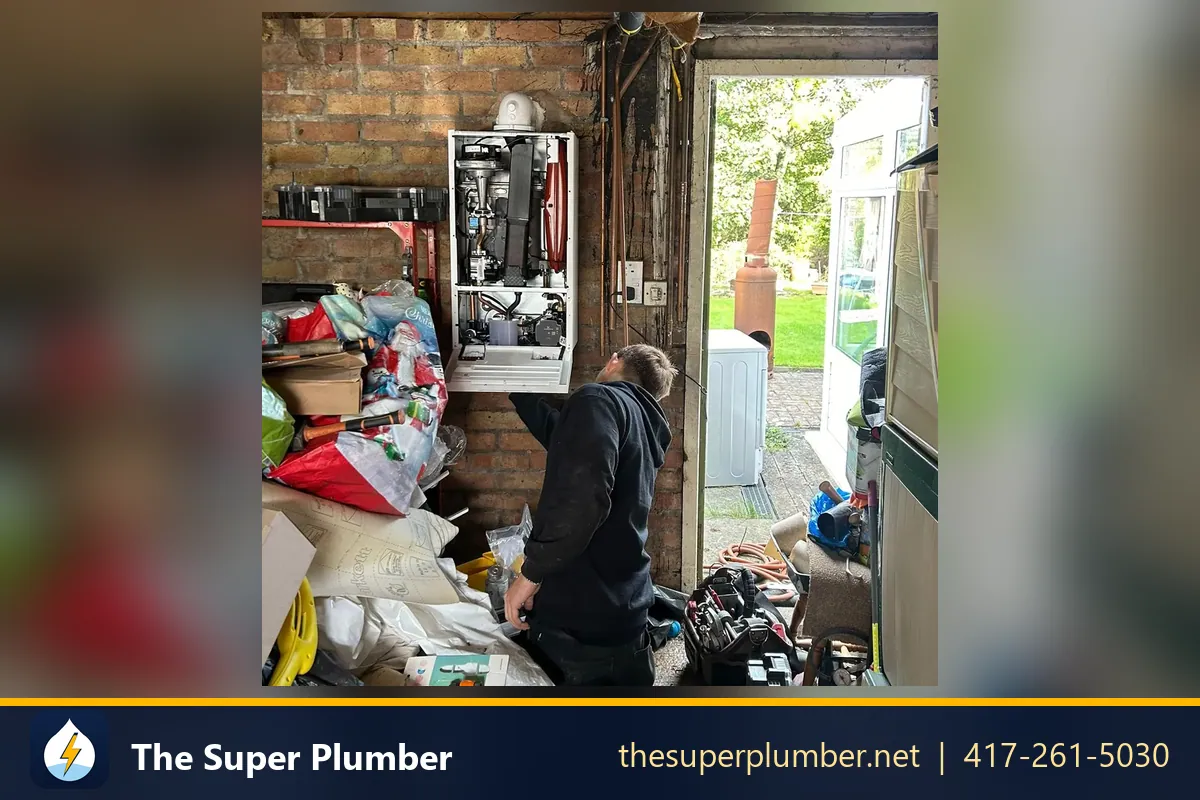
The tankless water heater installation and cost covers the broad decision. Here is the propane-specific work.
- Confirm the propane supply: tank size, regulator, line size and distance.
- Choose a location that allows venting and access.
- Mount the unit and connect the water lines with isolation valves for future flushing.
- Run the gas line and connect with an approved fitting and shutoff.
- Install the vent, condensate drain and any required power or outlet.
- Test for gas leaks, verify ignition, set the temperature and check flow.
Permits and code
- Gas connection and vent work often need a permit
- Inspectors commonly look at clearances, vent termination and shutoff access
- Keep the paperwork for warranty claims and for a future home sale
Gas appliance and vent work often requires a permit and inspection. Ask the plumber how the permit is handled. For related work on a general water heater installation, the basics of connections and code apply to tankless too.
When you are replacing a tank
If you are converting from a tank, ask about water heater replacement planning: old gas piping may be too small, the flue may not suit a tankless vent, and the space may need to be reworked.
Have a plumbing problem right now? Call and describe it.
Call 417-261-5030Safety With Propane
Propane is heavier than air and pools at low points, so a leak can gather in a basement or crawlspace. Any smell of gas, often described as rotten eggs, means leave right away.
If you smell propane
- Leave the building immediately, with everyone including pets
- Do not use switches, phones, lighters or flames inside
- Call the propane supplier's emergency line or 911 from outside
- Stay out until a professional says it is safe
Learn more about gas leak detection and detectors, and install a carbon monoxide alarm near any fuel-burning appliance.
Homeowner-safe checks
You can look at the vent termination for snow, nests or debris, keep the area around the unit clear, and check that the tank level is above empty. Do not adjust regulators, open gas fittings, or open the burner compartment.
Where Propane Tankless Heaters Make the Most Sense
Propane tankless units earn their place where natural gas is not available and electricity alone would be a heavy load. The same hardware behaves differently depending on the property.
Rural homes and farms
Many rural houses already have a propane tank for the furnace or stove, so a tankless unit can share that supply. The plumber will check that the tank, regulator and line together can handle furnace, range and water heater demand at once. A well and septic property adds another consideration: well water is often hard or carries sediment, which shortens the life of a heat exchanger without a filter or softener. Pump and well issues are covered under sump and well pump repair.
Cabins, garages and additions
- A detached garage or workshop may need only a small amount of hot water, and an outdoor unit avoids running a vent through the building
- Seasonal cabins need a drain-down plan for winter, since standing water in a wall-mounted unit can freeze
- An addition or basement bathroom may be too far from the main tank, so a dedicated unit removes a long wait for hot water
- A bathroom remodel is a natural time to decide where the heater goes and how the vent will run
Homes with high hot water demand
Big soaking tubs, body sprays and multiple showers can outrun a single small unit. Two units in a linked arrangement, or a large tankless water heater, spreads the load. A plumber can explain how each option affects your gas line.
Propane Tankless Compared With Other Choices
The right water heater depends on fuel, budget for installation, and how you use hot water.
- Against a propane tank heater: tankless avoids standby losses and frees floor space, but it costs more up front and needs a bigger gas supply
- Against an electric tankless: propane needs venting and a fuel supply, while electric may need a big new circuit; see the electric tankless option for that trade
- Against a heat pump tank: heat pump models need space and warmth, and are not tied to propane at all
- Against a small unit at the sink: a point of use water heater fixes one far fixture, but not a whole house
Cost factors, not numbers
Propane tankless jobs vary by unit size, gas line length and diameter, vent type and length, condensate handling, whether a new outlet is needed, permit fees and how hard the wall is to access. The plumber cost overview explains how labor and materials add up, and quotes are confirmed by phone.

Repair and Maintenance
Propane tankless units need periodic descaling and inspection. Hard water builds scale in the heat exchanger, which reduces flow and can trigger error codes. Diagnostics and service are covered under tankless water heater repair.
Common issues in propane units
- Lukewarm or fluctuating water, often from flow restriction or a supply issue
- Error codes tied to ignition, flame sensing or venting
- Loud ignition or a smell of exhaust
- Reduced flow from scale or clogged inlet filter
- Freeze damage in an outdoor unit during a cold snap
Yearly care
- Flush the heat exchanger on the schedule your plumber suggests
- Clean the inlet screen so flow stays steady
- Inspect the vent termination for snow, nests and debris
- Check the propane tank level and regulator at each delivery
- Note any new error code, noise or smell and mention it to the plumber
Ready to get a quote? Availability and pricing are confirmed by phone.
Call 417-261-5030Efficiency, Running Costs and Whether It Is Worth It
Tankless units avoid standby heat loss, since there is no tank to keep warm, so they can use less fuel in homes with modest hot water use. Propane tankless heater running costs depend on propane prices where you live, how much hot water you use, and how efficient the unit is. Do not rely on a generalized savings figure; compare the efficiency labels and your own delivery history.
Comfort trade-offs
- Hot water does not run out on a long shower unless demand exceeds the unit's flow
- Very small draws may not trigger the burner, so brief cool spells between short uses can happen
- Winter incoming water is colder, so the same unit delivers less flow than in summer
- Startup takes a few seconds, so distant fixtures still wait for the pipe to clear
Water is never stored, so you can run out only if demand exceeds the unit's flow capacity. A very small draw may not trigger the burner, so you might get a brief cold sandwich effect between hot flows in some homes.
Best fit
A propane tankless heater is a good fit for a home that already uses propane, has room for venting, and wants continuous hot water. It is a poorer fit where propane deliveries are unreliable or the gas line would need major upgrades.
Questions People Often Ask Before Buying
Is propane more expensive than electricity?
Running cost comparison matters more than sticker price, so ask for both. It depends on local rates. Propane can be cost-effective in places where electricity is expensive, and less so where power is cheap. An installer or your propane supplier can help compare based on your actual bills.
Can I convert a natural gas unit to propane?
Often only with the manufacturer's approved conversion kit and a professional to set it up. Do not modify orifices or valves yourself.
Should I get a plumber's opinion before buying?
Yes. Ask a plumber who handles tankless and gas work to look at your fuel line, vent path and water quality before you order. That avoids buying a unit your house cannot support. For emergencies with a failed unit, see emergency plumbing.
Where You Can Get Propane Tankless Water Heater Installation & Repair Help
Plumbing calls are taken for 21 states, 1,511 cities and 3,769 ZIP codes. Pick your state, or look at a sample city and ZIP for each state; coverage for your exact address is confirmed by phone.
- Arizona
- California
- Colorado
- Connecticut
- Florida
- Georgia
- Idaho
- Illinois
- Maine
- Massachusetts
- Michigan
- Minnesota
- Missouri
- New Hampshire
- New Jersey
- New York
- North Carolina
- Ohio
- Texas
- Virginia
- Washington
| City | ZIP codes and places |
|---|---|
| Gilbert, AZ | 85233 about 5 miles from Mesa Arts Center; about 6 miles from Wilkes University, Mesa 85234 about 5 miles from Mesa Arts Center; about 6 miles from Wilkes University, Mesa |
| San Diego, CA | 92102 about 1.8 miles from Balboa Park; about 2.1 miles from Petco Park 92103 about 1 mile from San Diego Zoo; about 1.3 miles from San Diego Museum of Art |
| Longmont, CO | 80501 about 3.4 miles from Vance Brand Airport; about 11 miles from Colorado National Speedway 80503 near Vance Brand Airport; about 11 miles from Naropa University |
| Greens Farms, CT | 06436 about 7 miles from Aldrich Contemporary Art Museum; about 8 miles from Western Connecticut State University 06838 about 2.2 miles from Westport Country Playhouse; about 4.2 miles from Rafferty Stadium |
| Fort Lauderdale, FL | 33308 about 2.6 miles from Fort Lauderdale–Hollywood; about 2.6 miles from Museum of Discovery and Science 33309 near City College; about 1.1 miles from Chase Stadium |
| Marietta, GA | 30006 near Strand Theatre; about 1.9 miles from Southern Polytechnic State University 30007 about 2.3 miles from Georgia Military Institute; about 2.9 miles from Southern Polytechnic State University |
| Meridian, ID | 83642 about 6 miles from Idaho Aquarium; about 10 miles from Idaho Central Arena 83646 about 8 miles from Idaho Aquarium; about 9 miles from Northwest Nazarene University |
| Chicago, IL | 60601 near St. Regis Chicago; near Maggie Daley Park 60602 near Tribeca Flashpoint Media Arts Academy; near Chicago Opera House |
| Cape Neddick, ME | 03902 about 2.5 miles from York's Wild Kingdom; about 2.9 miles from Ogunquit Museum of American Art |
| Litchfield, MA | 02464 about 1.4 miles from Crystal Lake; about 1.5 miles from William James College 02479 near McLean Hospital; about 2.8 miles from Harvard–Smithsonian Center for Astrophysics |
| Clinton Township, MI | 48035 about 8 miles from Jimmy John's Field; about 14 miles from Lake Saint Clair |
| Maple Plain, MN | 55359 about 7 miles from Crown College; about 7 miles from Lake Minnetonka |
| O Fallon, MO | 63366 about 4.9 miles from Midwest University; about 6 miles from Wentzville Ice Arena 63368 about 8 miles from Midwest University; about 8 miles from Wentzville Ice Arena |
| Atkinson, NH | 03811 about 5 miles from Canobie Lake Park; about 6 miles from Rockingham Park |
| Newark, NJ | 07101 near Newark Velodrome; about 1.2 miles from Seton Hall University 07102 near Newark City Hall; near Prudential Center |
| Mill Neck, NY | 11765 about 2.6 miles from Piping Rock Club; about 4.8 miles from Cold Spring Harbor Laboratory |
| Davidson, NC | 28035 near Davidson College; about 4.9 miles from Lake Norman 28036 about 3 miles from Davidson College; about 8 miles from Lake Norman |
| Springfield, OH | 45501 near Wittenberg University; about 2.3 miles from Clark State College 45502 near Wittenberg University; about 2 miles from Clark State College |
| Plano, TX | 75023 about 2.1 miles from John Clark Field; about 4.9 miles from University of Texas at Dallas 75024 about 1 mile from Children's Medical Center at Legacy; about 2.6 miles from Riders Field |
| Newport News, VA | 23601 about 1.5 miles from The Mariners' Museum; about 1.6 miles from Virginia Living Museum 23603 about 1.1 miles from Endview Plantation Historic Site; about 4.2 miles from Busch Gardens Williamsburg |
| Tacoma, WA | 98402 near Tacoma Art Museum; near University of Washington Tacoma 98403 near Stadium Bowl; about 1.2 miles from University of Puget Sound |
Frequently Asked Questions
How does a propane tankless water heater work?
When you open a hot tap, a flow sensor triggers the fan and burner, and propane combustion heats the water as it passes through a heat exchanger. When you close the tap, the burner stops. Because there is no storage tank, the unit delivers hot water continuously as long as demand stays within its capacity and the gas supply keeps up.
Do propane tankless water heaters need electricity?
Yes, in most cases. The control board, fan, igniter and sensors run on electrical power, so a power outage typically shuts the unit down even if propane is available. Some homeowners add a backup power source. Ask the installer what the unit needs and whether battery or generator backup is an option.
Can a propane tankless water heater be installed outdoors?
Yes, outdoor-rated models are built for exterior walls. They save interior space and simplify venting, but they need freeze protection in cold climates and a power connection. Check local code for clearances from windows, doors and property lines before choosing a spot.
What is the difference between natural gas and propane tankless units?
The burner orifice, gas valve setting and supply pressure differ. Some models are sold for one fuel only, and others need an approved conversion kit. Running the wrong fuel is unsafe. Always tell the installer which fuel you have and confirm the rating plate matches.
Why does my propane tankless heater turn off or run cool?
Common causes include an undersized gas line or regulator, a low propane tank, scale in the heat exchanger, a blocked vent, or flow that exceeds the unit's capacity. Error codes on the display help a technician narrow it down. If you smell gas, leave the building and call the supplier or 911 from outside.
How big of a propane tankless water heater do I need?
It depends on peak flow and how much the water needs to be heated. Add up fixtures that might run together and consider your coldest incoming water temperature. Homes with several bathrooms may need a larger unit or two. A plumber can size it and check that your propane supply can feed it.
Do I need a special vent for a propane tankless unit?
Usually yes. Indoor units typically use sealed venting through a wall or roof, and condensing models use plastic vent pipe and a condensate drain. The vent material and length must match the manufacturer's instructions and local code.
How long does a propane tankless water heater last?
Life depends on water quality, maintenance and usage. Descaling in hard water areas and yearly inspection help. Manufacturers give warranty terms, but they do not predict how long your specific unit will last.
Is it safe to use a propane tankless heater in a mobile home or cabin?
It can be, if the unit is approved for that setting and vented correctly. Outdoor models are often used at cabins. Always confirm the product label and code requirements, and use a carbon monoxide alarm.
Should I flush a propane tankless water heater?
Yes, periodically. Flushing with a descaling solution removes mineral buildup from the heat exchanger. The frequency depends on water hardness and use, and isolation valves on the water lines make the job easier for a plumber.
Ready to talk to a plumber? Call 417-261-5030.
Call 417-261-5030