Quick links
- Water Heater Repair in San Diego, CA: What Gets Repaired Before You Call
- Emergency Water Heater Repair in San Diego: What Cannot Wait
- Tankless Water Heater Repair in San Diego, CA: Error Codes, Scale, and Flow Faults
- Tank Water Heater Repair in San Diego: Sediment, Anode Rods, Leaks, and Weak Heat
- Gas Water Heater Repair in San Diego, CA
- Electric Water Heater Repair in San Diego, CA
- Brand-Specific Water Heater Repair in San Diego: Bradford White, Rheem, and Others
- Solar Water Heater Repair in San Diego
- Commercial Water Heater Repair in San Diego
- Water Heater Installation and Replacement in San Diego: When Repair Stops Making Sense
- Water Heater Maintenance in San Diego
- What Affects Water Heater Repair Cost in San Diego
- San Diego ZIP Codes for Water Heater Repair
- What to Expect on a Water Heater Repair Visit
- Call First: Water Heater Repair in San Diego
- ZIP Codes We Serve in San Diego
- Related Plumbing Help
- Frequently Asked Questions
Water heater repair San Diego CA covers every San Diego ZIP code and Coronado, and it spans tank, tankless, gas, electric, solar and commercial heaters. If your hot water has stopped, is leaking or smells wrong, call 417-261-5030. The background reading here is general; availability, pricing and response time are confirmed by phone, never assumed in advance.
What follows explains what actually gets repaired, how a plumber diagnoses a heater, what to say when you phone, and which problems cannot wait. Use it to describe your situation clearly, then let the phone team confirm what applies to your address.
Water Heater Repair in San Diego, CA: What Gets Repaired Before You Call
Most heater problems fall into a few families: no heat, weak heat, leaks, noise, odd smells and safety devices that trip. Knowing which family you are in makes the call faster and more useful.
Residential Water Heater Repair in Houses, Condos, and Apartments
Residential repair means fixing the heater you already own: a gas or electric tank, a tankless unit, or a solar-assisted system. In a coastal city like San Diego, heaters sit in garages, hallway closets, attics and condo utility closets, and the location changes the job. A garage unit is easy to reach; an attic or tight closet unit may need more time and care. Condo and apartment owners also deal with shared shutoffs and building rules, so ask who controls the water and gas supply before anyone opens a valve. Marine air can corrode exterior fittings and vents near the water, which is a common reason older water heaters develop leaks or poor draft.
Water Heater Diagnosis: What a Plumber Checks First
A good diagnosis starts with the fuel and the symptom, not with replacing parts. A plumber commonly checks the following, in roughly this order:
- Whether the gas, power and cold water supply are actually on to the unit.
- Thermostat settings, heating elements or burner operation, and any status light or blink code.
- Venting, air intake and the area around the heater for lint, rust, scorching or moisture.
- The temperature and pressure relief valve, its discharge pipe and the expansion tank.
- Visible leaks at fittings, valves and the tank itself.
Gas, venting, combustion and electrical testing are plumber-only work. Homeowners can safely read the label, note error codes and take photos. That information often decides whether a plumbing repair is enough or the unit is nearing the end of its life.
What to Tell the Phone Team About Your Water Heater
The phone team can only help if the call carries three details, and having them ready shortens the conversation.
- San Diego plus the physical street address and ZIP. Many ZIPs are unique or special-use, so the street address matters more than the ZIP alone. For example, ZIP 92109 (Pacific Beach, about 2.3 miles from SeaWorld San Diego) is a regular residential area, but the address still decides coverage.
- The symptom or error code: no hot water, lukewarm water, a leak, a noise, a smell, or the exact code on the display.
- The heater itself: brand, model, approximate age, fuel type (gas, electric or solar), where it sits (garage, closet, attic, roof) and whether you have shut anything off.
Photos of the rating label and any leak help a great deal. Ask whether a fee applies and what it covers before approving work, and read up on plumber cost factors.
Emergency Water Heater Repair in San Diego: What Cannot Wait
People search for an emergency plumber or a 24 hour plumber when a heater fails badly, but availability is confirmed when you phone. This section separates true emergencies from problems that can wait for a normal visit.
No Hot Water, Sudden Cold Showers, and a Heater That Stopped
A heater that suddenly stops making hot water is urgent for comfort but rarely dangerous, so a few checks are reasonable before calling. On an electric unit, look at the breaker; on a gas unit, see whether the pilot or display is lit, and read the label before touching anything. If the pilot is out and you smell no gas, the label may explain how to relight it. Repeated outages point to a failed thermostat, element, thermocouple or gas control, which a plumber should test. A tankless heater that goes cold mid-shower may be showing a flow or scale problem. Note any code and call 417-261-5030 with it.
Water Heater Leaking or Flooding: Source and First Steps
A leaking water heater is an emergency when water is pooling, and the source decides the fix. Water at a fitting, valve or pipe connection is often repairable. Water from the tank shell or the bottom seam usually means the tank has failed and needs replacement. First steps are simple and safe:
- Turn off the cold water supply valve on the pipe above the heater.
- Switch off the electric breaker, or set a gas control to its off or pilot position only if the label says so.
- Move belongings away and start drying the area.
- Photograph the leak and the rating label.
Do not open the tank or work on pressurized lines. If water is spreading, the leak repair side of the call becomes just as important as the heater.
Gas Smell, Burning Smell, and Pressure Relief Valve Discharge
A smell of gas is the one symptom that overrides everything else: leave the building, touch no switches and strike no flames, and call the gas utility or 911 from outside. SDG&E is the usual gas and electric utility, so check with your utility. Do not relight a pilot if you smelled gas. A burning smell is often dust or lint scorching near the burner or insulation, but have it checked. Water dripping from the relief valve pipe can mean high pressure or thermal expansion; it should not be capped. Learn more about gas leak detection and gas plumbing before an emergency happens.
When to Shut the Heater Down and What to Do Before the Plumber Arrives
Shut the heater down when there is an active leak, a gas smell, scorching, a relief valve that keeps discharging, or any sign of overheating. Close the cold water inlet, turn off the electric breaker, and leave gas shutoff to the label or the plumber. Keep hot taps closed on a leaking unit and keep children and pets away from hot discharge water. Gather the model label, a photo of the problem and the street address and ZIP. Call 417-261-5030 and ask what the phone team can confirm; for background on urgent calls, see emergency plumbing and what a plumber in San Diego will ask you.
Need a plumber in your area? Call to confirm coverage.
Call 417-261-5030Tankless Water Heater Repair in San Diego, CA: Error Codes, Scale, and Flow Faults
Tankless units heat water on demand, so most faults trace back to flow, scale, gas, venting or a sensor. This section explains each failure pattern so you can describe it clearly, and shows where tankless water heater repair moves from homeowner checks to plumber-only work.
How a Tankless Water Heater Works and Where It Fails
A tankless water heater senses water flow, fires a burner or energizes elements, and passes the water through a heat exchanger. Failures cluster in the flow sensor, igniter, flame sensor, exhaust path and the heat exchanger itself.
Gas units depend on a steady gas supply, a clear intake and exhaust path, and a condensate drain in condensing models. Electric units depend on adequate breaker capacity and element condition; the electric tankless water heater overview shows how they differ. Propane units add regulator and supply questions. Many San Diego units sit in garages, closets or exterior walls, and marine air near the coast can corrode vent terminations and fittings. Tell the phone team where the unit is mounted and which fuel it uses.
Tankless Water Heater No Hot Water or Cold Water Sandwich
A tankless heater that gives no hot water usually has a tripped safety, a flow problem, a lost gas or power supply, or a scaled heat exchanger. A cold water sandwich is a short burst of cold between two hot spells.
The sandwich happens when you shut a tap briefly and reopen it: water left in the pipe cools, then the unit restarts. Brief low-flow use may also fall below the minimum flow the unit needs to fire. A plumber checks the display, flow rate, inlet screen, gas supply and whether a recirculation setup is involved. Simple first steps are confirming the gas valve and power are on, and trying a higher flow at one fixture. If the unit keeps shutting off, stop and call.
Error Codes, Ignition Failure, and Flame Faults
A tankless error code is the unit telling you which system failed, and the same number can mean different things by brand. Read the code and the model label before anyone guesses.
Ignition and flame faults often come from a dirty flame sensor, a weak igniter, low gas pressure, a blocked intake or exhaust, or a failed control board. Do not open the cabinet or reset repeatedly if the code returns, because repeated lockouts can mask a gas or venting problem that only a plumber should test. If you smell gas, leave the building, avoid switches and flames, and call the gas utility or 911 from outside; gas leak detection is a separate, urgent matter. When you call 417-261-5030, give the code, the model and what the unit did just before it stopped.
Flow Sensor, Inlet Screen, and Low-Flow Problems
If a tankless heater will not fire at a low-flow tap, the flow sensor or inlet screen is often the cause. The unit needs enough moving water to confirm demand before it ignites.
Debris or scale can clog the inlet screen, and a fouled flow sensor may read wrong even with good pressure. Low-flow aerators, a partly closed isolation valve and a pressure drop elsewhere in the house can all mimic a faulty unit. A plumber compares flow at several fixtures, cleans or replaces the screen and tests the sensor. Cleaning the screen means shutting off water and handling connections, so many owners leave it to a plumber. Say which fixtures are affected, because a problem at only one shower points elsewhere.
Heat Exchanger Scale and Hard Water in San Diego
Scale on the heat exchanger is the most common slow failure in tankless units, and hard water is common across the region. Minerals insulate the metal, so the unit works harder and may overheat or throw codes.
Signs include lukewarm output, longer warm-up, rumbling or whistling, and temperature-related error codes. Water hardness varies by neighborhood and supply, so ask a plumber what to expect for your address. Heavy scale cuts flow through the exchanger and can lead to a leak if left alone. A water softener or scale-reduction setup may help in some homes, but whether it suits your unit is a question for a plumber. Mention how long the unit has run and whether it was ever flushed.
Venting, Intake, Condensate Trap, and Gas Supply Problems
Tankless units need clean combustion air in and exhaust out, and a blocked path can trigger a lockout. Condensing models also drain acidic condensate through a trap that can clog.
A plumber checks the termination for nests, debris, corrosion and loose joints, then inspects the condensate trap and drain line. Gas supply matters too: a tankless unit draws a large burst of gas, so an undersized line or a failing regulator can cause ignition faults. A line upgrade falls under gas line installation and belongs to a plumber. Never block or alter a vent yourself. Tell the phone team whether the vent runs through a wall or the roof.
Tankless Water Heater Leaks and Isolation Valve Faults
A leak at a tankless heater most often comes from a fitting, an isolation valve, the condensate line or a cracked heat exchanger. Where the water appears tells a plumber a lot.
Isolation valves allow flushing and service, and their seals can weep over time. Water near the bottom may be a fitting, the relief valve or condensate, while a leak from inside the cabinet could mean a failed exchanger. Shut off water to the unit if you can reach the valve safely, and do not touch wet electrical parts. For a slow hidden drip, leak detection can help find the source. Send photos and note where the wetness shows up.
Tankless Descaling and Flushing: When It Helps
Descaling helps when mineral buildup is behind lukewarm output, noise or scale-related codes. It will not fix a failed igniter, a bad sensor or a blocked vent.
Flushing circulates a descaling solution through the heat exchanger using the isolation valves, and how often depends on water hardness and use, so ask a plumber. On a heavily scaled unit, it may expose leaks that scale was hiding. On a unit with no scale symptoms, it will not solve the real problem. If the unit has never been flushed, say so on the call, because that history changes the diagnosis.
Tankless Repair or Replacement: How to Decide
Repair usually makes sense for a sensor, igniter, screen, trap or valve fault on a unit that otherwise runs well. Replacement is worth discussing when the heat exchanger has failed or repairs keep recurring.
Weigh age, repeated codes, parts availability, scale damage and whether the install still meets current code. If you are comparing options, tankless water heater cost factors and water heater replacement choices are worth reading first. Ask the plumber to explain what failed and what else is likely to follow. To start, call 417-261-5030 with San Diego, your street address and ZIP, the error code, and the brand, model and fuel type.
Tank Water Heater Repair in San Diego: Sediment, Anode Rods, Leaks, and Weak Heat
A storage tank heater is a steel tank with a heat source, a dip tube, an anode rod, and safety valves. Most San Diego tank problems trace back to sediment, worn parts, or a small leak that grew.
Not Enough Hot Water or Slow Recovery
Slow recovery usually means the heater is losing heating capacity, not that the tank is too small. Sediment on the tank floor insulates the burner or lower element, so water heats slowly and runs out fast. A cracked dip tube sends cold water straight to the outlet, which gives lukewarm showers. A failed element or thermostat can leave only part of the tank hot.
A plumber commonly checks:
- Whether the tank is hot at the top and cool near the bottom
- Element and thermostat function, or burner and gas control behavior
- Whether household demand has grown
A flush may restore capacity, but a heavily scaled old tank often points toward water heater replacement.
Leaking From the Top, Bottom, or Fittings
Where the water appears tells you whether the leak is repairable. Dripping at the top often comes from loose supply connections, a corroded dielectric union, or a weeping relief valve, and these are commonly fixable. Water at the base can be a failing drain valve or an element gasket. If the tank shell or bottom seam is the source, the inner tank has corroded through and replacement is the real fix.
Do not tighten fittings on a hot tank. Shut the cold supply valve, turn off power or gas, and contain the water. Marine air near the coast can corrode exterior fittings and vents. For active flooding, an emergency plumber call comes first, and leak detection can trace hidden water loss.
Rumbling, Popping, and Sediment Buildup
Rumbling or popping is steam bubbles escaping through a layer of hardened sediment. Hard water is common in the San Diego region, and minerals settle on the tank floor over time, trap water against the burner or element, and stress the steel.
What a plumber does:
- Confirms the noise pattern and recovery time
- Flushes the tank through the drain valve
- Tests the drain valve for a clean shutoff afterward
- Advises whether the tank is too far gone to flush safely
Heavy sediment can plug a drain valve or leave one that leaks once opened, so a neglected flush is better left to a plumber. Describe the noise and heater age on the phone.
Rusty Hot Water, Rotten Egg Smell, and the Anode Rod
The anode rod is a sacrificial metal rod that corrodes so the tank steel does not. When it is used up, the tank corrodes and the water can turn rust colored or smell of sulfur, often from bacteria reacting with the rod in warm water.
Run the cold tap to separate causes. Rust in both hot and cold usually points to supply piping, while rust only in hot water points to the heater. A plumber may replace the rod if steel is left to save, or sanitize and flush the tank. A tank already pitting inside is not saved by a new rod. Tell the phone team which taps show the discoloration, and see water heaters for the wider options.
Temperature and Pressure Relief Valve and Expansion Tank Problems
The temperature and pressure relief valve, or T&P valve, opens when the tank gets too hot or the pressure climbs too high. A drip can mean thermal expansion, high household pressure, a failing thermostat, or a worn valve seat. Never cap it or plug the discharge pipe.
Thermal expansion happens when heated water has nowhere to go in a closed system, and an expansion tank absorbs the extra volume. A waterlogged or missing one often shows as repeated drips or banging pipes. A plumber checks static pressure, the tank charge, the valve, and the thermostat. A valve that discharges steadily with very hot water is urgent: shut off fuel or power and call with the heater age.
Gas Water Heater Repair in San Diego, CA
Gas heaters add a burner, a gas control valve, a flue, and combustion air. Gas, venting, and combustion work are plumber-only. If you smell gas, leave the building, avoid switches and flames, and call the gas utility or 911 from outside.
Pilot Light Keeps Going Out: Thermocouple, Draft, and Gas Control
A pilot that will not stay lit is usually a worn thermocouple or thermopile, a draft problem, or a gas control that is not holding. The thermocouple is a probe in the pilot flame that tells the gas valve a flame exists. When it weakens, the valve closes and the pilot dies.
A garage draft, dirty pilot tube, loose wire, or failing control can do the same. Relight only per the label and only with no gas odor. If it will not stay lit after a normal attempt, stop and have a plumber test the output and the control. Give the phone team the make, the model label, and whether the pilot dies immediately or later.
Burner, Ignition, and Flammable Vapor Lockout Problems
When the burner will not fire, the cause is often an ignitor, flame sensor, gas supply, or a safety lockout. Many Rheem and Bradford White gas tanks use a flame arrestor and air inlet that can clog with lint and dust, and the heater then locks out as a safety response.
Gas control valves often blink a status code, and patterns vary, so read the label instead of guessing. A plumber cleans the arrestor, checks the ignitor and flame sensor, and confirms the control is sound. Keep paint and cleaners away from the heater. Tell the phone team how many flashes you see. A gas plumbing visit may follow if the supply is suspect.
Venting, Backdrafting, and Gas Supply Checks
Backdrafting means combustion gases spill into the room instead of leaving through the flue. Signs include soot at the draft hood, a rolling flame, a scorched smell, or a pilot that blows out. Causes include a blocked or loose flue, a poor vent slope, or negative pressure from exhaust fans.
Soot, headaches, or a CO alarm are an emergency: ventilate, leave, and call emergency services. A plumber checks vent connections, the gas shutoff, the flex connector, and supply sizing. Suspected leaks call for gas leak detection, and undersized supply may need gas line installation. To start, call 417-261-5030 with your address, ZIP, symptom, and heater location.
Electric Water Heater Repair in San Diego, CA
Electric tanks use two heating elements, two thermostats, and a high-limit safety switch. This is line-voltage wiring in a wet setting, so diagnosis beyond a breaker check belongs to a plumber.
Heating Elements, Thermostats, and the High-Limit Reset
A failed element or thermostat is the most common reason an electric heater gives little hot water. The upper element heats the top of the tank first, then the lower finishes the job. If only the lower fails, you run out fast; if the upper fails, you often get almost nothing.
The high-limit switch trips on overheating and has a reset behind the access panel. Do not open that panel: power must be off and a plumber should test for voltage first. A repeat trip points to a stuck thermostat or shorted element. Tell the phone team the heater age and whether the water is cold or lukewarm.
Tripped Breakers, Loose Connections, and Wiring Faults
A breaker that trips again right after reset signals a shorted element, ground fault, or damaged wiring. Do not keep resetting it, because repeated resets can overheat wire. Burned terminals, scorch marks, or buzzing suggest a connection fault.
Heaters in garages, closets, and attics can collect dust and moisture that contribute to wiring trouble. A plumber checks the breaker rating against the nameplate, tests the elements, and inspects terminals, and may advise bringing in an electrician. Check with your utility if electric service shows problems elsewhere. Tell the phone team which breaker trips and how fast.
Electric Water Heater Leaks and Temperature Swings
Leaks on electric tanks often come from element gaskets, T&P valve fittings, or the tank itself. Water at an element access panel can trip a breaker and create a shock hazard, so keep away and shut off power at the panel only if it is safe.
Hot-then-cold cycles may point to a broken dip tube or a thermostat that no longer holds its setting. Scalding risk rises with a high setting, so use a moderate temperature. A plumber confirms whether the shell is intact, replaces gaskets and elements, and tests the thermostat. A shell leak means replacement. For wider water loss, ask about leak repair and describe where the water appears.
Have a plumbing problem right now? Call and describe it.
Call 417-261-5030Brand-Specific Water Heater Repair in San Diego: Bradford White, Rheem, and Others
Most heaters in San Diego garages, closets, and attics wear a familiar nameplate, and each family of units tends to fail in recognizable ways. These are units homeowners may already own, not endorsements; the label on yours is what matters.
Bradford White Gas and Electric Water Heater Repair
A Bradford White heater that will not stay lit is commonly a weak pilot signal, a worn thermopile, or a loose wire connection, and a plumber tests those before replacing parts. Many gas models use the ICON System, which pairs a millivolt gas control with a pilot, a thermopile, a built-in igniter, and flash diagnostics that blink a pattern when something is wrong.
- Note how many times the light flashes and the pause between groups; patterns differ by model, so read the label.
- Electric models usually come down to a heating element, a thermostat, or the high-limit reset.
- Flame arrestor lint can trigger a flammable-vapor lockout on gas units.
Gas and electrical work stays with a plumber.
Rheem, A. O. Smith, and State Tank Problems
Rheem gas tanks commonly lock out when lint clogs the flame arrestor or air inlet, which is a safety response to flammable vapors, and the gas control valve usually blinks a status code.
A. O. Smith and State tanks share a different set of complaints: sediment rumbling, a worn anode rod, a leaking drain valve, and discharge from the temperature and pressure relief valve. A leak at a fitting or valve can often be repaired. Water seeping from the tank shell or the bottom seam generally means the tank has failed and replacement is the realistic path, so an older unit may be a candidate for water heater replacement.
Navien, Rinnai, and Noritz Tankless Faults
Navien, Rinnai, and Noritz tankless units fail in a handful of repeatable ways: scale on the heat exchanger, flow sensing that misreads low demand, error codes, blocked intake or exhaust, a clogged condensate trap, and ignition faults. Hard water is common around the region, so scale is a frequent suspect when output drops or a code returns after a reset.
Write down the code exactly as the display shows it and the model on the label; never guess at a code. Isolation valves make flushing possible, and a plumber decides whether flushing, a part, or a bigger fix is the answer. Details live in tankless water heater repair, and fuel choices are covered under propane tankless options.
Bosch, Takagi, and American Standard Units
Bosch and Takagi tankless units show the same general faults as other tankless heaters: scale, flow trouble, venting restrictions, and ignition faults. For these, read the display code and the model on the label and pass both to the phone team, because a plumber needs them before diagnosing anything.
American Standard heaters, whether tank or tankless, tend to follow the same failure patterns as their category: sediment, thermostats, and relief valve discharge on tanks, scale and flow faults on tankless.
Bring the Model Label: What the Phone Team Needs
The model label is the single most useful thing you can read before calling, because brand, fuel, capacity, and age all sit on it. Take a clear photo with your phone, including the serial number area. Then have these ready:
- San Diego, the street address, and the ZIP, such as ZIP 92109 (Pacific Beach, about 2.3 miles from SeaWorld San Diego).
- The symptom or error code, and what the heater did just before.
- Brand, model, approximate age, fuel type, and whether it sits in a garage, closet, attic, or on a roof.
- Whether the water, gas, or power to the unit is shut off.
Availability and pricing are confirmed by phone, so call 417-261-5030 with that label in hand.
Solar Water Heater Repair in San Diego
Solar thermal systems heat water with roof collectors and a storage tank, and plenty of sunny San Diego homes have one. Repairs touch plumbing, controls, and sometimes the roof, so ask whether your system type is one the phone team routes.
How Solar Thermal Hot Water Differs From Solar Panels
A solar water heater uses sun-warmed collectors to heat water or a heat-transfer fluid, while solar panels make electricity; the two are separate systems with separate repairs. If your roof has glass collector panels plumbed with pipes, you have thermal. If it has flat panels wired to an inverter, you have solar electric, and the heater in your garage or closet is a regular tank or tankless unit.
Collectors, Circulation Pumps, and Controller Problems
When a solar system stops delivering warm water, the usual suspects are the circulation pump, the differential controller, and the temperature sensors. The controller compares collector temperature with tank temperature and starts the pump when the collectors are warmer; a failed sensor or pump can leave the loop idle on a sunny day.
An air lock can also stall flow. A plumber checks pump operation, sensor readings, valves, and whether the backup heating is quietly doing all the work. Roof work is risky, so leave it to a plumber or a solar specialist rather than climbing up yourself.
Leaks, Heat Transfer Fluid, and Backup Heating
Leaks in a solar loop often start at fittings, valves, or the expansion tank, and a pressure and temperature relief valve may discharge when the loop overheats. Glycol-based systems lose heat-transfer fluid when they leak, and low fluid or pressure reduces performance; drainback designs depend on proper slope and an empty collector loop.
If the storage tank leaks from the shell, it needs replacement like any other tank. Give the phone team the system layout, the tank location, and any controller messages. For a stubborn hidden leak, leak detection may help locate it.
Commercial Water Heater Repair in San Diego
Restaurants, hotels, apartment buildings, and shops rely on hot water for daily operation, so a failed heater becomes a business problem quickly. Commercial equipment differs in size, fuel, and plumbing complexity from household units.
Restaurants, Hotels, and Apartment Buildings: Why Demand Differs
Commercial demand is higher, steadier, and more peaked than a house, so heaters are sized and plumbed differently.
Multi-unit properties may also rely on boilers or several heaters in a bank. General information on commercial plumbing explains how business calls are handled; the phone team confirms what applies to your building.
Commercial Tank, Tankless, and Banked Heater Faults
Commercial tank heaters fail much like household tanks but at larger scale: sediment, failed elements or burners, a worn anode, thermostat faults, and relief valve discharge. Commercial tankless units add scale, flow faults, error codes, and venting problems to the list.
In a banked arrangement, several heaters share the load, so one failed unit may only show as weak recovery at peak times. A plumber checks each unit, its gas or electric supply, and the expansion tank serving the system. Where fuel is involved, gas plumbing work stays with a plumber, and a gas smell means leaving the building and calling the gas utility or 911 from outside.
Recirculation, Mixing Valves, and Temperature Complaints
Temperature complaints in larger buildings often trace to the recirculation pump, a stuck check valve, or a failing mixing valve rather than the heater itself. Scald control matters, and Legionella-aware temperature management is worth raising with your plumber, who can describe what is commonly advised.
Backflow assemblies can also apply to some commercial systems; backflow preventer testing shows how that fits in.
Emergency Commercial Hot Water Loss: What to Have Ready
When hot water fails in a business, people ask for an emergency plumber or a 24 hour plumber, and availability is confirmed when you phone. Have these ready before you call:
- The business address and ZIP, and how a plumber gets into the building.
- The number of heaters, their capacity, brand, and fuel.
- Whether the loss is total, partial, or only at peak demand.
- Any codes, leaks, or relief valve discharge, and shutoff status.
Urgent situations are covered under emergency plumbing. Call 417-261-5030 with the building details and ask what the phone team needs next.
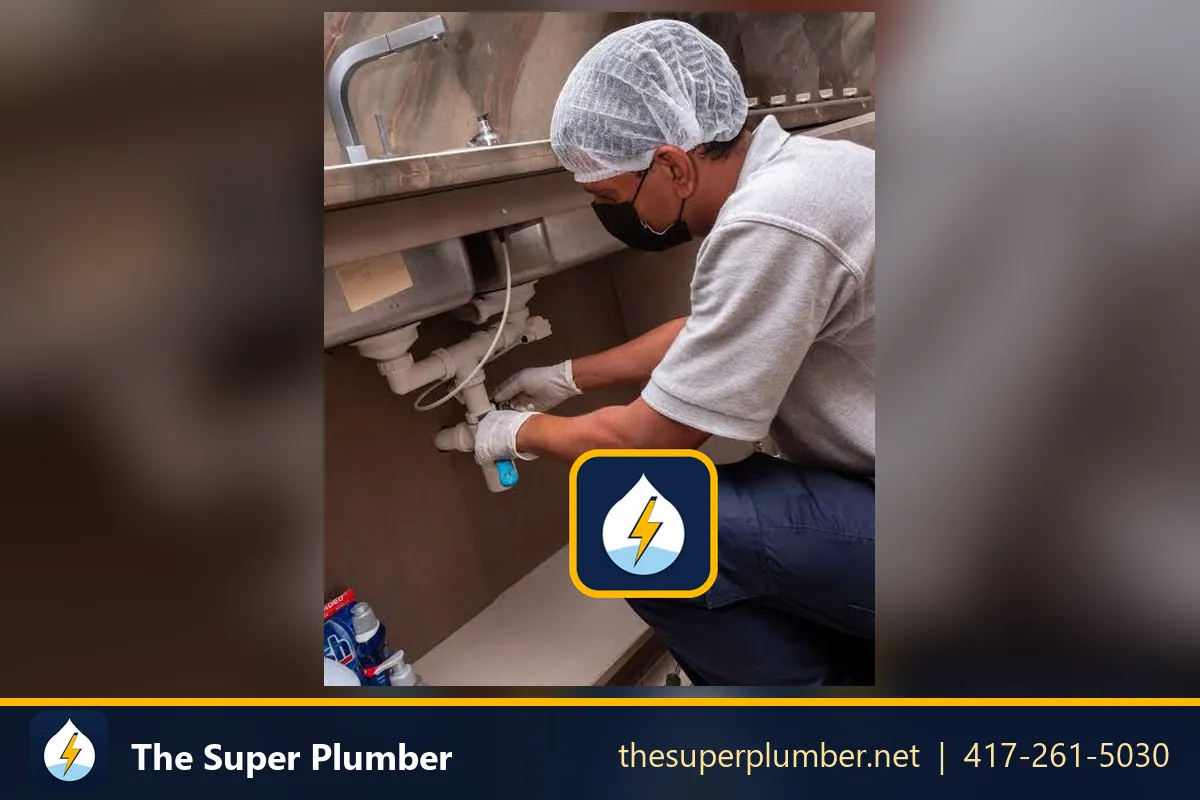
Water Heater Installation and Replacement in San Diego: When Repair Stops Making Sense
Some heaters are worth repairing and some are not. The deciding factors are the unit's condition, the fault, and what the next unit has to do for your household. Here is how that decision usually works.
Repair or Replace: A Decision Framework
Repair makes sense when the fault is a replaceable part and the tank or heat exchanger is sound. A bad thermostat, heating element, thermocouple, relief valve or igniter is usually a repair. A leak from the tank shell or bottom seam is different: that means the steel has failed, and water heater replacement is the normal answer.
Age, repeat failures, heavy corrosion at the fittings and an anode rod that was never checked all push toward a new unit. So does a heater that no longer matches the household. Ask the plumber which part failed, whether the part is available, and what else is likely to wear next. For a closer look at that path, read about water heater replacement.
Tank, Tankless, Heat Pump, Gas, or Electric: Choosing the Next Unit
The right unit depends on the fuel already in the home, available space, and how much hot water you use at once. A tank gives a stored supply and is simple to service. A tankless unit heats on demand, saves floor space, and needs adequate gas supply and venting. Heat pump models use electricity efficiently but need clearance and airflow, which can be hard in a tight closet.
Switching fuel types adds work, such as a new gas line or a larger electrical circuit. San Diego homes often keep heaters in garages, closets, attics or condo closets, and that location shapes the choice. Review the tankless water heater cost factors before deciding.
Sizing, Venting, Gas Line, Seismic Strapping, and Permits
A correct installation covers more than the heater itself. Sizing follows household size and the number of fixtures running together. Venting must match the unit type, and a gas heater needs a gas line sized for its load.
Items a plumber commonly reviews:
- Tank capacity or tankless flow rate for your fixtures
- Vent type, routing and clearances
- Gas line size, a proper shutoff and a flex connector
- Expansion tank and drain pan where needed
- Seismic strapping, commonly required in California
- Permit and inspection items; confirm with the City of San Diego and your plumber
Old-unit removal should be part of the scope. For the full process, see water heater installation, and for new gas runs see gas line installation. To discuss a replacement, call 417-261-5030 with your San Diego street address, ZIP, and the current unit's fuel, age and location.
Ready to get a quote? Availability and pricing are confirmed by phone.
Call 417-261-5030Water Heater Maintenance in San Diego
Maintenance is the cheapest way to avoid an emergency. The tasks differ for tank and tankless units, and hard water, which is common in the region, makes scale and sediment the main enemies.
Tank Flushing, Anode Rod, and Relief Valve Checks
Flushing a tank removes sediment that insulates the water from the burner or element and causes rumbling. A plumber drains part of the tank through the drain valve, checks that the valve still seals, and looks for rust at the fittings.
The anode rod is a sacrificial metal that corrodes so the tank shell does not. When it is mostly consumed, the tank itself starts to corrode, so it is worth inspecting. The temperature and pressure relief valve should also be tested by a plumber, since a stuck or weeping valve is a safety item. Homeowners should not open pressurized lines or work on gas or electrical parts. Ask the plumber to note the anode condition so you know what to expect next.
Tankless Descaling and Venting Inspection
Descaling dissolves mineral scale from the heat exchanger so a tankless unit can heat efficiently again. A plumber connects a pump and hoses to the isolation valves, circulates a descaling solution, then rinses and restores the valves.
The same visit is a good time to clean the inlet screen, check the condensate trap and inspect the intake and exhaust for blockage or loose joints. Marine air can corrode exterior fittings and vents near the coast, so those parts deserve a look. How often descaling is needed depends on water hardness and use, so ask a plumber. Scale-related faults are described under tankless water heater repair.
How Often to Service a Water Heater
A common rhythm is a periodic check of the relief valve, a visual look for leaks and corrosion, and a flush for tank units. Tankless units follow water hardness and how heavily the unit is used. There is no single schedule that suits every home, so ask a plumber to set one based on the unit's age and your water.
Signs that service should not wait include rumbling, rusty hot water, a damp drain pan, a discharging relief valve or a pilot that keeps going out. Keep a photo of the model label and notes from past visits. When you call, mention the heater's age, fuel, location and whether it has been flushed before. A broader overview is in water heaters.
What Affects Water Heater Repair Cost in San Diego
Cost depends on the unit and the work, not on a flat rate. Understanding the factors helps you compare a repair and a replacement fairly.
Why Pricing Is Confirmed by Phone
Two heaters with the same symptom can need very different work, so a fair answer needs details first. The phone team asks about the address, the symptom or error code, the brand, fuel, age and location, and whether the heater is shut off. Availability, pricing and response time are confirmed on the call.
Ask whether any fee applies for the visit and what it covers before approving anything. A written scope after diagnosis should show parts, labor and any code items. For general background reading, see plumber cost. When you are ready, call 417-261-5030.
Tankless, Gas, Electric, and Solar: Cost Factors by Type
Each type carries its own cost drivers:
- Tankless: scale level, the cause behind an error code, venting, gas supply sizing and part availability
- Gas tank: thermocouple or gas control, burner cleaning, venting and draft, and gas line condition
- Electric tank: elements, thermostats, wiring and breaker capacity
- Solar thermal: collectors, pump, controller, heat transfer fluid and roof access
Across all types, access in an attic, closet, garage or roof, unit age, permit and code items, and the split between parts and labor all move the total. After-hours handling is also confirmed by phone. If the fault is a leak, leak repair work may be separate from the heater itself.
Questions to Ask Before Approving a Repair
Good questions keep the decision clear. Before you approve work, consider asking:
- What exactly failed, and can I see the part or a photo?
- Is the tank or heat exchanger itself sound?
- What does the written scope include, and what could change it?
- Are permit, strapping, venting or gas items part of this work?
- How does this repair compare with replacement given the unit's age?
- What licensing and insurance details can you share on the call?
Ask what promotions, if any, apply, and note the answers during the call. For urgent situations such as flooding, read about emergency plumbing and then tell the phone team what the heater is doing right now.
San Diego ZIP Codes for Water Heater Repair
San Diego has a long run of ZIP codes, and each is cited here with the place label it carries. Use them as a quick way to describe where the heater is, then give the phone team the full street address.
Downtown, Central, and Mid-City ZIP Codes
Central San Diego ZIPs include ZIP 92101 (about 1.3 miles from San Diego Zoo), ZIP 92103 (Swan Canyon, about 1 mile from San Diego Zoo), ZIP 92104 (North Park, about 1.5 miles from San Diego Zoo) and ZIP 92116 (Normal Heights, about 2.4 miles from San Diego Zoo). Mid-City and east-central ZIPs include ZIP 92105 (City Heights, about 2.6 miles from San Diego State University), ZIP 92115 (El Cerrito, about 1 mile from San Diego State University) and ZIP 92120 (Allied Gardens, about 1.4 miles from San Diego State University).
Housing here ranges from older bungalows with heaters in closets or garages to condos with a shared utility closet. Say which one you have.
Coastal and Mission Valley ZIP Codes
Coastal and west-side ZIPs include ZIP 92109 (Pacific Beach, about 2.3 miles from SeaWorld San Diego), ZIP 92107 (Point Loma Heights, about 2.7 miles from San Diego International Airport) and ZIP 92110 (Old Town of San Diego, about 2.2 miles from San Diego International Airport). Inland neighbors are ZIP 92108 (Mission Valley, near San Diego Stadium), ZIP 92111 (Linda Vista, about 2.9 miles from Snapdragon Stadium) and ZIP 92199 (Mission Hills, about 1.4 miles from San Diego International Airport).
Marine air can corrode exterior fittings, vent caps and flex connectors near the coast, so mention any rust you can see on the unit or its vent.
North San Diego ZIP Codes
North of the core, ZIPs include ZIP 92122 (University City, about 2 miles from University of California, San Diego) and ZIP 92126 (Mira Mesa, about 6.1 miles from University of California, San Diego). Farther out are ZIP 92130 (Carmel Valley, about 5.3 miles from University of California, San Diego) and ZIP 92131 (Scripps Ranch, about 1.2 miles from Alliant University).
Newer master-planned homes often have heaters in garages or attics, which affects access. Tell the phone team where yours sits.
South San Diego and Special-Use ZIP Codes
Southern ZIPs include ZIP 92113 (Mountain View, about 1.2 miles from Naval Base San Diego), ZIP 92136 (Shelltown, near Naval Base San Diego) and ZIP 92139 (Paradise Hills, about 4.8 miles from Naval Base San Diego). Many other San Diego ZIPs, such as ZIP 92112, ZIP 92135, ZIP 92138 and ZIP 92152, carry the label near Petco Park, and dozens more do as well, for example ZIP 92158, ZIP 92163, ZIP 92170, ZIP 92186 and ZIP 92198. These tend to be unique, military, campus or special-use ZIPs rather than ordinary neighborhoods, so the caller should give the physical street address instead of relying on the ZIP alone.
Coronado and Nearby Cities
Coronado is a separate city, with ZIP 92118 (about 2 miles from Petco Park) and ZIP 92178 (about 2.1 miles from Petco Park). Nearby cities include El Cajon (ZIP 92019, about 1 mile from Seminary of Mar Abba the Great; ZIP 92020, about 6.3 miles from San Diego State University; ZIP 92021, about 1 mile from San Diego Christian College; ZIP 92022, about 6.5 miles from San Diego State University), La Mesa (ZIP 91941, ZIP 91942, ZIP 91943 and ZIP 91944, each labeled about 2.9 to 3.7 miles from San Diego State University), Poway (ZIP 92064 and ZIP 92074, about 3 miles from Lake Poway), Santee (ZIP 92071, about 7.1 miles from San Diego State University; ZIP 92072, near Gillespie Field), Lemon Grove (ZIP 91945, Lomita, about 3.7 miles from San Diego State University; ZIP 91946, about 3.3 miles from San Diego State University) and Lakeside (ZIP 92040, about 4 miles from San Diego Christian College). For a heater outside the city limits, ask the phone team whether the address is routed.
What to Expect on a Water Heater Repair Visit
A repair visit follows a predictable order: diagnose, explain, get approval, fix, test. Knowing the sequence helps you ask better questions, and the phone call beforehand sets what applies at your address.
Diagnosis, Written Scope, and Approval
A plumber first finds the actual fault before replacing anything. That commonly means checking the fuel supply or breaker, the gas control or thermostat, the burner or elements, the vent path, the relief valve and any leak source, plus the display code on a tankless unit.
Expect a plain explanation of what failed and whether the heater is worth repairing given its age. Ask for the scope in writing or a clear message, with parts and labor described, before you agree. If a gas, venting or code problem turns up, the unit may stay shut down until it is corrected. See plumbing repair for how repair work is usually handled.
Repair, Testing, and Cleanup
After you approve, the plumber shuts off fuel or power, isolates the water and makes the repair, such as a thermostat, element, gas control, relief valve, tankless flush or leaking fitting. Gas, electrical and venting work stays with the plumber.
Then comes testing: leak check, ignition or element operation, steady hot water and a safe vent path, with the drain pan, connectors and work area left tidy. Ask what was changed and what to watch next. If the unit is near the end of its life, water heater replacement may come up, and leak repair covers related piping. To start, call 417-261-5030 with your street address and ZIP.
Call First: Water Heater Repair in San Diego
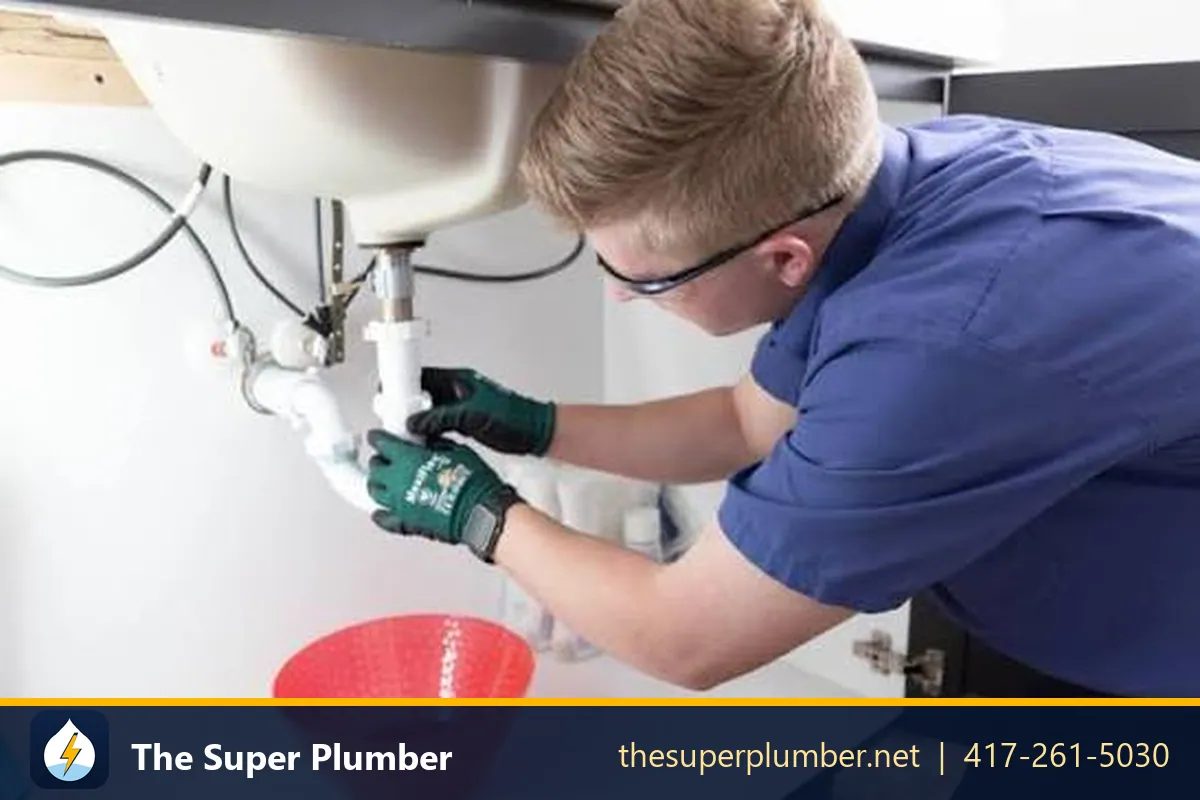
Before you buy parts or book anything, call 417-261-5030 so the phone team can confirm availability, pricing and response time for your address. Give three things: San Diego plus the street address and ZIP; the symptom or error code; and the brand, model, age, fuel (gas, electric or solar), location (garage, closet, attic or roof) and whether you shut it off. If you smell gas, leave the building and call the gas utility or 911 from outside. Background reading: plumber in San Diego, plumbers across California, emergency plumbing and plumber cost.
A water heater problem sometimes turns out to be part of a bigger plumbing job, so mention anything else you have noticed on the same call: a wet spot that points to slab leak repair or burst pipe repair, pressure trouble on the water main, slow fixtures that need drain cleaning, a backup that calls for sewer line repair or a sewer camera inspection, a running fixture that needs toilet repair, a leaking kitchen faucet replacement, or garbage disposal repair. Small kitchens and bathrooms far from the main heater are sometimes served by a point-of-use water heater. The full range of plumbing services helps if you are unsure which category fits.
ZIP Codes for Water Heater Calls in San Diego, CA
Water heater calls cover 75 San Diego ZIP codes, grouped by area in the text above. The complete ZIP-by-ZIP table is on the plumber in San Diego page, and coverage for your exact address is confirmed by phone.
- 92101
- 92102
- 92103
- 92104
- 92105
- 92106
- 92107
- 92108
- 92109
- 92110
- 92111
- 92112
- 92113
- 92114
- 92115
- 92116
- 92117
- 92119
- 92120
- 92121
- 92122
- 92123
- 92124
- 92126
- 92127
- 92128
- 92129
- 92130
- 92131
- 92132
- 92134
- 92135
- 92136
- 92137
- 92138
- 92139
- 92140
- 92142
- 92145
- 92147
- 92149
- 92150
- 92152
- 92153
- 92154
- 92155
- 92158
- 92159
- 92160
- 92161
- 92163
- 92165
- 92166
- 92167
- 92168
- 92169
- 92170
- 92171
- 92172
- 92174
- 92175
- 92176
- 92177
- 92179
- 92182
- 92186
- 92187
- 92191
- 92192
- 92193
- 92195
- 92196
- 92197
- 92198
- 92199
Nearby San Diego-Area Cities and ZIP Codes
The same phone line also takes calls for 7 nearby cities with 17 more ZIP codes. Tell the phone team the city and ZIP and coverage is confirmed for your address.
| City | ZIP codes and places |
|---|---|
| El Cajon | 92019 about 1 mile from Seminary of Mar Abba the Great; about 2 miles from San Diego Christian College 92020 about 2.3 miles from Seminary of Mar Abba the Great; about 4.5 miles from Lake Murray 92021 about 1.3 miles from San Diego Christian College; about 3.2 miles from Seminary of Mar Abba the Great 92022 about 2.2 miles from Seminary of Mar Abba the Great; about 4.8 miles from Lake Murray |
| La Mesa | 91941 about 2.6 miles from Lake Murray; about 3.7 miles from San Diego State University 91942 about 1.5 miles from Lake Murray; about 3.1 miles from San Diego State University 91943 about 1.8 miles from Lake Murray; about 2.9 miles from San Diego State University 91944 about 1.8 miles from Lake Murray; about 2.9 miles from San Diego State University |
| Poway | 92064 about 2.8 miles from Lake Poway; about 4.4 miles from Black Mountain Open Space Park 92074 about 3.4 miles from Lake Poway; about 4.8 miles from Black Mountain Open Space Park |
| Santee | 92071 about 1.7 miles from Gillespie Field; about 5 miles from Lake Murray 92072 near Gillespie Field; about 4.6 miles from San Diego Christian College |
| Lemon Grove | 91945 about 3.7 miles from San Diego State University; about 3.7 miles from Viejas Arena 91946 about 3.1 miles from Lake Murray; about 3.3 miles from San Diego State University |
| Coronado | 92118 about 2 miles from Petco Park; about 2.1 miles from Chicano Park 92178 about 2.1 miles from Naval Air Station North Island; about 2.1 miles from Petco Park |
| Lakeside | 92040 about 3.7 miles from San Diego Christian College; about 10 miles from San Diego State University |
Other California Cities and ZIP Codes We Serve
Calls are also taken for other California cities, 373 in all. Every city is covered in plumbing services across California.
| City | ZIP codes and places |
|---|---|
| Riverside | 92501 near Riverside Fox Theater; near Museum of Riverside 92502 about 2.3 miles from California Baptist University; about 2.4 miles from Museum of Riverside 92503 about 2 miles from California Baptist University; about 2.4 miles from La Sierra University |
| Inglewood | 90302 near Edward Vincent Jr. Park; about 1.3 miles from Kia Forum 90305 near YouTube Theater; near SoFi Stadium 90306 near Kia Forum; near Edward Vincent Jr. Park |
| Irvine | 92602 about 3 miles from Peters Canyon Regional Park; about 3.4 miles from William Woollett Jr. Aquatics Center 92603 about 2.2 miles from Concordia University Irvine; about 2.3 miles from Anteater Recreation Center 92620 about 1.4 miles from William Woollett Jr. Aquatics Center; about 2.6 miles from Great Park |
| Glendale | 91203 near Museum of Neon Art; about 1.1 miles from Autry Museum of the American West 91204 near Museum of Neon Art; about 1.4 miles from Forest Lawn Memorial Park 91205 near Museum of Neon Art; near Forest Lawn Memorial Park |
| Burbank | 91501 about 2.8 miles from Los Angeles Zoo; about 3 miles from Forest Lawn Memorial Park 91502 about 1.4 miles from Travel Town Museum; about 2.2 miles from Forest Lawn Memorial Park 91503 about 2.6 miles from Forest Lawn Memorial Park; about 2.7 miles from Los Angeles Zoo |
| Van Nuys | 91401 about 1 mile from Monarch Stadium; about 2.5 miles from Woodley Park 91404 about 1.6 miles from Woodley Park; about 2.1 miles from Monarch Stadium 91406 near Van Nuys Airport; about 1.5 miles from Woodley Park |
| Santa Ana | 92701 near California Coast University; near Santa Ana Zoo 92702 about 1 mile from Santa Ana Stadium; about 1.2 miles from California Coast University 92703 about 1.7 miles from Santa Ana Stadium; about 3.8 miles from Angel Stadium of Anaheim |
| Santa Monica | 90401 near Frederick S. Pardee RAND Graduate School; near Heal the Bay Aquarium 90402 near Palisades Park; about 1 mile from Riviera Country Club 90403 near Emperor's College; near Palisades Park |
Frequently Asked Questions
How is water heater repair pricing confirmed?
Pricing depends on the unit type, fuel, parts, access and any venting or gas work, so it is confirmed by phone, not stated in advance. Call 417-261-5030 with your address, the symptom and the model label, and ask what any fee covers before you approve a repair.
What should I do first in an emergency water heater repair?
If you smell gas, leave the building and call the gas utility or 911 from outside. If water is leaking, shut off the cold supply to the heater and the power or gas control if it is safe to reach. Then call and describe what you see. Availability is confirmed on the call.
What do tankless water heater error codes mean?
Codes vary by brand and model, and often point to ignition, flow, venting or scale problems. Write down the exact code and the model on the label rather than guessing. A plumber reads the code, checks the likely cause and tells you whether a flush, a part or a larger repair is needed.
Why does my gas water heater pilot light keep going out?
Common causes include a weak thermocouple or thermopile, a draft problem, lint blocking the air inlet or a failing gas control. Relight a pilot only per the label and only with no gas smell. If it will not stay lit, stop and call a plumber, since gas parts are not homeowner work.
Is a leaking tank worth repairing or should I replace it?
It depends on the source. A leak at a fitting, valve or connector is often repairable. Water from the tank shell or bottom seam usually means the tank has failed and replacement is the sensible route. Shut off the water to the heater and tell the phone team where the leak appears.
Why is my electric water heater not heating?
Typical causes are a tripped breaker, a tripped high-limit reset, a failed heating element or a faulty thermostat. Resetting a breaker once is reasonable, but repeated tripping points to a fault. Do not open the access panels, because the wiring carries live power. A plumber can test the parts safely.
How do I decide between repair and replacement?
Consider the unit's age, the type of fault, how often it has needed work and whether the tank is leaking. A simple part on a sound heater is often a repair. Ask the plumber to describe both options in plain terms, and compare the scope of each, before approving anything.
Can solar water heaters be repaired in San Diego?
Solar thermal systems that heat water with roof collectors can have pump, controller, sensor, fluid or leak problems. They differ from solar panels that make electricity. Roof work is risky, so do not climb up yourself. Ask on the call whether your system type is one the phone team routes.
Can commercial water heaters be repaired?
Commercial systems at restaurants, hotels and apartment buildings, including banked units, boilers and recirculation loops, can be raised on the call. Give the building address, the number of units, the capacity, the fuel and what failed. The phone team confirms how the job is routed, plus availability and pricing.
Should I ask about licensing and insurance?
Yes, ask for licensing and insurance details on the call before approving work, and expect them to be confirmed by phone rather than assumed. It is also reasonable to ask who will do the work, what the written scope covers and how any permit or code item is handled for your address.
Are there coupons or promotions for water heater repair?
Ask on the call what promotions, if any, apply to your situation. None are promised here. A fair comparison looks at the scope of work, the parts involved and what any fee includes, not just the headline number. Have your address and the heater details ready when you phone.
Is water heater repair San Diego CA available in every ZIP, and in Coronado?
Calls cover the San Diego ZIP codes cited here and Coronado, which is a separate city, plus nearby cities such as El Cajon, La Mesa, Poway, Santee, Lemon Grove and Lakeside. Because many ZIPs are unique or special-use, give the physical street address. Coverage and availability are confirmed by phone.
Ready to talk to a plumber? Call 417-261-5030.
Call 417-261-5030