
Quick links
- Your Local Plumbing Service Resource in Lawrence, Massachusetts
- Complete Plumbing Services Available in Lawrence, MA
- Emergency Plumber in Lawrence, MA
- Drain Cleaning in Lawrence, MA
- Sewer Line Cleaning, Inspection and Repair in Lawrence
- Trenchless Pipe Lining and Pipe Bursting in Lawrence, MA
- Water Heater Repair and Installation in Lawrence, MA
- Burst Pipe Repair, Pipe Repair and Repiping in Lawrence
- Water Line Repair, Replacement and Leak Detection in Lawrence
- Gas Line Repair and Installation in Lawrence, MA
- Faucet, Toilet and Garbage Disposal Repair in Lawrence
- Sump Pump Installation and Repair in Lawrence, MA
- Basement Drainage, French Drains and Crawl Space Problems
- Water Treatment and Water Softener Services in Lawrence
- Commercial Plumbing Services in Lawrence, MA
- Mold Inspection, Mold Removal and Remediation in Lawrence
- Water Damage Repair and Emergency Water Removal in Lawrence
- Common Plumbing Problems in Lawrence, MA Homes
- Plumbing Services Across Lawrence, MA ZIP Codes
- What You Can Expect When You Call About Plumbing in Lawrence
- Our Plumbing Service Process
- Call First: Plumbing Services in Lawrence
- ZIP Codes We Serve in Lawrence
- Related Plumbing Help
- Frequently Asked Questions
Plumbing services in Lawrence MA cover homes, apartment buildings and commercial properties across the Lawrence ZIP codes: drains, sewer lines, water heaters, supply pipes, water lines, gas lines, fixtures and emergency leaks. To describe your problem to the phone team, call 417-261-5030. Everything you read here is background reading; availability, pricing and response time are confirmed by phone.
What follows walks through the services in plain terms: what each job involves, what a plumber looks at, and what you can do safely while you wait. Use it to decide what to say when you call, and to understand the answer you get back. If you are comparing plumbing services Lawrence MA households ask about most, start with the section that matches what is happening now: gas plumbing safety, drains, water heaters or leaks.
Your Local Plumbing Service Resource in Lawrence, Massachusetts
Lawrence has a mix of older single-family homes, many multi-family buildings and commercial properties, and plumbing that ranges from recent copper and PEX to old galvanized and cast iron. The sections here sort the work by property and urgency.
Residential Plumbing Services
Residential plumbing covers everything that carries water in or waste out of a home: kitchen and bathroom fixtures, supply lines, drains, water heaters, toilets, sump pumps and the main shutoff. In older Lawrence housing, a plumber often finds a mix of pipe materials from different eras, so repairs frequently start with working out what is behind the wall before choosing a fix.
Commercial Plumbing Services
Commercial plumbing means larger loads and less tolerance for downtime: restroom groups, floor drains, grease-producing kitchens, water heaters sized for staff or tenants, and gas piping to equipment. A plumber asks about the building type, the fixture count and who controls the shutoffs. The commercial plumbing overview explains how those jobs are scoped.
Plumbing Repairs and Installations
Repairs fix what has failed, such as a leaking supply, a worn valve or a cracked drain. Installations put in something new, such as a toilet, a faucet, a water heater or a sink drain. The two often overlap: when a part is too corroded to repair, replacing it is usually the sounder choice. Permits and inspections commonly apply to larger installations, so confirm with the City of Lawrence and your plumber.
Routine Plumbing Maintenance
Maintenance catches small problems before they flood a basement. Common items include exercising shutoff valves, checking under sinks for slow weeping, flushing sediment from a tank water heater, testing a sump pump and watching for slow drains. Older buildings with galvanized or cast iron pipe benefit most from a periodic look, because hidden corrosion tends to show up slowly.
Emergency Plumbing Assistance
An emergency is anything that is actively damaging the building or making it unsafe: a burst pipe, a sewage backup, a failed water heater leaking onto the floor or a gas smell. Many people search for an emergency plumber in Lawrence MA when this happens. Availability is confirmed when you phone, so call 417-261-5030 and have your street and ZIP ready. More detail is in emergency plumbing.
Complete Plumbing Services Available in Lawrence, MA
The work breaks into four broad types. Knowing which one your problem falls under helps you describe it clearly and helps the phone team route the call.
General Plumbing Repair
General repair is the everyday category: dripping faucets, running toilets, leaking shutoff valves, clogged sinks, failing supply connectors and noisy pipes. These jobs are usually diagnosed by following the water, so a plumber starts with where it appears, when it started and whether it happens only when a fixture runs. Tell the phone team what you see and hear. More on plumbing repair is available.
Plumbing Installation
Installation covers new fixtures and equipment: toilets, faucets, sinks, disposals, water heaters, sump pumps, gas appliance connections and bathroom rough-in work during a remodel. A sound installation depends on the supply, drain, venting and shutoff arrangements already in the building, so a plumber checks those first. Bathroom work is covered under bathroom remodel plumbing.
Plumbing System Inspection
A plumbing system check looks at what can be seen and tested: visible pipe material and condition, shutoff valves, water pressure behavior, drain flow, fixture leaks, the water heater and its safety valve. Where a drain is the concern, a camera can show the inside of the line. This is a look at your plumbing, not a general home inspection or any mold or structural assessment.
Plumbing Maintenance
Ongoing maintenance is usually a short list of repeat tasks: draining or flushing a water heater tank, replacing worn washers and supply hoses, clearing a slow drain before it stops, and checking a sump pump before wet weather. A plumber can tell you which items suit your system and which should simply be watched. Ask what is worth doing now and what can wait.
Not sure what you need? Call and we will point you to the right help.
Call 417-261-5030Emergency Plumber in Lawrence, MA
When water or sewage is where it should not be, or you smell gas, speed matters but so does order. Start with safety, then stop the water, then call. The sections here cover what counts as an emergency and what to do first.
When to Call an Emergency Plumber
Call right away for a burst or actively spraying pipe, water coming through a ceiling, sewage backing up through floor drains or toilets, a water heater leaking heavily, no water at all in winter, or a pipe you suspect has frozen and split. A slow drip, a minor drain slowdown or a dripping faucet can usually wait for regular scheduling. If you smell gas, leave first and call from outside.
Emergency Burst Pipe and Water Leak Repair
For a burst pipe, shut off the main water supply first, open a faucet at the lowest level to relieve pressure and move belongings away from the water. A plumber then locates the break, cuts out the damaged section and replaces it. Read more on burst pipe repair and leak detection when the source is not obvious.
Emergency Drain Cleaning and Sewer Backups
If several fixtures back up at once, or a floor drain gurgles or overflows, the main drain or sewer line is likely blocked. Stop using water, because every flush and shower adds to the overflow. A plumber clears the line with a cable machine or a water jet and may run a camera to find the cause. See drain cleaning and the sewer line overview.
Emergency Water Heater Repair
A water heater leaking from the tank body usually means the tank has failed, while a leak at a fitting, valve or the T&P discharge pipe may be repairable. For a tank leak, shut off the cold water supply to the unit and turn off the power or gas control to the heater. Gas, venting and electrical parts are plumber-only. Details on water heater repair are available.
Emergency Plumbing for Commercial Properties
A commercial emergency needs a few extra facts: which shutoffs control which areas, whether tenants or customers are affected, and whether any floor drains or grease lines are involved. Restroom overflows, burst lines and water heater failures can close a business quickly. Have a manager or maintenance contact at the property, and call 417-261-5030 with the street, ZIP and what is happening.
How to Shut Off Your Main Water Supply
The main shutoff is usually where the water line enters the building, often in a basement, a utility room or near the water meter. Turn a round handle clockwise until it stops, or turn a lever a quarter turn so it sits across the pipe. Then open a low faucet to drain the lines. Find and test the valve now, before a leak forces the question.
What to Do Before an Emergency Plumber Arrives
While you wait, keep yourself safe and limit the damage. Stay out of standing water if outlets or appliances are nearby, and switch off power at the panel only if the panel is dry and you can reach it safely.
- Shut off the main water supply or the valve nearest the leak.
- Move furniture, rugs and electronics out of the way.
- Photograph the damage and the pipe, fixture or heater involved.
- Unlock access to the basement, utility room or crawl space.
- Note the age of the home, the fuel type and the shutoff location.
Give the phone team your Lawrence street, ZIP and a clear description of what you see.
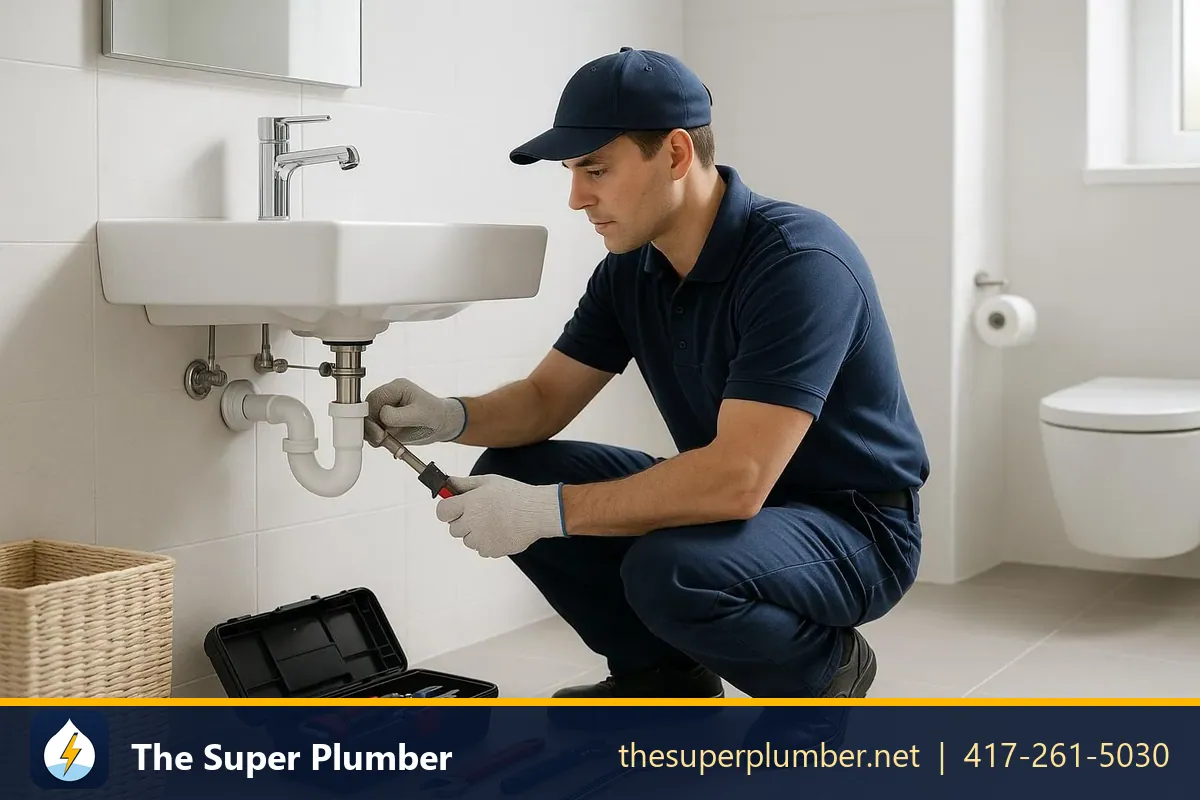
Drain Cleaning in Lawrence, MA
Slow sinks, gurgling tubs and backed-up floor drains in Lawrence homes and businesses usually trace to one of a few causes. The right fix depends on where the blockage sits, what is in it, and how the pipe is built.
Residential Drain Cleaning
Residential drain cleaning clears a blockage in a single fixture, a branch line, or the whole house drain. Older Lawrence homes and multi-family buildings often have cast iron or clay pipes with rough interiors that catch grease and paper. Tell the phone team which fixtures are slow, since several slow drains at once point to a shared line. See the drain cleaning overview for the full range of methods.
Commercial Drain Cleaning
Commercial drains carry heavier loads than a house line: grease from kitchens, lint from laundries, paper from restrooms, and sludge from floor drains. Many mixed-use and older mill-style buildings share one lateral among several units, so a blockage in one place can show up somewhere else. A plumber may clear the line, then camera it to find what keeps causing the buildup.
Kitchen Sink and Bathroom Drain Cleaning
A kitchen sink clogs mostly from grease, soap film and food scraps, while a bathroom sink clogs from hair and toothpaste residue caught in the trap and tailpiece. Pulling the stopper and cleaning the trap is a fair first try. If water backs up in a second fixture, stop and call, because that means the blockage is farther down the line.
Bathtub, Shower, and Toilet Drain Cleaning
Tub and shower drains slow down from hair wrapped around the strainer and stopper, and from soap scum below it. A plastic drain tool can pull out the hair. A toilet that clogs repeatedly, or one that makes a tub gurgle when flushed, usually has a problem past the bowl, in the branch or the main. Avoid repeated chemical drain cleaners, which can damage older pipes. The toilet plumbing section covers bowl-side problems.
Main Drain Cleaning
The main drain is the large line that collects every fixture and carries waste out to the sewer lateral. When it blocks, the lowest drains in the building, often a basement floor drain, shower or laundry standpipe, back up first. Cleaning the main generally means a cleanout access and a larger machine than a sink snake.
Drain Snaking and Mechanical Augering
Snaking uses a flexible steel cable with a cutting head to break through or hook a blockage. Smaller hand augers suit sinks and tubs. Larger drum machines handle main lines, and the right head depends on whether the clog is soft, such as grease or paper, or hard, such as roots. Snaking restores flow but may leave residue on pipe walls, so heavy buildup can call for another method.
Hydro Jet Drain Cleaning
Hydro jetting sends high-pressure water through a nozzle to scour the pipe wall, not just punch a hole through the clog. It is often chosen for grease, sludge, scale and fine roots. It is not right for every pipe, so a plumber usually checks the line first, since cracked or severely deteriorated pipe can be damaged. Read more about hydro jetting for how the process works.
Signs of a Main Drain Blockage
Several fixtures draining slowly at the same time is the clearest sign. Others include gurgling from a toilet when the washer drains, water rising in a tub when the toilet flushes, sewage smell near a floor drain, and water backing up in the lowest fixture. If sewage is coming up, stop using water and keep people away from the spill. Then call 417-261-5030 and describe which drains are affected.
Causes of Recurring Drain Clogs and How to Prevent Them
Clogs that return within weeks usually have an underlying cause: grease coating the pipe, tree roots in a joint, a belly or sag that holds water, or wipes labeled flushable that do not break down. Prevention is plain. Keep grease out of sinks, use drain screens, and flush only toilet paper. A camera look shows whether the pipe itself is the problem.
Sewer Line Cleaning, Inspection and Repair in Lawrence
The sewer line carries everything out of the building, and many in older Lawrence neighborhoods were laid long ago in clay, cast iron or similar materials. Problems tend to start slowly, so catching them early often keeps repairs smaller.
Residential and Commercial Sewer Line Repair
Sewer line repair can mean fixing a short cracked section, replacing a failed joint, relining a longer run, or replacing the pipe. A plumber decides by locating the problem with a camera first. Commercial and multi-unit buildings add complications, such as shared laterals and heavier flow. Learn more about sewer line services before you call.
Sewer Line Cleaning and Main Sewer Line Cleaning
Sewer line cleaning removes roots, grease and debris from the long pipe between the building and the connection to the street. It generally uses a heavy cable machine, a jetter, or both, run through a cleanout. A clean line does not mean a healthy line, which is why cleaning is often followed by a camera pass. See sewer line cleaning for detail.
Sewer Camera Inspection
A sewer camera is a small waterproof lens on a flexible cable that shows the inside of the pipe on a screen. It can reveal roots, cracks, offset joints, bellies, scale and collapsed sections, and a locator can mark the depth and position above ground. The sewer camera inspection section explains what the footage shows.
Tree Root Intrusion in Sewer Pipes
Roots find hairline cracks and loose joints because sewer pipes hold moisture and nutrients. Once inside, they thicken and catch paper and grease. Cutting roots restores flow for a while, but they usually regrow unless the joint is repaired or lined. Roots that keep returning are a strong reason to have the line camera checked.
Cracked and Collapsed Sewer Lines
Cracks, offsets and collapses can come from age, shifting soil, heavy loads, frost cycles and root pressure. Signs include repeated backups, slow drains throughout the building, wet or sunken ground over the line, and a camera that cannot pass a certain point. A collapsed section generally needs repair or replacement, not just cleaning.
Sewer Odors and Wastewater Backups
A sewer smell can come from a dry trap, a loose cleanout cap, a vent problem, or a damaged line. Wastewater backing up is more serious and points to a blockage or break. Do not use fixtures that are draining slowly, keep children and pets out of the area, and phone with the location of the backup and what is draining.
Sewer Service Lateral Responsibilities in Lawrence
The lateral is the pipe running from the building toward the connection near the street. In many places the owner is responsible for part of it, but where that line ends varies. Confirm with the City of Lawrence and the Lawrence water and sewer department who owns which section, and what permits and inspections commonly apply before digging or lining.
When Does a Sewer Line Need Replacement?
Replacement is often considered when a camera shows a collapse, major offsets, long cracked stretches, or pipe that has failed repeatedly. Frequent backups after cleaning are another sign. A plumber compares repair, lining and replacement based on pipe condition, depth, length, and what sits above it. The sewer line replacement section covers the options in more depth.
Traditional Sewer Repair vs. Trenchless Repair
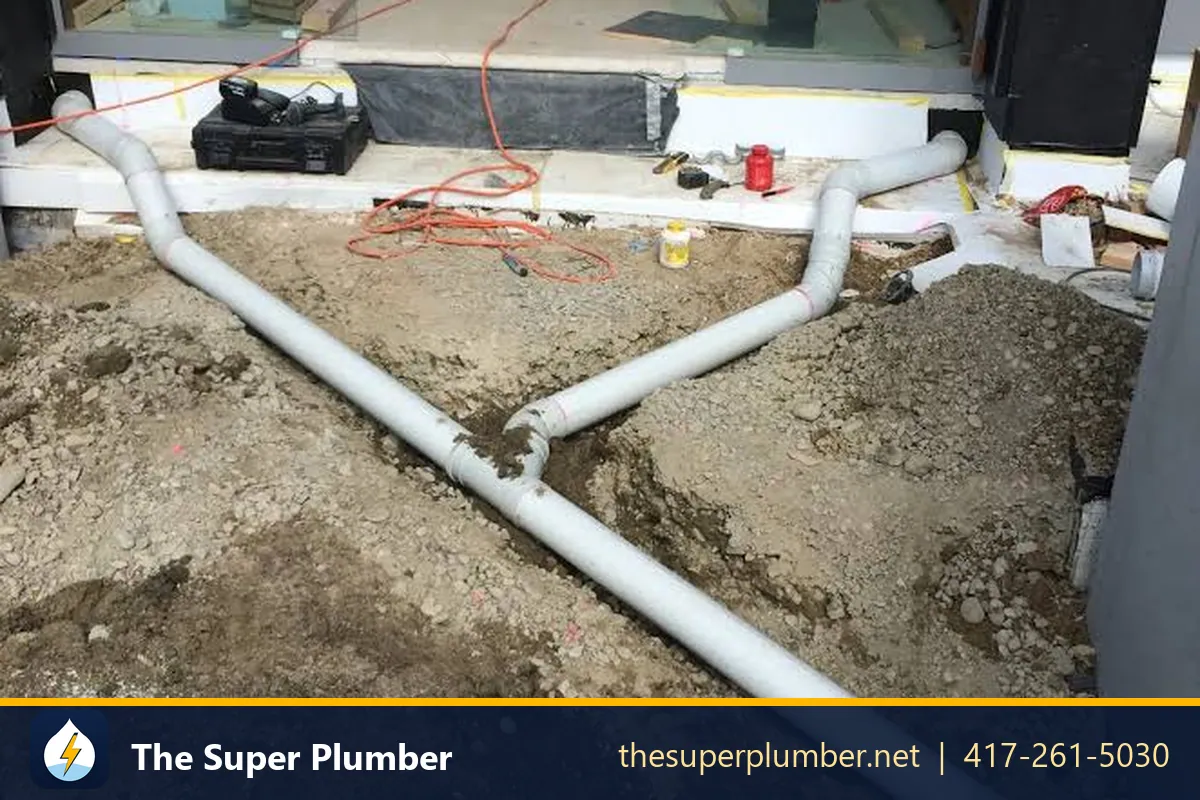
Traditional repair means digging a trench to expose and replace pipe, which can disturb lawns, driveways and landscaping. Trenchless repair works through small access points, by lining or pulling new pipe through the old. It is not always possible, and the choice depends on pipe condition and layout.

Trenchless Pipe Lining and Pipe Bursting in Lawrence, MA
Trenchless methods repair or replace buried pipe with little or no open trench. They suit many older Lawrence lots where digging would disturb driveways, walkways or mature trees, though not every pipe qualifies.
What Is Trenchless Pipe Repair?
Trenchless pipe repair rehabilitates an underground line through a few small openings rather than a long open trench. The two main methods are lining the existing pipe and pulling new pipe through while breaking up the old. A camera survey comes first, since the pipe's condition decides which method, if any, will work. See trenchless pipe repair for more.
Cured-in-Place Pipe Lining (CIPP)
CIPP inserts a resin-soaked felt tube into the old pipe, then cures it so it hardens into a smooth new liner inside the old one. It can seal cracks and joints and cover root entry points. The pipe is cleaned first, and the liner slightly reduces the inside diameter. Lining generally needs a pipe that is still in place and passable.
Pipe Bursting Services and How Pipe Bursting Works
Pipe bursting pulls a bursting head through the old pipe, fracturing it outward while drawing a new pipe behind it. It needs an entry pit and an exit pit, but far less digging than a full trench. It can restore or even increase pipe size. A plumber checks depth, nearby utilities and soil before recommending it.
Benefits of Trenchless Pipe Rehabilitation
Trenchless work often means less digging, less damage to driveways, patios and landscaping, and a shorter period without a working sewer. It can also seal joints that roots keep entering. Results depend on the pipe's condition.
When Is Pipe Lining the Right Solution?
Lining is often a good fit when the pipe is mostly intact but has cracks, leaking joints, root entry or rough wear, and the line can be cleaned and cleared end to end. It tends to be less suitable for collapsed, badly offset or crushed pipe.
When Is Pipe Bursting Not Suitable?
Bursting may not suit shallow pipe near other utilities, pipe under structures that could be disturbed, very rocky or unstable soil, or lines with sharp bends or many connections. In those cases lining or traditional replacement may work better. Ask the phone team at 417-261-5030 what is possible for your line, and have photos and your street and ZIP ready.
Need a plumber in your area? Call to confirm coverage.
Call 417-261-5030Water Heater Repair and Installation in Lawrence, MA
Most water heater problems in Lawrence come down to a few parts: the burner or element, the thermostat, the anode rod, or a tank that has simply worn out. Here is how each situation usually plays out.
Residential Water Heater Repair
Many residential repairs are small: a failed thermostat, a heating element, a pilot or flame sensor, a worn T&P valve, or a dripping drain valve. A plumber tests the unit first, then tells you whether a part fixes it. A tank that leaks from the shell itself is a different story, because that is rarely repairable. Learn more about water heater service options before you phone.
Commercial Water Heater Repair
Commercial units work harder than a home heater. Restaurants, laundries, small offices and multi-unit buildings often run larger tanks, recirculation loops, or several heaters piped together. Failures tend to involve scale, burned-out elements, gas controls or a pump on the loop. Tell the phone team the building type, how many units you have, and whether the whole building or only one area lost hot water.
Hot Water Heater Installation and Water Heater Replacement
A replacement is more than swapping a tank. The plumber sizes the unit, checks the gas line or electrical supply, sets new shutoff valves, a drain pan if needed, and connects the T&P discharge pipe. Venting and gas connections are plumber-only work, and permits and inspections commonly apply, so confirm with the City of Lawrence and your plumber. See what water heater replacement involves.
Tank and Tankless Water Heater Services
Tank heaters store hot water and fail mostly from sediment, a spent anode rod, or corrosion. Tankless units heat on demand and tend to fail from scale on the heat exchanger, flow sensor faults, or venting and gas supply problems. A plumber can walk through tankless water heater repair when your unit shows an error code.
Gas and Electric Water Heater Repair
Gas units commonly fail at the thermocouple, flame sensor, gas valve, or from a blocked vent. Electric units fail at the heating elements, thermostats or the high-limit switch. Homeowners should not open burner compartments, touch wiring, or adjust gas controls. If you smell gas, leave the building, avoid light switches and flames, and call the gas utility or 911 from outside.
Water Heater Leaks and No Hot Water Problems
Find out where the water comes from. A drip at the T&P pipe, a loose fitting or a drain valve can be repaired. Water pooling under the tank from the shell usually means replacement. For no hot water, check whether the breaker tripped or the pilot went out, then stop. Shut off the cold supply to the heater if it is leaking, and tell the phone team what you see.
Temperature Problems, Strange Noises, and Sediment Buildup
Lukewarm water, water that runs hot then cold, or a rumbling sound often points to sediment on the tank bottom or a failing element or thermostat. Hard water speeds up that buildup. Popping and cracking noises are common signs of scale. A plumber can flush a tank that is still sound, but a very old tank that has never been flushed may leak after the sediment is disturbed.
When to Repair or Replace a Water Heater
Repair makes sense when the tank is sound and the fault is a part. Replacement is the better call when the shell leaks, rust shows at the bottom, the unit is old, or repairs keep repeating. See plumber cost factors to prepare. To get a plumber involved, call 417-261-5030 with your street, ZIP, and the heater's age and fuel type.
Burst Pipe Repair, Pipe Repair and Repiping in Lawrence
Cold New England winters and older housing stock mean pipe trouble is a regular part of life in Lawrence. These sections cover emergency bursts, material-specific repairs, and when whole-house repiping starts to make sense.
Emergency Burst Pipe Repair
If a pipe bursts, shut off the main water supply first, open a faucet at the lowest level to drain the line, and switch off power to anything near the water if you can do it safely. Then call a plumber. The repair may be a cut-out section, a new coupling, or a longer run of pipe. Read more on burst pipe repair and have photos ready.
Leaking Water Pipe Repair
Small pinhole leaks, weeping joints and corroded fittings can look minor but damage drywall, subfloors and insulation fast. A plumber finds the exact source, cuts out the failed section, and replaces it with compatible material, using the right fittings where metals meet. Mention how long the leak has been going and whether the water is hot or cold. General leak repair help starts with that detail.
Copper, PEX, and PVC Pipe Repair
Each material repairs differently. Copper is joined by soldering or press fittings, PEX by crimp or expansion fittings, and PVC by solvent-welded couplings in drain lines. Mixing metals without a dielectric union can cause corrosion. Many older buildings mix old and new piping from past renovations.
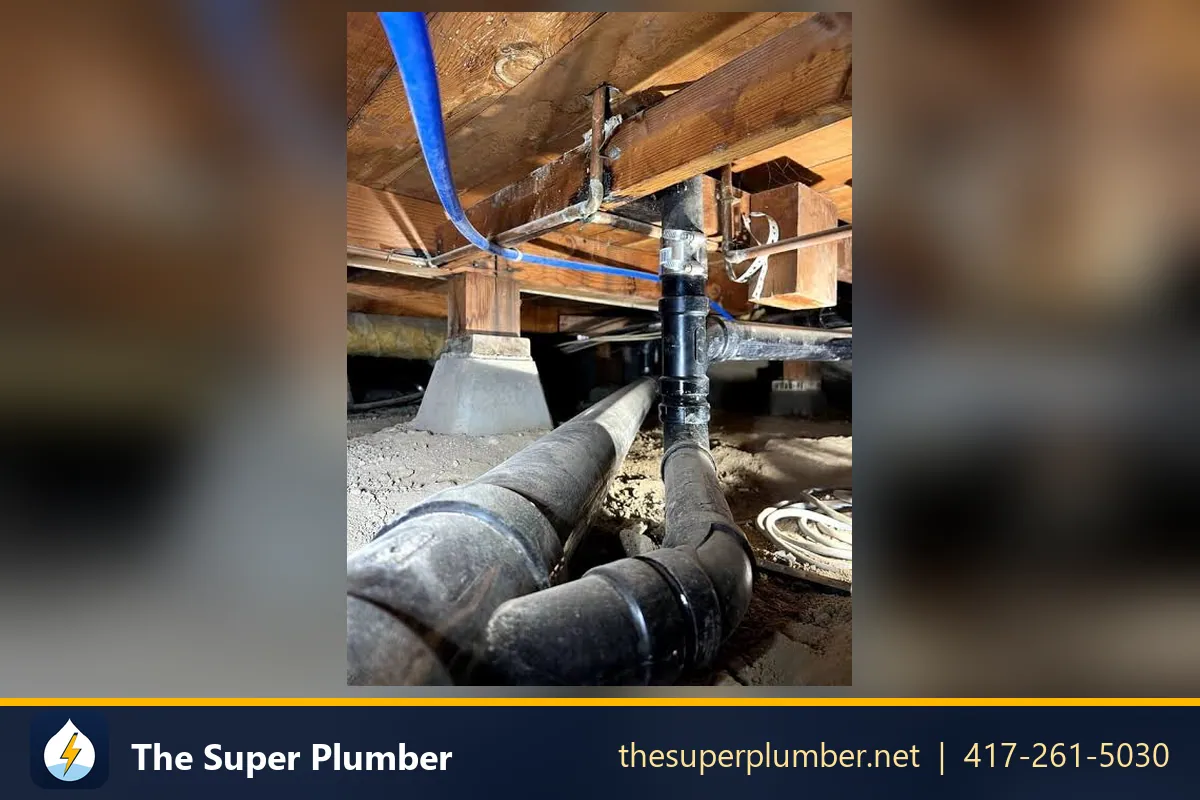
Cast Iron Pipe Problems and Galvanized Pipe Replacement
Older drain stacks are often cast iron, which can crack, flake and rust through from the inside. Older supply lines are often galvanized steel, which tends to corrode inside, shrink the opening and lower pressure, and sometimes turn the water brown. Patching helps for a short while, but widespread corrosion usually points toward replacing sections or the whole run with modern pipe.
Frozen Pipe Repair
Pipes in exterior walls, unheated basements, crawl spaces and garages freeze first. If a pipe is frozen but not burst, open the faucet and warm the area gently with a hair dryer on low, never a flame. Do not thaw a pipe you cannot see or reach. Once it thaws, check for leaks. A plumber repairs splits and checks the neighboring pipes.
Whole-House Repiping and Signs Your Home Needs Repiping
Common signs include repeated leaks in different spots, discolored water, low pressure throughout the house, metallic taste, and visible corrosion or green crust on fittings. One leak does not always mean repiping, but a pattern does. Repiping opens walls and ceilings, so plan for patching afterward and ask whether permits apply in Lawrence.
Copper vs. PEX Repiping
Copper is rigid, durable, and familiar, but it costs more in material and labor and can corrode in some water. PEX is flexible, goes through walls with fewer joints and resists bursting better when water freezes, though it must not be exposed to sunlight and some codes limit its use. Each suits different buildings. Ask a plumber which one local inspectors accept, and confirm with the City of Lawrence.
Commercial Pipe Repair and Pipe Corrosion
Commercial buildings have longer pipe runs, more fixtures, and heavier daily use, so corrosion and scale show up sooner. Failures often happen in utility rooms, above ceilings and behind kitchen lines. Fast, clean repairs matter because shutting down a restroom or kitchen costs a business. See commercial plumbing help and have the building type and affected area ready.
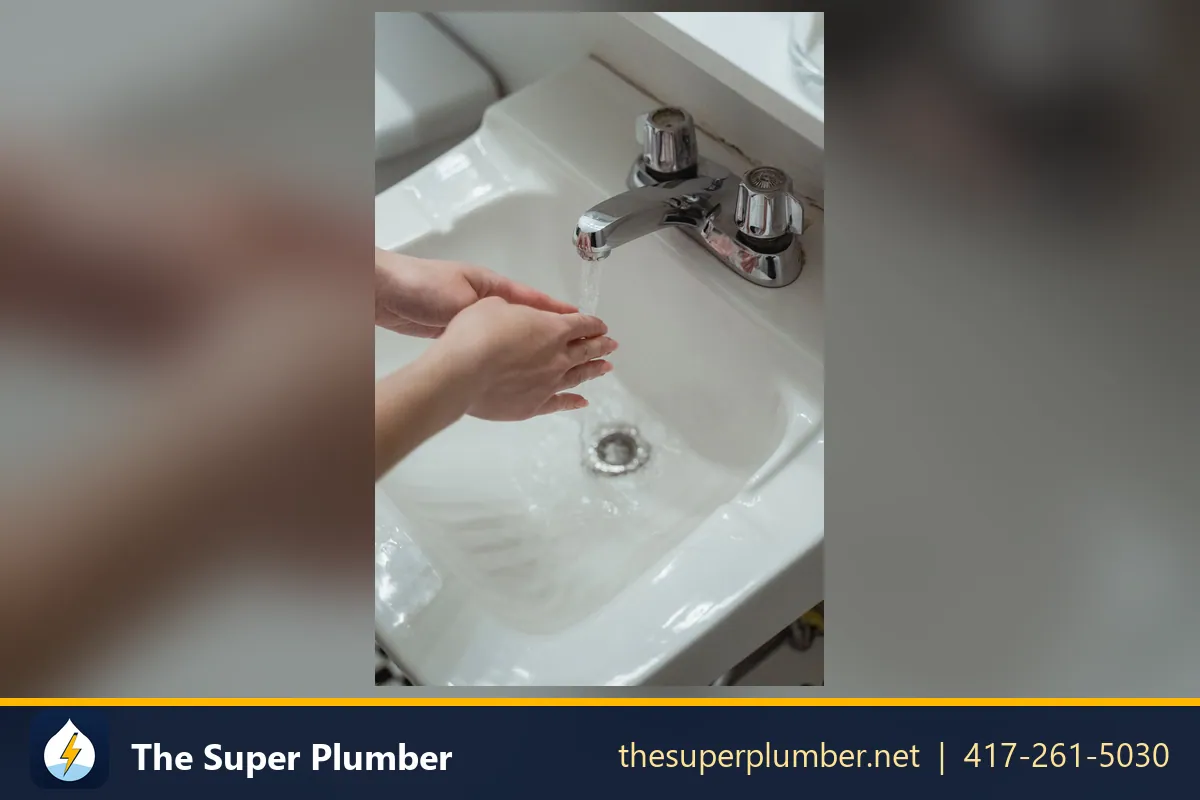
Water Line Repair, Replacement and Leak Detection in Lawrence
The water line brings supply from the street to your building. Problems here often hide underground, so detection matters as much as repair. These sections explain what a plumber looks for and what you can expect to decide.
Main Water Line Repair
A main line leak may show up as a wet patch in the yard, a soggy basement wall near the meter, a hissing sound, or a meter that keeps turning when every fixture is off. Repairs range from a small spot fix to a replacement section. Learn how water main repair works and locate your main shutoff before you phone.
Water Line Replacement and Water Service Line Replacement
Replacement is considered when the line is badly corroded, has leaked repeatedly, or is made of an outdated material. It can be done by open trench or sometimes with less digging, depending on access. Ownership of the section between the street and the building varies, so confirm with the City of Lawrence which part you are responsible for. Permits commonly apply.
Water Leak Detection and Hidden Plumbing Leak Detection
Hidden leaks sit behind walls, under slabs or underground. Plumbers commonly use pressure tests, listening gear, thermal tools and a meter check to narrow down the location before opening anything. A careful search keeps the damage small. Take photos of stains, note any sound, and read about water leak detection so you know what to expect.
Low Water Pressure Diagnosis
Low pressure may come from a partly closed valve, a clogged aerator, a failing pressure reducing valve, corroded galvanized pipe, or a leak. Check whether it affects one fixture or the whole building, and whether hot and cold are both weak. A single faucet is usually a cartridge or aerator issue; whole-building pressure loss points to the supply side and calls for a plumber.
Signs of an Underground Water Leak and High Water Bills
Look for a sudden jump in the water bill with no change in use, damp or unusually green patches in the yard, a basement wall that stays wet, or the sound of running water when everything is off. Try the meter test: shut off all fixtures and see whether the meter still moves. Report what you find to the phone team.
Lead Water Service Lines in Lawrence
Older service lines in some cities may contain lead, so the question is fair for older Lawrence buildings. A plumber can look at the visible pipe where it enters the building, but only the City of Lawrence can confirm what is in the street connection. Check the water utility's water quality information and test through a qualified lab if you are concerned.
When to Repair or Replace a Water Line
Repair fits a single failure on a line that is otherwise sound. Replacement fits a line with repeated leaks, heavy corrosion, an old material, or poor pressure. The plumber weighs access, depth, what sits above the line, and permits. For all water supply work, see water line services and call 417-261-5030 with your street, ZIP, and any leak or pressure details.
Gas Line Repair and Installation in Lawrence, MA
Gas piping is the one part of a home where a small mistake can turn dangerous fast. This section explains how gas line repair, leak detection and new connections generally work, and why every step is plumber-only work.
Residential Gas Line Repair and Gas Pipe Replacement
Gas pipe repair usually means replacing a damaged or corroded section, a failed fitting or a worn flex connector, then pressure testing the line before gas returns. In older Lawrence homes the piping may be black iron that has rusted at joints or near moisture. Homeowners should never tighten fittings or patch gas pipe themselves. A plumber decides whether a short repair or a longer replacement makes sense.
Gas Line Leak Detection and Signs of Gas Line Problems
If you smell gas, leave the building right away. Do not touch light switches, start a car in an attached garage or use a flame. Call the gas utility or 911 from outside. Other warning signs include a hissing sound near a pipe, dead grass over a buried line, or a pilot that keeps going out. Plumbers find leaks with approved detection methods and pressure tests, not by guessing. Read more about gas leak detection once everyone is safe.
Gas Line Installation and Appliance Connections
New gas lines are commonly added for a range, dryer, water heater, fireplace or outdoor grill. The plumber sizes the pipe for the total load of every appliance, runs the line, installs a shutoff at each appliance and tests for leaks before use. A short look at gas line installation explains the usual steps in more detail.
Gas Line Safety and Massachusetts Regulations
Gas work in Massachusetts is regulated, and it commonly requires a permit and an inspection before gas is turned back on. Rules differ by job, so confirm with the City of Lawrence and your plumber before work starts. Homeowners can safely learn where the main gas shutoff is, keep the area around appliances clear and replace nothing themselves. Venting, combustion and relighting are plumber-only tasks. For gas questions, call 417-261-5030 from outside the home with the street, ZIP and appliance type ready.
Have a plumbing problem right now? Call and describe it.
Call 417-261-5030Faucet, Toilet and Garbage Disposal Repair in Lawrence
Fixture problems look small, but they waste water and often point to worn parts best addressed early. Here is how the common faucet, toilet and disposal problems are usually sorted out.
Kitchen and Bathroom Faucet Repair and Replacement
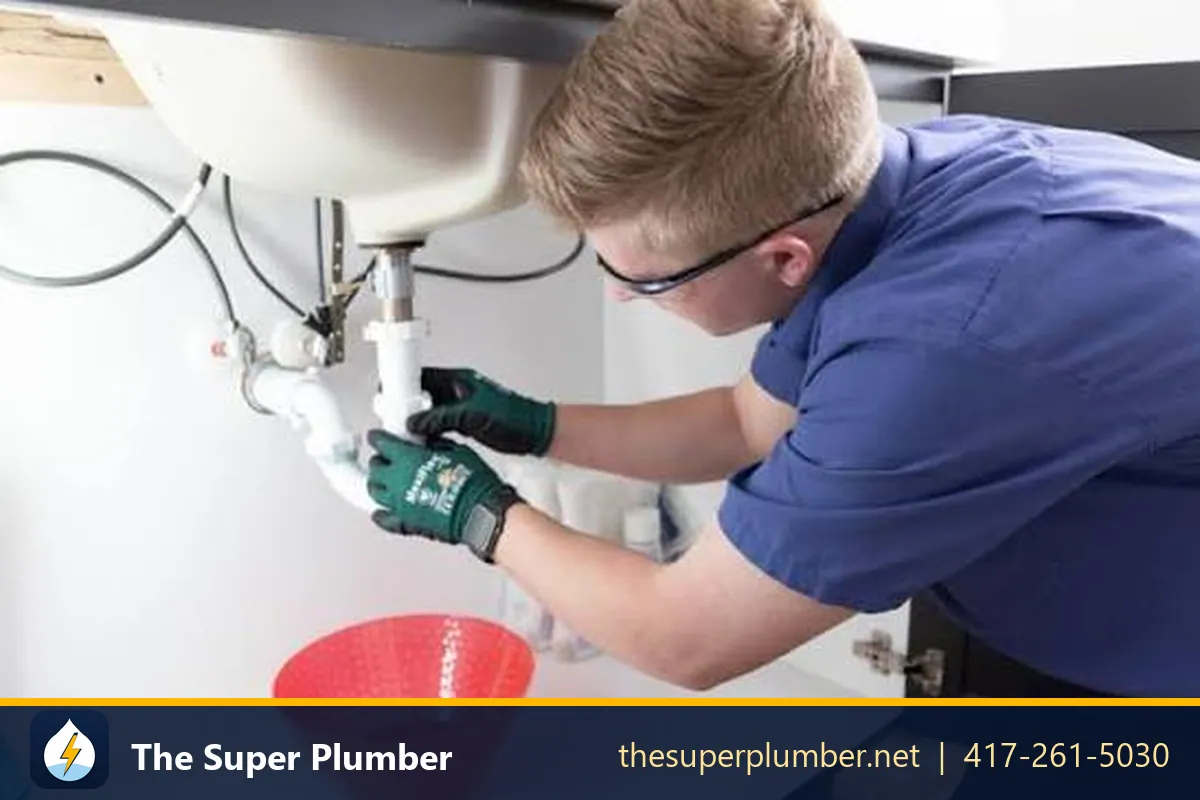
A dripping faucet is most often a worn cartridge, washer, O-ring or valve seat. Shutting off the supply valves under the sink lets you work safely. If the faucet is old, corroded or the valves will not close, replacement is often the better route. See dripping faucet repair for the usual causes.
Toilet Repair, Running Toilets, and Toilet Leaks
A toilet that keeps running usually has a worn flapper, a misadjusted fill valve or a chain that is too tight. Food coloring in the tank that shows up in the bowl means the flapper leaks. Water around the base points to a failed wax ring or loose closet bolts. Here is how to approach a toilet that is not flushing properly.
Toilet Installation and Toilet Drain Blockages
A new toilet needs a flat, solid flange, a fresh wax ring or seal, level placement and a supply line that fits. In older buildings the flange may be corroded or sit at the wrong height, which a plumber corrects. When a toilet clogs repeatedly, the cause may be a partial blockage deeper in the drain rather than the bowl. Learn about toilet installation before choosing a replacement.
Garbage Disposal Repair, Installation, and Leaks
A humming disposal that will not spin is often jammed; a leak usually comes from the sink flange, the dishwasher inlet or the drain connections. Always turn the power off at the switch and breaker before reaching near it, and never put a hand inside. Electrical and sealed motor parts are plumber-only work. Here is how garbage disposal repair and replacement decisions are usually made.
Sump Pump Installation and Repair in Lawrence, MA
Basements are common in Lawrence, and spring thaw or heavy rain can push groundwater toward them. A working sump pump is often the main defense, so it is worth understanding how the system fits together.
Sump Pump Installation, Repair, and Replacement
A sump pump sits in a pit and moves collected water out through a discharge line when a float or switch rises. Installation involves a properly sized pit, a check valve, a sealed lid where appropriate and a discharge route away from the foundation. Replacement is often considered when a pump is noisy, cycles too often or is simply old. See sump pump repair for more.
Battery Backup Sump Pump Systems
A battery backup keeps pumping when storms knock out power, which is exactly when water tends to rise. The backup unit usually mounts beside the primary pump and runs on a deep-cycle battery with a charger. Batteries wear out, so they need testing and eventual replacement.
Common Sump Pump Failures and Continuous Running
Common failures include a stuck float, a clogged intake, a failed check valve and a burned-out motor. A pump that runs nonstop may be fighting very high groundwater, a float that cannot drop, or water that flows back down the discharge line. Do not stand in water to unplug it. If water is rising near outlets, stay out and call a plumber.
What Happens When a Sump Pump Stops Working?
When a pump fails, the pit fills and water can spill onto the floor, sometimes within hours of heavy rain. First, make sure it is safe to enter the basement and that nothing electrical is wet. Move stored items up, then ask for help. Callers should mention the pump age and whether a backup exists.
Sump Pump Discharge Line Problems and Maintenance
The discharge line carries water outside, so a frozen, kinked or clogged line can stop the whole system. In cold winters, water left standing in an exposed line can freeze. Keep the outlet clear of snow and debris, and make sure it directs water away from the house. Pour water into the pit now and then to confirm the pump starts and shuts off cleanly.
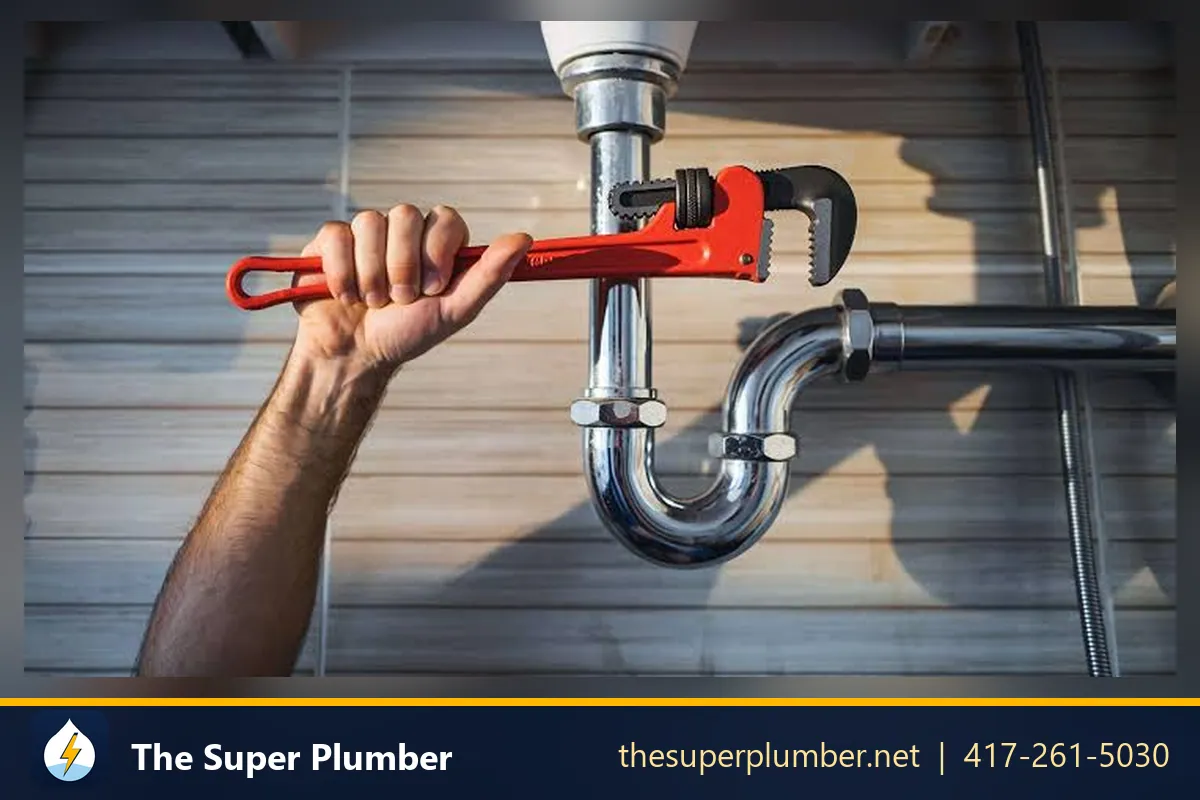
Basement Drainage, French Drains and Crawl Space Problems
Water in a basement or crawl space can come from plumbing, from the ground, or from both. The plumber's job is to find the plumbing cause first and explain what other trades handle.
Basement Floor Drain Problems
A floor drain that gurgles, smells or backs up often has a dry trap, debris or a blockage in the line that serves it. Slow drainage during heavy rain can mean the sewer or storm connection is overloaded. Pour water into a dry trap to restore the seal. Repeated backups call for cleaning or a camera look, so see drain cleaning for how that works.
Basement Leaks and Wall Water: Plumbing or Foundation?
Wet spots that appear on a regular schedule may be plumbing, such as a leaking supply line, a drain fitting or a water heater. Water that appears only after rain along a wall or floor joint usually points to groundwater or the foundation. A plumber can check pipes, fixtures and the water meter for leaks. Learn about leak detection to rule plumbing in or out.
French Drain Systems and Foundation Water Intrusion
French drains, wall sealing and exterior excavation are drainage and foundation work, not plumbing, so ask a drainage or foundation contractor about them. What a plumber can do is confirm the pipes are not the source and check that sump pumps and discharge lines are working. Ask the phone team what can be routed if your problem looks like groundwater rather than a pipe.
Wet Crawl Space Problems and Musty Odors
A damp crawl space may come from a leaking supply or drain pipe, a condensation problem, or ground moisture. Musty odors alone do not identify the cause. A plumber looks for active leaks, failed drain fittings and wet insulation near pipes. Any mold concern is separate work handled by other specialists, so ask what can be routed.
Preventing Basement Water Damage
A few habits lower the risk:
- Test the sump pump before wet seasons and after storms.
- Know where the main water shutoff is.
- Keep floor drains clear and traps filled.
- Check hoses, supply lines and water heater connections for slow weeping.
- Insulate exposed pipes near cold walls.
Give the phone team your street, ZIP and what you have noticed so far.
Water Treatment and Water Softener Services in Lawrence
Softeners and filters are separate equipment, and this plumbing business does not sell or install treatment systems. A plumber can help with the plumbing around them, such as shutoffs, drain lines and leaks near a unit.
Water Softener and Water Treatment System Problems
Common softener problems include salt bridges, clogged drain lines, leaking fittings and a bypass valve left in the wrong position. A plumber can help with leaks, shutoff valves and the drain connection. Resin tanks, valves and control heads are serviced by the manufacturer or a water treatment company. Ask what can be routed when you phone.
Water Softener vs. Water Filtration System
A softener swaps hardness minerals, like calcium and magnesium, for sodium or potassium. A filter removes particles, chlorine taste or specific contaminants, depending on its design. They solve different problems and many homes use neither. If you are unsure which applies, start with your water utility's water quality information and consider testing through a qualified lab.
Understanding Lawrence Municipal Water Quality
This is general background only, with no claim about Lawrence water quality. Municipal water suppliers publish water quality information, and homeowners can review it for hardness, chlorine and other details. Older service lines and interior pipes can matter too, so a lab test of your tap is a sound step. For service line ownership or lead line questions, confirm with the City of Lawrence. See water lines for plumbing-side basics.
Commercial Plumbing Services in Lawrence, MA
Shops, restaurants, offices, apartment buildings and warehouses depend on pipes that keep working during business hours. Commercial plumbing differs from house work in size, code requirements and the cost of a shutdown.
Commercial Plumbing Installation, Repair, and Maintenance
Commercial plumbing covers fixture installation, leak repair, water heater work, drain service and routine checks of supply and waste lines. Larger pipe sizes and shared risers change how a job is planned. Many jobs commonly need permits and inspections; confirm with the City of Lawrence and your plumber. See commercial plumbing for scope.
Commercial Drain, Sewer, Water Line, and Gas Piping Work
Commercial buildings usually have a larger main drain, a longer sewer lateral and many fixtures on one line. Plumbers clear blockages, run a camera, line damaged sections and fix water service leaks. Gas piping is plumber-only work, and permit and inspection rules apply, so confirm locally. Background on sewer line repair helps when a whole building backs up.
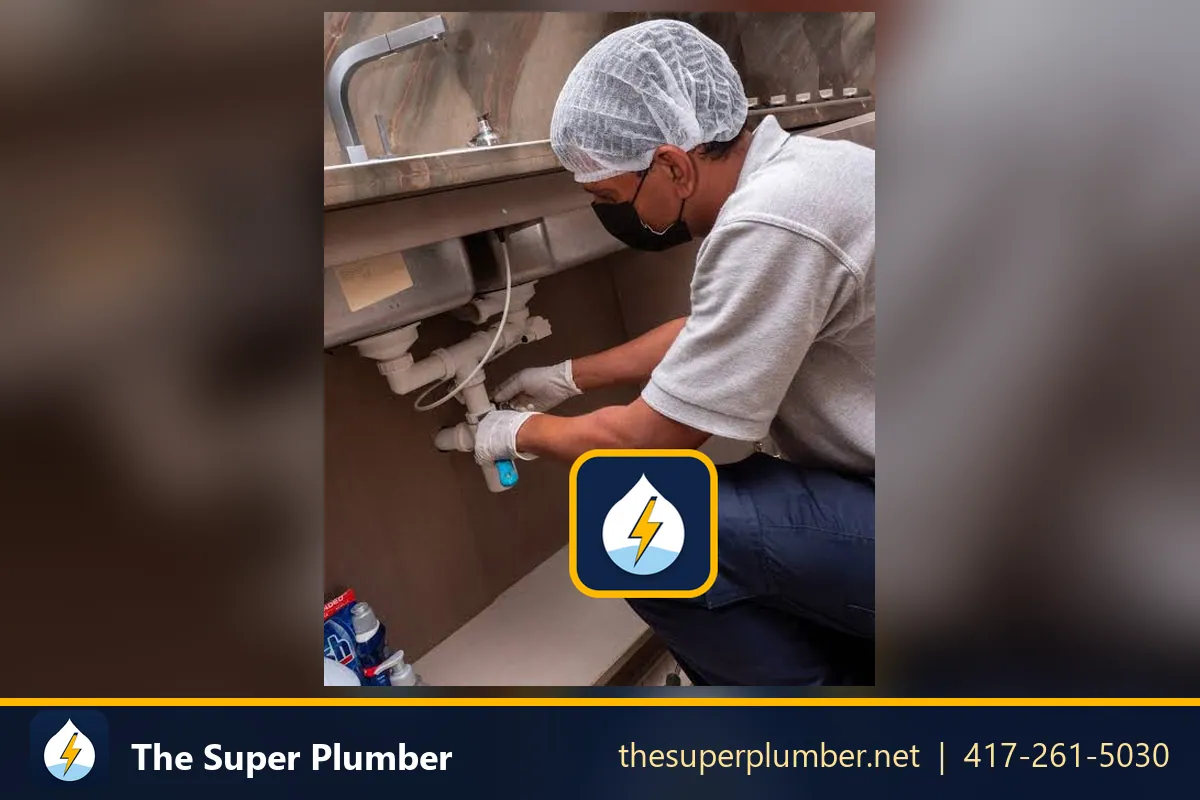
Plumbing for Restaurants
Restaurant drains take grease, food solids and constant dishwashing, so slow sinks and floor drains are common. Hand sinks, prep sinks, grease interceptors and water heaters all matter. Tell the phone team which fixtures are down and whether a grease trap is involved so work can be planned around your kitchen.
Plumbing for Retail Buildings and Offices
Retail and office plumbing is mostly restrooms, break-room sinks, water heaters and shared drain lines. A running toilet or slow floor drain can disrupt customers. Many tenants must ask the landlord who handles repairs first. Have the unit, the fixture and the shutoff valve location ready when you phone.
Plumbing for Apartment Complexes
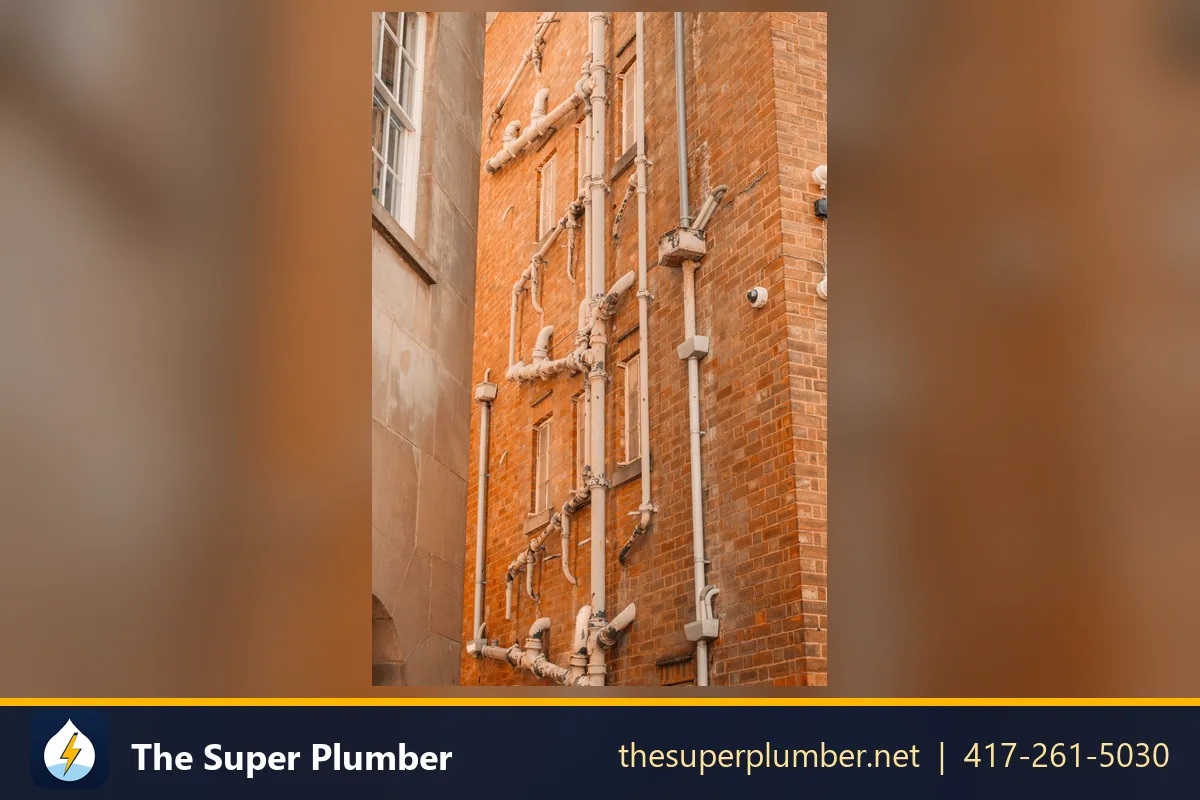
Apartment buildings share risers, stacks and sewer laterals, so one clog can show up in several units. Many older multi-family buildings mix pipe materials from different eras, which makes leaks harder to trace. Managers should note affected units and the main shutoff. See leak detection for how hidden leaks are traced.
Plumbing for Warehouses and Industrial Buildings
Warehouses and industrial buildings tend to have long pipe runs, large floor drains, utility sinks, restrooms and sometimes gas-fired heaters. Frozen lines in unheated areas are a winter concern, and some properties need backflow protection; ask about backflow preventer testing. Call 417-261-5030 with the street, ZIP and what the system is doing.
Mold Inspection, Mold Removal and Remediation in Lawrence
Mold needs moisture, and moisture often starts with a leaking pipe or drain. A plumber finds and stops the water source. Mold testing, removal and remediation are separate trades, not plumbing.
Mold Around Plumbing Leaks, Bathrooms, Basements, and Crawl Spaces
Mold commonly shows up where water lingers: under sinks, behind toilets and tubs, near water heaters, on basement walls and in crawl spaces. Dark spots near a supply line or drain suggest a leak. The plumbing job is to trace and repair that leak.
Moisture Source Identification
Finding the moisture source is the part a plumber can do. That means checking supply lines, drain connections, shutoff valves, heater fittings and pipe condensation, sometimes with leak detection. If the water is not plumbing, a plumber can say so. Read about leak repair for common sources.
Mold Inspection vs. Mold Testing
A mold inspection is a visual assessment of growth and moisture. Mold testing means sampling air or surfaces for a lab. Neither is plumbing work, and this business does not offer either one. A plumber tells you where the water comes from. Ask the phone team what can be routed.
Mold Removal and Remediation: What Is Not Plumbing
Removing mold-damaged material, containment and remediation planning belong to mold specialists. The plumbing side is stopping the leak and repairing the pipe or drain. Ask the phone team what can be routed, and keep notes on where the leak was found.
Mold Prevention After Plumbing Leaks
After a leak is fixed, the area must dry and the cause must stay fixed. Watch for a recurring drip, sweating pipes, a failing shutoff valve or a slow drain keeping a cabinet damp. Run bathroom ventilation and fix small leaks early.
Water Damage Repair and Emergency Water Removal in Lawrence
Plumbing stops the water; restoration crews handle what the water already soaked. Knowing where that line falls helps in the first hour after a leak.
Water Damage from Burst Pipes, Water Heater Leaks, and Sewer Backups
Burst pipes, heater leaks and sewer backups can flood a floor quickly. Shut off the main water supply if a supply line or heater is the source. For a sewer backup, stop using fixtures and avoid contaminated water. See burst pipe repair for the plumbing side.
Basement Flooding and Crawl Space Water
Basements take on water from plumbing failures, sump pump trouble and groundwater after heavy rain or spring thaw. Stay out of standing water near outlets or the panel. A plumber checks supply lines, floor drains, the sewer line and the sump pump. Groundwater problems may call for other contractors.
Emergency Water Removal and Structural Drying: What Restoration Covers
Water extraction, dehumidifying and structural drying are done by water damage restoration companies. This business does not offer extraction, drying or rebuilding. A plumber stops the source and repairs the pipe so restoration can start. Ask the phone team what can be routed, and photograph damage first.
Preventing Mold After Water Damage
Prevention depends on how fast the area dries and whether the source is truly fixed. Plumbers handle the second part: confirming no leak remains and testing shutoff valves. Drying and material removal are for restoration trades. Call 417-261-5030 with your street, ZIP and what flooded.
Common Plumbing Problems in Lawrence, MA Homes
Cold winters, older homes and many mixed-age mill and apartment buildings create a recognizable set of plumbing problems. These are the ones homeowners and tenants describe most.
Frozen Pipes During Massachusetts Winters
Pipes freeze most often in exterior walls, unheated basements, crawl spaces and garages. A trickle at the faucet or frost on exposed pipe is a warning. Open the tap, shut off the main if a pipe has split, and never thaw with an open flame. See water lines for supply basics.
Burst Pipes in Older Lawrence Homes
Older homes may have aged copper, galvanized steel or soldered joints that fail under pressure or after a freeze. If a pipe bursts, shut off the main, open a low faucet to drain the line, then call a plumber for the repair.
Aging Plumbing Systems and Corroded Pipes
Corroded pipes show up as rusty water, pinhole leaks, green crust on copper or falling pressure. Galvanized and old cast iron are common in older buildings. A plumber can explain whether patching or repiping makes sense for your layout.
Low Water Pressure in Older Properties
Low pressure often comes from mineral buildup in galvanized pipe, a partly closed valve, a failing regulator or a leak. One weak fixture usually points to an aerator or cartridge. Whole-home loss deserves a plumber's look.
Repeated Sewer Backups
A sewer that backs up repeatedly usually has a physical problem: roots, a sag, a cracked section or debris building at a weak spot. Snaking may only buy time. A camera shows the cause; sewer camera inspection explains how.
Tree Roots Entering Underground Sewer Lines
Roots enter old clay and cast iron lines through joints and small cracks. Slow drains, gurgling and recurring backups are common signs. Cutting roots clears the line for a while, but a damaged pipe may need lining or replacement.
Basement Water Intrusion After Heavy Rain
Water in a basement after heavy rain may be groundwater, a failed sump pump, a backing-up floor drain or a plumbing leak. A plumber can rule out plumbing. Wall seepage and foundation cracks usually belong to other trades.
Leaking Water Service Lines and Lead Water Service Line Concerns
A leaking service line may show as a wet patch, a sunken yard area or a spinning meter with everything off. Older service lines may include lead or galvanized pipe. Confirm ownership and lead questions with the City of Lawrence, and test through a qualified lab. See water main repair.
Water Heater Failures During Winter
Water heaters work harder when incoming water is colder, so weak tanks often fail in winter. Signs include no hot water, rusty water, popping noise or a puddle. If a tank leaks, shut off the cold supply, then see water heater replacement.
Slow Kitchen and Bathroom Drains
Slow drains usually mean buildup: grease in kitchen lines, hair and soap in bathroom lines. A plunger is a reasonable first step; chemical cleaners can harm pipes. If several drains slow at once, the main line may be involved. See drain cleaning.
Musty Basement and Crawl Space Odors
A musty smell suggests damp materials and often a moisture source. A plumber can check for a leaking pipe, a weeping drain, sump pump trouble or a dry floor drain trap letting sewer odor in. Mold work is separate. Call 417-261-5030 and say where the smell is strongest.
Plumbing Services Across Lawrence, MA ZIP Codes
Lawrence has four ZIP codes, and the phone team also takes calls from other nearby ZIP codes. Boundaries overlap in older neighborhoods, so the exact street always matters more than the ZIP alone.
Plumbing Services in Lawrence 01840
For a drain, water heater, leak or gas question at an address in ZIP 01840 (about 1 mile from Campagnone Common), give the full street address and the cross street if you know it. Because boundaries overlap, a street can sit near the line between two Lawrence ZIP codes. Mention whether the building is a single-family house, a multi-family house or a mixed-use building, since that changes where the shutoffs and main drain usually are.
Plumbing Services in Lawrence 01841
Calls from ZIP 01841 (about 1 mile from Campagnone Common) are handled the same way: street, building type and what the fixture or pipe is doing. Many older buildings have mixed pipe materials from repairs made over decades, so tell the phone team about any galvanized, cast iron or newer plastic piping you can see in the basement. Photos of the problem and of the water meter area help, and so does knowing whether the shutoff valves turn freely or are stuck.
Plumbing Services in Lawrence 01842
If your address falls in ZIP 01842 (about 1 mile from Campagnone Common), say so, but also read the street number slowly. Overlapping boundaries mean a mailing ZIP does not always match the service area on a map. In an apartment building, tell the phone team which unit or floor is affected, and whether neighbors are seeing the same backup, low pressure or leak.
Plumbing Services in Lawrence 01843
Plumbing questions from ZIP 01843 (about 1 mile from Campagnone Common) usually start with the same basics: where the water is, what has already been shut off, and how old the heater or pipes are. For commercial addresses, add the type of business and whether kitchen, restroom or floor drains are involved. Boundaries overlap, so confirm the street when you call. If you can, note when the problem began and whether it follows a pattern, such as only after heavy rain or only when the heater runs.
Other ZIP Codes the Phone Team Also Takes
These are other ZIP codes the phone team also takes calls from. They are not Lawrence neighborhoods, so give the full street address when you call:
- ZIP 01864 (about 4 miles from Lake Quannapowitt)
- ZIP 01887 (about 13 miles from Harvard University)
- ZIP 01889 (about 4 miles from Lake Quannapowitt)
- ZIP 01907 (about 1 mile from Marian Court College)
- ZIP 01940 (about 2 miles from Lake Quannapowitt)
- ZIP 01945 (about 1 mile from Salem State University)
- ZIP 01982 (about 1 mile from Myopia Hunt Club)
- ZIP 02148 (about 4.7 miles from Harvard University)
- ZIP 02474 (about 2.1 miles from Tufts University)
- ZIP 02476 (about 2.9 miles from Tufts University)
- ZIP 02493 (about 2.1 miles from Brandeis University)
What You Can Expect When You Call About Plumbing in Lawrence
This section explains how a first call usually goes, what an estimate is, and where plumbing stops. Availability, pricing and response time are confirmed by phone, never assumed from reading. Use it as background so your call is short and specific.
Local Service Coverage Across Lawrence ZIP Codes
Coverage is confirmed by address, not by ZIP code alone. When you call 417-261-5030, give Lawrence, the street and the ZIP so the phone team can tell you whether and how soon a plumber can be routed. If your address is near a boundary, say so. Availability depends on the day, the type of work and what is happening at your property.
Residential and Commercial Plumbing in One Call
One number covers houses, multi-family buildings, restaurants, shops, offices and warehouses. Say which you have, because commercial work often involves grease interceptors, multiple restrooms, larger water lines or floor drains, while residential work often involves a single main shutoff and one water heater. Mention if the building has tenants, since access and shutoff timing may need coordination with them.
Estimates Explained Before Work Starts
An estimate is the plumber's scope for a fix, based on what they find. Prices are confirmed by phone and on site, never guessed from an article. Cost usually depends on access, pipe material, depth, fixture or equipment type, permit needs and how long the work takes. Ask what is included, what could change the scope, and whether your approval is needed before extra work starts.
Equipment and Methods a Plumber May Bring
Depending on the problem, a plumber may bring a drain machine, a hydro jetting unit, a sewer camera, a pipe locator, pressure gauges, a gas leak detector and hand tools for fixture work. Larger jobs may call for trenchless lining or pipe bursting equipment. You do not need to choose a method in advance. Describe the symptoms and the plumber recommends a method after diagnosis.
What Is and Is Not Plumbing: Honest Limits
Plumbing covers pipes, drains, sewers, water heaters, water lines, gas piping, fixtures, disposals and sump pumps. It does not include mold testing or removal, water damage restoration, structural drying, water treatment sales or foundation waterproofing. A plumber can find and fix the leak or backup that caused the problem. For the rest, ask the phone team what can be routed, and read about the full range of plumbing services.
Our Plumbing Service Process
A plumbing visit follows a predictable order, from listening to the problem through testing the finished work. Knowing the steps helps you ask for what you need and spot anything that gets skipped. Each step below is also a chance for you to ask questions before the next one begins.
Understanding Your Plumbing Problem
Everything starts with a clear description. Tell the phone team where the problem is, when it started, what you have already tried and whether it is getting worse. Have the street, the ZIP and the building age ready, and call 417-261-5030 when you are ready to talk it through. Photos of leaks, labels on equipment and the location of your main shutoff speed up the first conversation.
Initial Inspection and Diagnosis
On arrival, a plumber looks at the fixture, pipe or equipment, checks the nearest shutoff valves and tests how the system behaves. That might mean running water, checking pressure, sending a camera down a drain or tracing a leak. The aim is to find the actual cause, not just the symptom, before recommending anything. You may be asked to show where the problem is and what changed recently.
Identifying the Appropriate Repair
Once the cause is clear, the plumber lays out the realistic options: a small repair, a part replacement, a larger repair or a full replacement. Each has tradeoffs in disruption, durability and cost factors. A sound recommendation explains why one option fits your building and pipe material. Ask what happens if you wait, and whether a temporary fix is safe in the meantime.
Explaining the Estimate
Before work begins, the plumber should explain what the work involves, what drives the price and what might change it. Ask about permits, access to walls or floors, disposal of old parts and whether any part of the job needs another trade. Decide only when the scope makes sense to you. Prices are confirmed with the plumber, not set by this text.
Completing the Plumbing Work
The plumber shuts off the right valve, protects the work area and makes the repair or installation. Where gas, venting, electrical connections or pressurized lines are involved, that work stays with the plumber. Permits and inspections commonly apply to larger jobs such as sewer, water service and gas work, so confirm with the City of Lawrence and your plumber which ones your job needs.
Testing the Repaired System and Final Walkthrough
After the work, the plumber tests the system: running fixtures, checking for leaks under pressure, confirming drains flow and restarting equipment safely. Then walk through the job together. Ask where the shutoffs are, what to watch for in the next few days and what maintenance helps. Keep any paperwork, model numbers and notes for future calls, and report anything that looks off in the first few days rather than waiting.
Call First: Plumbing Services in Lawrence
Plumbing problems rarely wait, and the right first step is a short call. When you ring 417-261-5030, give three things: Lawrence plus the street and ZIP, what is happening right now, and what you know, such as the age of the home or building, where the shutoff is, the fuel type and any photos. The phone team confirms availability, pricing and response time before anything is scheduled. If you smell gas, leave the building first and call the gas utility or 911 from outside. For wider coverage, see plumbing in Massachusetts, read about emergency plumbing and learn what drives a plumber's cost. Have a pen ready, since the phone team may ask for a model number, a shutoff location or a photo of the problem, and a calm, specific description gets you a clearer answer faster.
ZIP Codes We Serve in Lawrence, MA
Lawrence coverage includes 15 ZIP codes. Look up yours in the table.
| ZIP code | Area | Nearby landmarks | County |
|---|---|---|---|
| 01840 | Lawrence area | ▸ Near Campagnone Common ▸ Near Great Stone Dam ▸ About 3 miles from The Stevens-Coolidge Place | Essex |
| 01841 | Lawrence area | ▸ Near Campagnone Common ▸ Near Great Stone Dam ▸ About 3.2 miles from The Stevens-Coolidge Place | Essex |
| 01842 | Lawrence area | ▸ Near Campagnone Common ▸ Near Great Stone Dam ▸ About 2.9 miles from The Stevens-Coolidge Place | Essex |
| 01843 | Lawrence area | ▸ About 1.3 miles from Campagnone Common ▸ About 2.3 miles from The Stevens-Coolidge Place ▸ About 2.5 miles from Merrimack College | Essex |
| 01864 | Lawrence area | ▸ About 4.2 miles from Lake Quannapowitt ▸ About 5 miles from Addison Gallery of American Art ▸ About 14 miles from Harvard University | Middlesex |
| 01887 | Lawrence area | ▸ About 5 miles from Lake Quannapowitt ▸ About 11 miles from Tufts University ▸ About 13 miles from Harvard University | Middlesex |
| 01889 | Lawrence area | ▸ About 3.8 miles from Lake Quannapowitt ▸ About 5 miles from Addison Gallery of American Art ▸ About 14 miles from Harvard University | Middlesex |
| 01907 | Lawrence area | ▸ About 1.2 miles from Marian Court College ▸ About 2.2 miles from Salem State University ▸ About 3.4 miles from Peabody Essex Museum | Essex |
| 01940 | Lawrence area | ▸ About 2.4 miles from Lake Quannapowitt ▸ About 10 miles from Tufts University ▸ About 12 miles from Harvard University | Essex |
| 01945 | Lawrence area | ▸ About 1.4 miles from Salem State University ▸ About 2.1 miles from Peabody Museum of Salem ▸ About 2.2 miles from Peabody Essex Museum | Essex |
| 01982 | Lawrence area | ▸ Near Myopia Hunt Club ▸ Near Gordon–Conwell Theological Seminary ▸ About 1.9 miles from Wenham Museum | Essex |
| 02148 | Lawrence area | ▸ About 3.4 miles from Tufts University ▸ About 4.3 miles from TD Garden ▸ About 4.7 miles from Harvard University | Middlesex |
| 02474 | Lawrence area | ▸ Near Zoryan Institute ▸ About 1.1 miles from Old Schwamb Mill ▸ About 2.1 miles from Tufts University | Middlesex |
| 02476 | Lawrence area | ▸ Near Old Schwamb Mill ▸ Near Zoryan Institute ▸ About 2.9 miles from Tufts University | Middlesex |
| 02493 | Lawrence area | ▸ Near Regis College ▸ About 2 miles from Rose Art Museum ▸ About 2.1 miles from Brandeis University | Middlesex |
Other Massachusetts Cities and ZIP Codes We Serve
Calls are also taken for other Massachusetts cities, 162 in all. Every city is covered in plumbing services across Massachusetts.
| City | ZIP codes and places |
|---|---|
| Barrington | 02101 about 1.2 miles from Logan International Airport; about 1.8 miles from Boston Public Library 02106 near Fisher College; near Boston Public Garden 02108 near Boston Common; near Boston Public Garden |
| Wakefield | 02129 near Monument Square Park; near Thompson Square 02131 about 1.2 miles from Faulkner Hospital; about 1.3 miles from Bussey Institution 02143 near Peabody Museum of Archaeology and Ethnology; near Harvard Law School |
| Auburn | 01730 about 1.2 miles from Hanscom Field; about 3.8 miles from Concord Museum 02135 near Saint John's Seminary; near The Auerbach Center 02152 about 1.6 miles from Logan International Airport; about 2.2 miles from Revere Beach |
| Methuen | 02128 near Logan International Airport; about 1.7 miles from Boston Public Library 02153 about 1.1 miles from Tufts University; about 1.4 miles from Dilboy Stadium 02155 near Tufts University; about 1.2 miles from Dilboy Stadium |
| Litchfield | 01862 about 4 miles from Cawley Memorial Stadium; about 4.8 miles from Lowell Memorial Auditorium 02464 about 1.4 miles from Crystal Lake; about 1.5 miles from William James College 02479 near McLean Hospital; about 2.8 miles from Harvard–Smithsonian Center for Astrophysics |
| New Bedford | 02740 near Buttonwood Park Zoo; about 1.7 miles from Fairhaven Town Hall 02741 about 1 mile from Buttonwood Park Zoo; about 1.6 miles from Fairhaven Town Hall 02742 about 1 mile from Buttonwood Park Zoo; about 1.6 miles from Fairhaven Town Hall |
| Carlisle | 01741 about 4.8 miles from Nashoba Valley Ski Area; about 4.9 miles from Concord Museum 01908 about 3.3 miles from Marian Court College; about 3.5 miles from Revere Beach 01949 about 2.2 miles from Danvers State Hospital; about 6 miles from Lake Quannapowitt |
| Haverhill | 01830 about 1.4 miles from Northpoint Bible College; about 3 miles from Ski Bradford 01832 about 1.8 miles from Northpoint Bible College; about 3.6 miles from Ski Bradford 01835 near Northpoint Bible College; about 1.4 miles from Ski Bradford |
Frequently Asked Questions
How do I find a reliable plumber in Lawrence?
Ask direct questions before anyone starts work: whether they hold the required Massachusetts licensing, whether they carry insurance, who pulls permits, and how they explain an estimate. Confirm those answers by phone rather than assuming. Reading about plumbing services in Lawrence MA is background only; the phone team confirms what applies to your property.
What affects the cost of a plumbing job?
Cost depends on access, pipe material and age, how far the problem runs, fixture or equipment choice, permit needs, and whether digging or a camera inspection is involved. Two similar-looking clogs can need very different work. Pricing is confirmed by phone after the team hears your street, ZIP, and what the plumbing is doing. See the plumber cost overview for the factors.
Can I get an emergency plumber in Lawrence at night or on a weekend?
People do search for an emergency plumber or a 24 hour plumber when water is spreading or sewage is backing up, but availability is not assumed here. Availability and response are confirmed when you phone. Shut off the water or fixture first if you can, then call 417-261-5030 and describe what is happening.
What should I do first when a pipe bursts?
Shut off the main water valve, open a cold faucet low in the house to relieve pressure, and switch off the water heater's power or gas control if water reached it. Keep electricity away from standing water and move belongings. Take photos, then ask a plumber about burst pipe repair.
How do I find a hidden water leak?
Shut off every fixture and watch the water meter dial. If it keeps moving, water is escaping somewhere. Warm floor spots, damp drywall, musty smells, and unexplained sounds of running water are other clues. Pinpointing the source behind walls or under a slab usually takes tools, so ask about leak detection.
Why is my water pressure low?
Common causes include a partly closed shutoff valve, a failing pressure regulator, clogged aerators, corroded galvanized supply pipes, or a leak. If only one fixture is weak, the cause is local to it. If the whole house is weak, check whether the problem is hot only, cold only, or both, then call.
How often do drains need professional cleaning?
There is no fixed schedule. A drain that runs freely may never need it, while a line with grease, roots, or old cast iron scale may need attention more often. Slow drains, gurgling, and repeat clogs are the signals. Ask a plumber whether snaking or drain cleaning fits your pipes.
What is hydro jetting?
Hydro jetting uses high-pressure water from a nozzle to scour grease, sludge, and scale off the inside of a drain or sewer pipe, rather than just punching a hole through a clog. It often suits main lines with repeat buildup. A camera look first helps confirm the pipe can handle it. Read more about hydro jetting.
What are the signs of a damaged sewer line?
Watch for several fixtures backing up at once, gurgling toilets, sewage odors, soggy or unusually green patches in the yard, and slow drains throughout the home. In older properties, cracked, offset, or root-filled pipe is common. A camera run shows what is wrong; see sewer camera inspection.
Why do sewer backups keep coming back?
Repeat backups usually mean the cause was never removed: tree roots, a sagging or cracked pipe, grease buildup, a belly where water pools, or heavy debris. Clearing the clog gives temporary relief only. A camera inspection helps decide whether the line needs cleaning, lining, or replacement. Mention how often it happens when you call.
What affects the cost of sewer line replacement?
The main factors are pipe length and depth, what runs above it such as paving or landscaping, soil conditions, access, the method used, and permit requirements. Trenchless options can change the scope compared with open digging. Nobody can responsibly give a figure without seeing the line, so pricing is confirmed by phone; see sewer line replacement.
Can a sewer line be repaired without digging up the yard?
Often yes, depending on the pipe's condition. Trenchless methods like pipe lining and pipe bursting need only small access points instead of a long trench. A badly collapsed or severely misaligned section may still need excavation. A camera inspection is how a plumber decides which approach applies to your line.
What is trenchless pipe lining?
Pipe lining, often called cured-in-place pipe, pushes a resin-soaked liner into an existing pipe, then cures it into a new smooth inner pipe. It can seal cracks and root entry points without removing the old pipe. It works best when the host pipe is still mostly continuous. See trenchless pipe repair.
How does pipe lining differ from pipe bursting?
Lining coats the inside of the existing pipe, so the old pipe stays in place. Pipe bursting pulls a new pipe through while fracturing the old one outward, which can fit pipes too damaged to line. Offsets, collapses, and sizing questions often decide it. A camera inspection helps a plumber choose.
How long does a water heater last?
Tank heaters wear out gradually, and lifespan depends on water conditions, how well the tank is maintained, and usage. Hard water, sediment, and a spent anode rod shorten life. Tankless units commonly outlast tanks when maintained. Age, rust at the base, and puddles under the tank all matter; check the label date.
Should I repair or replace my water heater?
Repair makes sense for a failed part such as a thermostat, element, or igniter on a unit that is otherwise sound. Replacement is more likely when the tank itself leaks, the unit is old, or repairs keep returning. Have the model and age ready, and ask about water heater replacement.
Why do pipes freeze, and how do I prevent it?
Pipes freeze when cold air reaches them, often in exterior walls, unheated basements, crawl spaces, and garages. Insulating exposed pipes, sealing drafts, keeping the heat on, and knowing where the main shutoff is all help. If a pipe is frozen, keep the water off and do not use open flame.
When does a home need whole-house repiping?
Signs include repeated leaks, discolored water, low pressure throughout the house, and aging galvanized or corroded supply lines. One leak alone does not always mean repiping. A plumber looks at pipe material, condition, and access before recommending partial or full replacement. Photos of visible pipes and the home's age help.
What are the signs of a leaking water line?
Look for a wet or unusually green patch outdoors, a drop in pressure, the sound of water running when nothing is on, a spinning meter with everything off, or a rising water bill. Where the line enters the building is a common trouble spot. Ask about water main repair.
What should I do about a flooded basement?
Stay out of standing water if the electrical panel or outlets may be wet, shut off the water supply if a plumbing line is the source, and call the utility or an electrician if power is at risk. A plumber can look for a burst pipe, failed sump pump, or backed-up drain. Cleanup and drying are separate trades.
Do I need a sump pump?
It depends on the basement and how groundwater behaves around it. Many New England basements get water during spring thaw or heavy rain, and a pit with a working pump is a common answer. A plumber can discuss a sump pump, a battery backup, and discharge piping.
Who handles mold around pipes and crawl space moisture?
A plumber finds and fixes the leak or moisture source from the plumbing side. Mold testing, removal, and remediation are separate work that this phone team does not perform. If you suspect mold, mention it when you call and ask what can be routed. Stopping the water source comes first.
What is the difference between a water softener and a filter?
A softener targets hardness minerals that cause scale; a filter targets things like sediment, taste, or chlorine, depending on the media. They solve different problems. For water quality questions, check your water utility's information and use a qualified lab. A plumber can discuss shutoffs, hookups, and drain lines near a unit.
Who is responsible for the sewer lateral in Lawrence?
Responsibility for the pipe between a building and the main can vary by location along the line, and it is not safe to assume. Confirm with the City of Lawrence, including the Lawrence water and sewer department, before spending money. A plumber can show where a problem is with a camera. Lead service line status also needs that check.
Do you serve commercial plumbing needs and which ZIP codes?
Yes, commercial plumbing is part of the work, covering restaurants, offices, retail, apartment buildings, and warehouses, including drains, sewer, water lines, and gas piping. The four Lawrence ZIPs are 01840, 01841, 01842, and 01843, each noted as about 1 mile from Campagnone Common; other ZIP codes are also taken, so ask the phone team.
How do I request an estimate?
Call 417-261-5030 and give three things: Lawrence plus your street and ZIP, what is happening, and what you know, such as building age, where the shutoff is, fuel type, and any photos. The phone team confirms availability, pricing, and what can be routed. Nothing here replaces that conversation.
Ready to talk to a plumber? Call 417-261-5030.
Call 417-261-5030