
Quick links
- Plumbing Repair in El Cajon, CA: Repairs Covered Before You Call
- Emergency Plumber in El Cajon: What Counts as an Emergency
- Slab Leak Repair in El Cajon, CA: Detection, Rerouting, and Repair Options
- Sewer Line Repair in El Cajon, CA: Backups, Roots, Cracks, and Collapsed Pipe
- Drain Repair in El Cajon, CA: When Cleaning Is Not Enough
- Pipe Repair and Replacement in El Cajon, CA: Leaks, Corrosion, and Repiping
- What Affects Plumbing Repair Cost in El Cajon, CA
- What to Expect From a Repair Visit: Diagnosis, Written Scope, Repair, and Testing
- El Cajon ZIP Codes and Nearby Cities for Plumbing Service
- Call First: Plumbing Repair in El Cajon
- ZIP Codes We Serve in El Cajon
- Related Plumbing Help
- Frequently Asked Questions
Plumbing repair El Cajon CA starts with a clear description of what the water, drain, or pipe is doing. This is background reading for homeowners, landlords, and small business owners across El Cajon's four ZIP codes who are dealing with slab leaks, sewer lines, stubborn drains, or failing pipes. When you are ready, call 417-261-5030. Availability, pricing, and response time are confirmed by phone, not promised in writing here.
What follows explains in plain words how each problem is usually diagnosed and fixed. You will find what a repair visit covers, how to tell a burst pipe from a sewer backup, how to find your main water shutoff, and what to have ready for the call. Later sections go deep on slab leak repair, sewer lines, drains, and pipe replacement.
Plumbing Repair in El Cajon, CA: Repairs Covered Before You Call
Plumbing repair here means finding the failed part, fixing only what needs fixing, and testing the result. Houses and condos differ from small commercial buildings, and both start with the same diagnosis and the same phone call.
Residential Plumbing Repair for Houses, Condos, and Rentals
Residential plumbing repair covers leaking supply lines, running toilets, clogged drains, failed shutoff valves, and fixtures that no longer seal. In houses, the problem is often in a crawlspace, wall, or slab. In condos, shared stacks and walls mean you may need to involve the association before opening anything. Tenants usually report the problem to the landlord first, and the landlord then arranges the repair. For broader fixture work, see plumbing repair services, including faucet and sink repair. Mention whether the home is owned, rented, or shared-wall when you phone.
Commercial Plumbing Repair for Small Shops and Offices
Commercial plumbing repair for a small shop or office usually involves restrooms, floor drains, grease-prone sinks, and water lines that cannot stay down during business hours. A plumber commonly asks about the building layout, who owns the pipes, and whether a landlord must approve work. Older tenant spaces may have mixed pipe materials that complicate repairs. Details on commercial plumbing work are covered separately. Tell the phone team your hours, what is not working, and whether the problem affects customers or neighbors.
What to Tell the Phone Team About Your El Cajon Plumbing Problem
Give the phone team three things: the El Cajon street address with ZIP, what the problem is doing, and what you already know. Be specific about symptoms, such as water on the floor, a gurgling drain, or low pressure. Then add what you know:
- Whether the water is shut off and where the shutoff is
- House age, and whether it sits on a slab or crawlspace
- Where the sewer cleanout is, if you have found it
- Past repairs, repipes, or camera inspections
- Photos of stains, meters, or damage
Give the exact street, because ZIP boundaries and mailing addresses can overlap.
Plumbing Inspection and Troubleshooting Before Any Repair
A plumbing inspection finds the actual cause before anyone cuts into a wall or digs a yard. Troubleshooting commonly starts with questions, then moves to checks such as a water meter test, pressure readings, a drain camera, or leak detection equipment. A plumber is looking to separate a supply leak from a drain problem, because the fixes differ. A written scope should follow diagnosis, so you approve a known repair rather than guesswork. Ask what was found, where, and why it needs the proposed fix.
Emergency Plumber in El Cajon: What Counts as an Emergency
An emergency is water or sewage you cannot control, or a failure that threatens the structure or health. People often ask for an emergency plumber or a 24 hour plumber; availability is confirmed when you phone. Read emergency plumbing basics, then call 417-261-5030.
Burst Pipe, Sewer Backup, or Slab Leak: Which Is It?
A burst pipe sprays or floods fast, a sewer backup pushes dirty water up through low drains, and a slab leak is usually hidden and slow. Each calls for a different response:
- Burst pipe: sudden flooding, often with the meter spinning; see burst pipe repair.
- Sewer backup: gurgling, odor, or several drains backing up together; see sewer line problems.
- Slab leak: warm floor spots, running-water sounds, or a rising bill.
If you cannot tell, describe the symptoms as they are.
How to Shut Off the Main Water Supply
To shut off the main water supply, find the main valve and turn it fully closed. It is often near the street meter or on the front or side wall of the house, but locations vary.
- Locate the main valve, which may be a round handle or a lever.
- Turn it clockwise, or turn the lever a quarter turn, until it stops.
- Open a faucet at the lowest point to relieve pressure.
- Take photos of the leak and the valve for your records.
If the valve will not turn, stop forcing it and say so on the call. Tell the phone team if the water heater is involved.
What to Do Before the Plumber Arrives
Before the plumber arrives, limit damage and protect yourself. Move belongings away from water, lift small rugs, and use towels or buckets to catch drips. Keep everyone out of standing water if electrical outlets or cords are nearby, and do not touch sewage. Avoid chemical drain cleaners, which can harm pipes and splash on whoever works next. Never run water into a backed-up drain. If you smell gas, leave the building, avoid switches and flames, and call the gas utility or 911 from outside. Note when it started and what changed, then share it by phone.
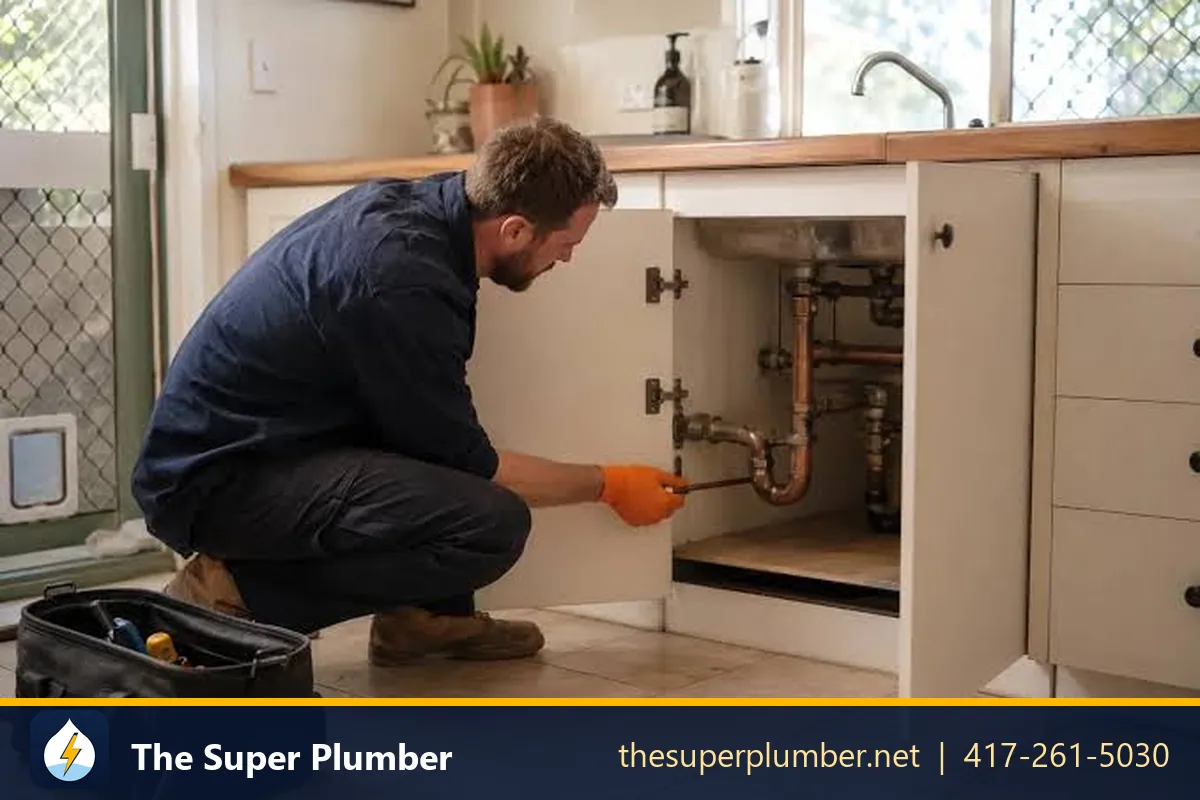
Need a plumber in your area? Call to confirm coverage.
Call 417-261-5030Slab Leak Repair in El Cajon, CA: Detection, Rerouting, and Repair Options
A slab leak is a leak in a water line that runs in or under the concrete floor of a home. It is found by testing first, and it is repaired by opening the slab, going around it, or replacing the line.
What Is a Slab Leak and Why Does It Happen?
A slab leak is a break or pinhole in a pressurized supply line, hot or cold, that sits in or beneath the concrete foundation. Slab-on-grade construction is very common in Southern California, so many El Cajon homes have some supply piping buried this way.
Common causes include:
- Corrosion, especially in aging copper, where hard water and scale can follow pinholes.
- Abrasion, when a line rubs on concrete or gravel as the slab shifts or expands and contracts.
- Poor installation, such as sharp bends or pipe resting on rough fill.
- High water pressure that keeps stressing joints.
Drain leaks under a slab are a different problem and are diagnosed differently.
Signs of a Slab Leak: Bills, Sounds, Warm Floors, and Damp Spots
The most common sign is a water bill that rises with no change in how you live. Other signs often show up alongside it:
- The sound of running water when every fixture is off.
- A warm spot on the floor, which commonly points to a leaking hot line.
- Damp or lifting flooring, baseboards, or carpet, and a musty smell.
- Low water pressure, or a water heater that seems to run constantly.
- A water meter that keeps moving with everything turned off.
None of these proves a slab leak on its own, since a running toilet or an irrigation fault can look similar. Photos of the damp area and a note of when you first noticed the change help a plumber narrow it down. If water is already pooling, see burst pipe repair for what to do first.
How Plumbers Detect a Slab Leak Without Tearing Up the Floor
Plumbers usually confirm a leak exists, then pinpoint where it is, then decide how to reach it. Locating the leak before touching the floor is what keeps the opening small and the repair targeted.
A typical sequence is:
- Rule out fixtures, irrigation, and the water heater.
- Run a meter test and a pressure isolation test.
- Narrow the zone with listening equipment, tracer gas, or thermal imaging.
- Mark the spot, then choose a repair method.
Skipping the locating step is how floors get opened in the wrong place. A dedicated leak detection visit can also be useful when you only suspect a hidden leak.
Meter Test and Pressure Test: The First Checks
A meter test shows whether water is moving through your service when nothing should be using it. With all fixtures off, a meter dial or low-flow indicator that keeps turning suggests a leak somewhere on the property.
A pressure isolation test goes a step further. A plumber closes off sections of the supply system and watches a gauge, so a falling reading helps tell whether the loss is under the slab, in the walls, or on the yard-side line. You can do the meter check yourself: note the reading, avoid using water for a short while, and look again. Do not open or work on pressurized lines yourself. Share what you saw when you phone.
Acoustic, Electronic, and Thermal Leak Detection
Acoustic detection uses sensitive microphones on the floor to hear the hiss or vibration of escaping water and trace it to its loudest point. Electronic and tracer-gas methods add a safe gas to the line and sense where it escapes, which can help in noisy or hard-to-hear conditions.
Thermal imaging reads heat patterns and is mainly useful for hot-line leaks, since warm water can show up as a cooler or warmer patch on a floor scan. No single method works in every situation. Experienced plumbers often combine two so that the mark on the floor is confirmed before any concrete is touched.
Spot Repair Through the Slab
A spot repair means opening the concrete directly over the leak, cutting out the damaged section of pipe, and installing new pipe with proper fittings. It is often the most direct choice when the leak is isolated and the surrounding pipe is in reasonable shape.
The work involves cutting the floor covering and concrete, repairing the line, pressure testing it, and patching the slab. Floor finishes may need to be replaced or matched afterward, so ask what the repair scope includes. If the same line has already failed in more than one place, a spot repair may only delay the next leak.
Pipe Rerouting Around the Slab and Partial Replacement
Rerouting abandons the leaking buried line and runs new supply piping through walls or the attic instead. It avoids opening the slab, which can mean less mess, and it removes the section that was failing from service.
Partial replacement swaps one run or zone, for example the hot line to a bathroom, while leaving healthy sections alone. Rerouting usually means access holes in drywall that need patching, and the new line has to be sized and routed to suit your home. Ask a plumber how many fixtures the reroute would cover and what finish work is involved. A water line review can show how the rest of the supply is arranged.
Slab Leak Repair Without Breaking Concrete: What Is Realistic
Repairing a slab leak without breaking concrete is sometimes possible, but not always. Rerouting through walls or the attic is the most reliable way to avoid the slab, and tunneling under the foundation from outside may suit some homes.
Epoxy or lining methods are used on some drain and sewer pipes, but whether they fit a pressurized supply line is something to ask a plumber about rather than assume. Pipe condition, depth, and house layout decide what is realistic. Be wary of any promise that a leak can always be fixed with no disruption. A plumber who has located the leak can explain which options apply to your home.
Slab Leak Repair or Repipe: Making the Call
Spot repair suits a single, well-located leak in otherwise sound pipe. Repiping tends to make more sense when leaks are repeating, the copper is pitted throughout, or water chemistry and age are wearing the whole system.
Questions to ask:
- How many leaks has this system had, and where?
- What is the pipe material and condition?
- Would a reroute cover several risky runs at once?
- What does each option mean for walls, floors, and downtime?
For the wider decision, a leak repair overview and slab leak repair details are useful background.
What Affects Slab Leak Repair Cost and Time
Cost and time depend on how hard the leak is to find, how deep and accessible the line is, and which fix is chosen. A single spot repair differs from a reroute, and a whole-system repipe differs again.
Other factors include the flooring over the area, how much drywall must be opened and restored, whether permits are needed, and whether the slab is heavily finished with tile or hardwood. For a broader view of how plumbers price work, see plumber cost factors. Pricing and response time are confirmed by phone, so call 417-261-5030 with your El Cajon street address and ZIP, such as ZIP 92020 (about 6.3 miles from San Diego State University), and describe the symptoms.

Sewer Line Repair in El Cajon, CA: Backups, Roots, Cracks, and Collapsed Pipe
A sewer line is the buried pipe that carries everything from your house to the public main. When it fails, drains back up. Here is how plumbers work out what went wrong and which fix fits.
Signs of a Damaged Sewer Line and What Each One Points To
Several drains slowing down at once usually points to the main sewer line, not a single fixture. A clog in one sink stays in that sink; a damaged lateral shows up house-wide.
- Gurgling in a tub or toilet when another fixture drains often means air is trapped behind a partial blockage.
- Backups in the lowest drain, such as a shower or floor drain, suggest the main line is restricted.
- Sewer odor indoors or in the yard can mean a cracked pipe or a dry trap.
- Soggy or sunken patches in the lawn may mean a broken pipe is leaking into soil.
- Repeat clogs after cleaning suggest a defect, not just paper or grease.
If sewage is coming up inside, stay out of it and keep children and pets away. Mention which drains are affected when you call.
Sewer Camera Inspection: How the Diagnosis Works
A sewer camera inspection is a small waterproof camera on a flexible cable, fed through the cleanout so a plumber can see inside the pipe. It replaces guessing with a recording of what is actually down there.
The plumber watches for roots, grease, scale, cracks, offset joints, bellies where water pools, and sections that have flattened. Many cameras also report the distance from the cleanout, so a problem can be located before anyone digs. Ask to see the footage and for a plain description of each defect and where it sits. More on the process is in this overview of sewer camera inspection. If you know where your cleanout is, say so on the phone; if you do not, a plumber can often find it.
Tree Roots in El Cajon Sewer Laterals
Roots are one of the most common reasons an older sewer lateral clogs, and they do not need a large opening to get in. Mature trees send fine roots toward the moisture and nutrients inside a pipe, and a loose joint or hairline crack is enough of an invitation.
In a dry inland valley like El Cajon, where summers are hot, roots may search harder for water, and older clay joints give them easy entry. A cutting head on a cable machine or a hydro jetting tool can clear the mass, but roots usually grow back unless the opening is sealed. If the camera shows roots at a joint, ask whether a spot repair or lining would stop them returning, and mention any large trees near the line.
Cracked, Offset, and Collapsed Sewer Pipe
A cracked pipe leaks, an offset pipe snags paper, and a collapsed pipe blocks flow. Each is a structural problem that cleaning alone does not cure.
Cracks often come from age, soil movement, or heavy loads over the line. Clay soils can swell and shrink, and over time that movement can pull joints apart or push sections out of line. A collapse can follow, leaving a pipe partly or fully closed. Camera footage shows which of these you have, and the finding sets the repair method. Heavy rain is uncommon here, but when it arrives it can expose weak spots, so a backup after a storm deserves a camera look. Tell the phone team when the trouble began and what the drains were doing.
Sagging Pipe, Orangeburg, and Aging Sewer Lines
A sagging section, called a belly, holds water and waste instead of letting it flow downhill. Solids settle there, and clogs form at the same spot again and again.
Older lines raise their own questions. Orangeburg is tar-impregnated fiber pipe that can soften and deform. Vitrified clay is durable but jointed, and cast iron can corrode inside. Newer homes more often have ABS or PVC. A home with an original lateral from an older tract may be a candidate for inspection even without symptoms. Ask a plumber which material is on camera, because it limits which repairs are realistic. Give the approximate age of the house when you phone.
Sewer Line Cleaning Versus Sewer Line Repair
Cleaning removes what is in the pipe; repair fixes the pipe itself. If the line is intact, cleaning may be all it needs. If it is damaged, the clog will come back.
A plumber may start with sewer line cleaning using a cable machine, then run a camera to see what remains. High-pressure water from hydro jetting can scour grease and scale, though it is not suited to every fragile pipe, so the camera comes first. A good rule of thumb: if the same line clogs at the same spot after being cleared, ask for a camera inspection before paying to clear it again.
Spot Repair, Open-Trench, Trenchless Lining, and Pipe Bursting
Four methods cover most sewer repairs, and the right one depends on the damage, depth, and access.
- Spot repair replaces one short damaged section, often by digging down to it.
- Open-trench replacement exposes the pipe along its length and swaps it for new pipe.
- Cured-in-place lining pulls a resin liner through the old pipe, creating a new pipe inside the old one. It needs a pipe that is open and reasonably round, and it does not fix a bad collapse or a deep belly.
- Pipe bursting pulls new pipe through while breaking up the old one, and it can reduce digging.
Read about trenchless pipe repair for how lining and bursting compare. Ask what each option would disturb in your yard, driveway, or landscaping.
When a Sewer Line Needs Full Replacement
Replacement makes sense when damage runs along much of the line, or when the pipe is too deformed for a liner. Repeated spot repairs on the same lateral can point the same way.
Typical triggers include extensive cracking, severe root intrusion at many joints, collapse, large bellies, or deteriorated fiber pipe. A plumber compares the cost and disruption of replacing with the cost of repeating repairs. When the case is close, ask for both options in writing. For a broader look, see how sewer line replacement is scoped, and read the main sewer line repair overview if you are still sorting out the problem.
Sewer Lateral Ownership, Permits, and Inspections in El Cajon
The sewer lateral is commonly the homeowner's responsibility from the house to a point near the property line or the connection to the public main, but where that point sits can vary. Confirm with the City of El Cajon who owns which section.
Sewer work commonly needs a permit and sometimes an inspection before the trench is covered. Ask your plumber who pulls the permit and what the city requires, and confirm those details with the City of El Cajon. For rentals, owners and tenants should also settle who calls the plumber. If a backup comes from the public main, the fix is a different one, so say so if neighbors are affected.
What Affects Sewer Line Repair Cost and Time
Sewer repair cost depends mostly on the method, the depth, and how easy it is to get to the pipe. Pricing and timing are confirmed by phone, after the plumber knows what the camera found.
- Length of pipe that needs work
- Depth of the line and soil conditions
- Access, such as driveways, patios, fences, and landscaping
- Pipe material and the method chosen
- Permit and inspection steps
- Whether the line is blocked and needs clearing first
See general plumber cost factors for more detail. If sewage is backing up now, mention that when you call so the phone team can discuss emergency plumbing availability. Have your street, ZIP, and which drains are affected ready.
Drain Repair in El Cajon, CA: When Cleaning Is Not Enough
A drain that clogs once usually needs cleaning. A drain that clogs again and again usually has a cause that cleaning does not remove, such as scale, a rough joint, or a damaged pipe. Here is how plumbers tell the difference.
Why Drains Keep Clogging: Grease, Hair, Scale, and Damaged Pipe
Drains keep clogging because something in the line keeps catching debris, and the usual culprits are grease, hair and soap, mineral scale, or a damaged section of pipe. Kitchen grease cools and coats the pipe wall. Hair binds with soap scum in bathroom traps. Hard water, which is common across San Diego County, can leave scale that narrows older metal drain lines.
Kitchen and Bathroom Drain Repair
Kitchen and bathroom drain repair starts at the trap and works toward the wall, because most sink clogs sit within a few feet of the fixture. In kitchens, grease and food paste build up in the P-trap and the horizontal arm. In bathrooms, hair and toothpaste residue collect in the stopper, the trap, and the tailpiece.
A plumber commonly checks:
- the pop-up or strainer assembly for buildup
- the trap for leaks, corrosion, or a poor slope
- the vent, since a blocked vent causes slow draining and gurgling
- whether the wall stub-out is rough or partly collapsed
Repair may mean replacing a worn trap, a corroded tailpiece, or a short run of drain pipe, not just clearing it.
Shower, Bathtub, and Floor Drain Problems
Shower and tub drains slow down mostly from hair and soap, while floor drains clog from sediment, lint, and dried trap seals. A tub that drains slowly after hair has been removed may have a damaged overflow or a trap that has built up scale. A shower pan drain that gurgles can point to a venting problem further along the line.
Floor drains in garages and laundry areas often carry silt and lint, and a dry floor drain can let sewer odor into the room. Pouring water into an unused drain now and then keeps the trap seal filled. If water rises in the floor drain when another fixture runs, the problem is likely in a shared branch or the main, not the drain itself.
Main Drain and Toilet Drain Blockages
A main drain blockage shows up as more than one fixture backing up at once, and a toilet drain blockage is the one that sits closest to the main line. If a toilet gurgles when the shower drains, or water appears in a tub after you flush, suspect the main or a large branch. A single toilet that will not clear after plunging may have a lodged object, a wax ring problem, or a partial blockage in the closet bend.
Shut the water off at the fixture if it is rising. If sewage is coming up inside, avoid contact and call a plumber. A sewer line cleaning visit often starts at the cleanout, and ongoing main backups can mean the problem is the sewer lateral, covered in the sewer line section.
Snaking, Augering, and Hydro Jetting Compared
Snaking and augering break through or pull out a blockage, while hydro jetting scours the whole pipe wall with high-pressure water. A hand auger suits sink and tub lines. A cable machine reaches further into branch and main lines and can cut roots. Jetting is often used for heavy grease, scale, and sludge that a cable only punches a hole through.
Jetting is not right for every pipe. Cracked, patched, or very old fragile pipe may not tolerate it, so a plumber commonly runs a camera first. Ask which method fits your pipe material and the type of blockage, and read about hydro jetting before approving it.
Drain Camera Inspection and Damaged Drain Pipe Replacement
A drain camera inspection shows what is actually inside the pipe, which turns guessing into a diagnosis. A small waterproof camera on a flexible cable travels through the line and shows roots, cracks, offset joints, scale, grease, and low spots where water pools. A sewer camera inspection uses the same idea on the longer lateral.
When the camera finds damaged pipe, the fix is usually targeted. A plumber may replace a cracked section, cut out a bellied run and reset the slope, or swap old cast iron or galvanized for newer ABS or PVC. Ask to see the footage and have the damaged spot described before you approve the scope.
How to Know Whether a Drain Needs Repair Instead of Cleaning
A drain needs repair, not cleaning, when the clog returns at the same spot after a proper cleaning. Cleaning clears material; it does not fix a crack, a sag, or a corroded wall that traps debris. Signs that point to repair include:
- the same fixture clogs again within weeks
- gurgling or bubbling in several fixtures
- rust-colored water or flakes on older metal pipe
- a camera view showing a break, offset, or low spot
If the line runs well for a long time after cleaning, cleaning was the right call.
What Affects Drain Repair Cost and How to Prevent Repeat Clogs
Drain repair cost depends on access, pipe material, how deep the damage sits, how many fixtures are involved, and whether a camera and jetting are needed. A repair at an exposed trap differs from one behind a wall or under a slab. Cleanouts that are easy to reach save time. Pricing is confirmed by phone, so describe the situation first. See drain cleaning for what routine service covers, and plumber cost for the factors in general.
To prevent repeat clogs:
- Wipe grease into the trash, not down the sink.
- Use hair catchers in showers and tubs.
- Flush only toilet paper and waste.
- Skip chemical drain openers, which can damage pipe and are unsafe to mix.
- Have a recurring problem looked at before it backs up.
When you phone, give El Cajon, the street address and ZIP, which fixture is affected, whether other drains are acting up, and any past cleaning dates. Call 417-261-5030; availability, pricing, and response time are confirmed by phone.

Pipe Repair and Replacement in El Cajon, CA: Leaks, Corrosion, and Repiping
Most El Cajon pipe problems come down to one question: is this a single failed spot or a pipe that is wearing out everywhere? The answer decides between a repair and a replacement, and a plumber can usually tell after a short diagnosis.
Signs of Failing Pipes: Pinholes, Stains, Low Pressure, and Discolored Water
Failing supply pipes usually announce themselves through small, repeated symptoms before anything bursts. Look for these:
- Damp drywall, bubbling paint, or brown stains on a ceiling or wall
- Pinhole sprays or green crust on exposed copper
- Rusty or brown water when a faucet has sat unused
- Low pressure at several fixtures at once, not just one
- A water bill that climbs with no change in use
Hard water is common across the San Diego County region, and scale plus aggressive water chemistry can speed up pitting inside older metal pipe. One leak in a mixed-age system is a warning, not proof the whole house is failing, so note where each symptom shows up.
Copper, Galvanized, PEX, CPVC, and Polybutylene: How Each One Fails
Each supply material fails in its own way, and knowing which you have shapes the repair.
- Copper commonly develops pinhole leaks from pitting corrosion, and joints can weep where solder has aged.
- Galvanized steel rusts from the inside, narrowing the pipe, dropping pressure, and sometimes turning water orange-brown.
- PEX is flexible and resists corrosion, but it can fail at fittings, from sun exposure before installation, or from physical damage.
- CPVC turns brittle with age and can crack at fittings.
- Polybutylene is a gray or blue plastic used in some older homes, and plumbers often recommend evaluating it, so ask a plumber what to expect.
Tell the phone team what you see at the water heater and under sinks, and send a photo if you can.
Leaking Pipe and Burst Pipe Repair
A leaking pipe repair starts with stopping the water and finding the exact failure. A small leak may need only a cut-out section and new fitting, while a split line may need a longer run replaced. For full detail on active water loss, see burst pipe repair for what happens after a rupture.
Until help arrives, you can do the homeowner-safe steps:
- Close the main water shutoff, often near the street meter or on the front or side wall of the house.
- Open one low faucet to relieve pressure and drain the line.
- Move belongings away from wet areas and photograph the damage.
- If the water heater is involved or the water is gone, ask on the call before touching any gas or power controls.
Never cut or solder pressurized pipe yourself.
Main Water Line and Underground Water Pipe Repair
The main water line carries water from the meter to the house, and when it fails the symptoms are often a wet patch in the yard, a meter that keeps turning with everything off, or soft pressure throughout the home. Repair may be a spot fix with a coupling, a trenched replacement, or a new route, depending on pipe material, depth, and what sits above it.
Roots, shifting clay soil, and aging pipe are common causes. Learn more about water main repair and how water lines differ from drains. Because ownership and permits can differ at the meter, confirm with the City of El Cajon what applies to your property. Give the phone team where the main enters the house.
Hidden Leak Detection Behind Walls and Underground
Hidden leak detection means finding where a pipe is losing water without opening every wall. A plumber commonly starts with a meter test, then isolates sections of the system by pressure testing, then uses listening gear, moisture meters, or thermal imaging to narrow the spot.
That precision matters because it limits how much drywall, tile, or soil must be opened. Slab-on-grade homes, which are very common in Southern California, add the complication of lines under concrete. To see how this works in practice, read about leak detection and the broader leak repair options. When you call, mention the sounds, stains, and meter behavior you have noticed.
Pipe Repair or Replace: A Decision Framework
Repair makes sense when failure is isolated and the surrounding pipe is sound; replacement makes sense when leaks keep coming back. A plumber usually weighs these factors:
- How many leaks in how short a time, and where
- Pipe material and approximate age
- Condition of cut sections, since thin or pitted walls point to wider wear
- Water quality, pressure, and whether leaks follow a pattern
- Access, finishes, and how disruptive each option would be
A repeated pinhole in the same run often suggests more are coming. If repairs are stacking up, ask the plumber to explain why one more patch is or is not reasonable. Mention past repairs and the house age when you phone.
Partial Repipe Versus Whole-House Repiping
A partial repipe replaces only the failing section, such as one bathroom branch, while a whole-house repipe replaces most or all supply lines. Partial work is often less disruptive and suits a clear problem zone, but it leaves older pipe in place elsewhere and can create a mix of materials joined by transition fittings.
Whole-house work usually involves several access openings, shutting water off for a stretch, and patching drywall afterward, so ask how finish repair is handled. Homes with widespread galvanized or aging copper, or with polybutylene, more often lean toward a full repipe. Ask which option the plumber would choose and why.
Copper Versus PEX for Replacement Piping
Both copper and PEX are common for replacement, and the right one depends on the home and the installer. Copper is rigid, familiar, and handles heat well, but it is more labor-intensive and can pit in aggressive water. PEX is flexible, often easier to route through walls and attics, and tolerates movement, though it needs proper support and protection from sunlight.
Neither is automatically better. Ask the plumber about their experience, fitting types, and local code, and confirm any permit requirement with the City of El Cajon. Mention which material your house has now.
What Affects Pipe Replacement Cost and Time
Pipe replacement cost and time depend on scope and access rather than on a single number. The main factors are:
- How many fixtures and how much pipe are involved
- Slab, attic, crawlspace, or finished-wall access
- Pipe material chosen
- Permit, inspection, and drywall or flooring repair needs
- Number of stories and house layout
A plumber can only quote after seeing the layout, and pricing is confirmed by phone. For the broader picture, see plumber cost and plumbing repair. Call 417-261-5030 and give the phone team your El Cajon street address and ZIP, the pipe material if you know it, and where you have seen leaks.

Have a plumbing problem right now? Call and describe it.
Call 417-261-5030What Affects Plumbing Repair Cost in El Cajon, CA
Repair cost depends on what is wrong, how hard it is to reach, and what materials the fix needs. No honest number can be given without details, so pricing is confirmed by phone after the problem is described.
Why Pricing Is Confirmed by Phone
A plumber cannot price a slab leak, a sewer defect, or a stubborn clog without knowing the pipe, the location, and the access. Two homes with the same symptom can need very different work. Pricing, availability, and response time are confirmed when you call 417-261-5030, based on what you describe.
Read the plumber cost overview for the general factors. It is background reading, not a quote.
Diagnosis, Access, Materials, and Labor
Four things drive most repair estimates:
- Diagnosis: finding the leak or blockage with a meter test, a drain camera, or leak listening gear.
- Access: open crawlspace, finished wall, concrete slab, or a lateral buried under a driveway or mature trees.
- Materials: copper, PEX, ABS, or PVC, plus fittings, valves, and liners.
- Labor and permits: crew time, restoration, and any inspection the City of El Cajon requires.
Slab-on-grade homes and older lines usually add access work.
When Repair Costs Less Than Replacement
A single failed fitting, a short cracked section, or one root intrusion usually costs less to repair than to replace. Repair stops making sense when the same pipe keeps failing in new places, when corrosion is widespread, or when the repair itself needs most of the same digging. Ask the plumber to explain both options in writing. For a leak, leak detection results often show whether one spot or many are failing.
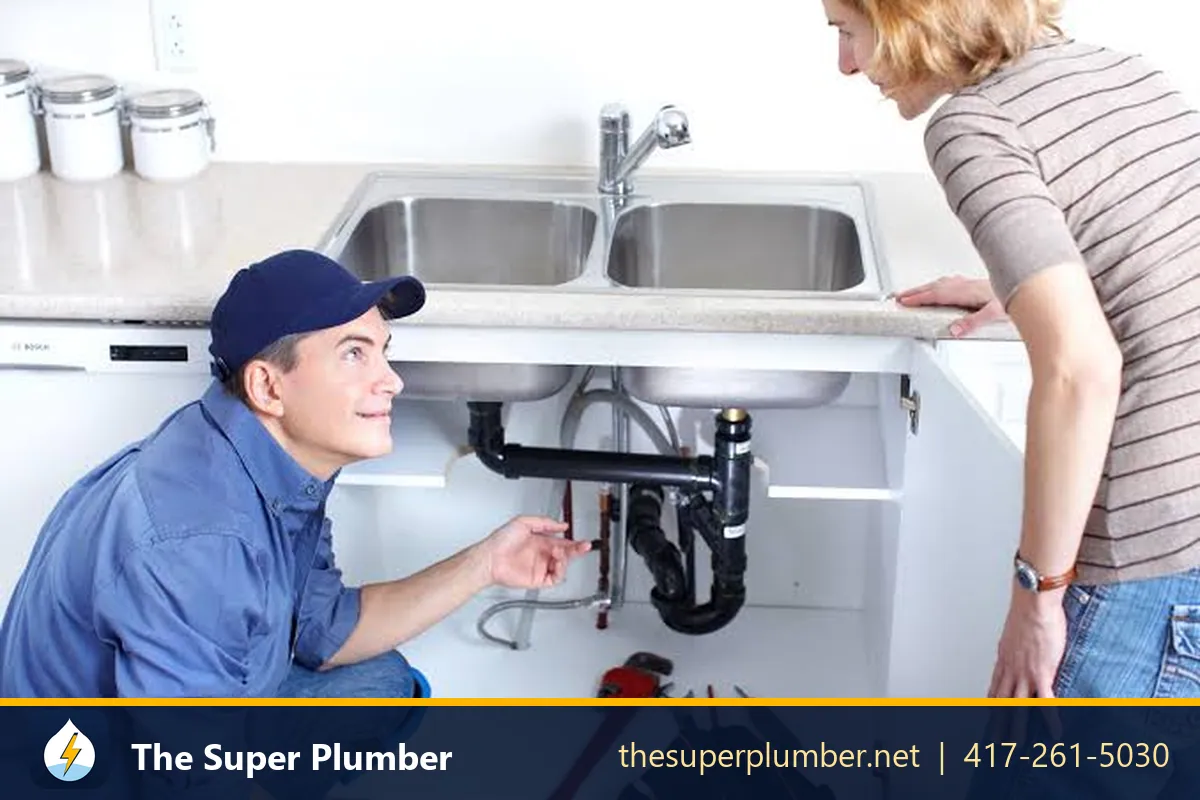
What to Expect From a Repair Visit: Diagnosis, Written Scope, Repair, and Testing
A good repair visit follows a clear order: you prepare, the plumber diagnoses, you approve a defined scope, then the fix is tested and cleaned up. Knowing the order helps you spot a rushed or vague job.
Before the Visit: What to Prepare
A little preparation saves time on site:
- Locate the main water shutoff and the sewer cleanout, if you have one.
- Clear access to sinks, the water heater, and the cleanout.
- Photograph stains, meter readings, or error messages.
- Write down when the symptom started and what you have already tried.
- Secure pets and move valuables away from the work area.
For a slab leak or backup, note the house age and whether it sits on a slab or crawlspace.
Diagnosis, Scope, and Approval
The plumber should find the cause before quoting the fix. That may mean pressure testing, running a camera down the line, or checking fixtures one by one. Then expect a scope that names the pipe, the location, the method, and the repair or replacement being proposed. Ask what is included and whether the City of El Cajon requires a permit. Do not approve open-ended work. Ask for the contractor's license and coverage details by phone before you say yes.
Repair, Testing, and Cleanup
After approval, the plumber isolates the problem, makes the repair, and restores service. Testing matters: a pressure check on supply lines, a water run through a repaired drain, or a camera pass on a relined sewer. Cleanup should cover debris, opened walls or floors, and removed old pipe. Ask what testing was done and what finishing work, such as drywall or flooring, is left for another trade. Keep the paperwork for your records.
El Cajon ZIP Codes and Nearby Cities for Plumbing Service
Coverage is confirmed by phone, and the street address matters more than the ZIP alone. Give both so the phone team can place your home correctly.
El Cajon ZIP Codes 92019, 92020, 92021, and 92022
El Cajon uses four ZIP codes: ZIP 92019 (about 1 mile from Seminary of Mar Abba the Great), ZIP 92020 (about 6.3 miles from San Diego State University), ZIP 92021 (about 1 mile from San Diego Christian College), and ZIP 92022 (about 6.5 miles from San Diego State University). Landmarks only help orient the area. Give the exact street, because boundaries and mailing addresses overlap between ZIP codes.
La Mesa, Santee, Lakeside, and Lemon Grove Nearby
Neighboring cities share similar inland-valley plumbing: La Mesa uses ZIP 91941 (about 3.7 miles from San Diego State University), 91942 (about 3.1 miles from San Diego State University), 91943 and 91944 (both about 2.9 miles from San Diego State University). Santee uses ZIP 92071 (about 7.1 miles from San Diego State University) and ZIP 92072 (near Gillespie Field). Lakeside uses ZIP 92040 (about 4 miles from San Diego Christian College). Lemon Grove uses ZIP 91945 (Lomita, about 3.7 miles from San Diego State University) and ZIP 91946 (about 3.3 miles from San Diego State University). Phone to confirm coverage for your address. For the neighboring city to the west, see plumbers in San Diego.
Call First: Plumbing Repair in El Cajon
If something is leaking, backing up, or draining slowly, call 417-261-5030 before you start tearing into walls or floors. Tell the phone team three things: that you are in El Cajon plus your street address and ZIP, what the symptom is, and what you know, such as shutoff status, house age, slab or crawlspace, cleanout location, and any past work. Availability, pricing, and response time are confirmed on that call.
If water is actively running or sewage is backing up, read about an emergency plumber first and shut off the main water if you can do so safely. For cost background, see what plumbers charge. Other California cities are covered in plumbing across California. Whatever the problem, phone 417-261-5030 and describe it plainly.
Other plumbing problems in an El Cajon home often travel with the ones above, so mention them on the same call: a failing water heater or a planned water heater replacement, a running toilet, a jammed garbage disposal, a dripping faucet, a smell that needs gas leak detection, a sump pump that will not run, or backflow testing for a commercial property. The full range of plumbing services is the place to start if you are not sure which category fits.
Ready to get a quote? Availability and pricing are confirmed by phone.
Call 417-261-5030ZIP Codes We Serve in El Cajon, CA
El Cajon coverage includes 4 ZIP codes. Look up yours in the table.
| ZIP code | Area | Nearby landmarks | County |
|---|---|---|---|
| 92019 | El Cajon area | ▸ About 1 mile from Seminary of Mar Abba the Great ▸ About 2 miles from San Diego Christian College ▸ About 14 miles from San Diego Zoo | San Diego |
| 92020 | El Cajon area | ▸ About 2.3 miles from Seminary of Mar Abba the Great ▸ About 4.5 miles from Lake Murray ▸ About 6 miles from San Diego State University | San Diego |
| 92021 | El Cajon area | ▸ About 1.3 miles from San Diego Christian College ▸ About 3.2 miles from Seminary of Mar Abba the Great ▸ About 12 miles from San Diego Stadium | San Diego |
| 92022 | El Cajon area | ▸ About 2.2 miles from Seminary of Mar Abba the Great ▸ About 4.8 miles from Lake Murray ▸ About 7 miles from San Diego State University | San Diego |
Nearby El Cajon-Area Cities and ZIP Codes
The same phone line also takes calls for 4 nearby cities with 9 more ZIP codes. Tell the phone team the city and ZIP and coverage is confirmed for your address.
| City | ZIP codes and places |
|---|---|
| La Mesa | 91941 about 2.6 miles from Lake Murray; about 3.7 miles from San Diego State University 91942 about 1.5 miles from Lake Murray; about 3.1 miles from San Diego State University 91943 about 1.8 miles from Lake Murray; about 2.9 miles from San Diego State University 91944 about 1.8 miles from Lake Murray; about 2.9 miles from San Diego State University |
| Santee | 92071 about 1.7 miles from Gillespie Field; about 5 miles from Lake Murray 92072 near Gillespie Field; about 4.6 miles from San Diego Christian College |
| Lakeside | 92040 about 3.7 miles from San Diego Christian College; about 10 miles from San Diego State University |
| Lemon Grove | 91945 about 3.7 miles from San Diego State University; about 3.7 miles from Viejas Arena 91946 about 3.1 miles from Lake Murray; about 3.3 miles from San Diego State University |
Other California Cities and ZIP Codes We Serve
Calls are also taken for other California cities, 373 in all. Every city is covered in plumbing services across California.
| City | ZIP codes and places |
|---|---|
| West Covina | 91790 about 5 miles from Gay's Lion Farm; about 7 miles from California State Polytechnic University, Pomona 91791 about 3.8 miles from Hilmer Lodge Stadium; about 4.4 miles from California State Polytechnic University, Pomona 91792 about 3.8 miles from Hilmer Lodge Stadium; about 4.9 miles from California State Polytechnic University, Pomona |
| Perris | 92570 about 4.8 miles from California Theatre of the Performing Arts; about 5 miles from Orange Empire Railway Museum 92571 about 3.1 miles from Lake Perris; about 3.6 miles from Orange Empire Railway Museum 92572 about 1.4 miles from Perris Valley Airport; about 1.6 miles from Orange Empire Railway Museum |
| Goleta | 93116 about 1.7 miles from Kavli Institute for Theoretical Physics; about 1.7 miles from University of California, Santa Barbara 93117 near Harder Stadium; about 1.2 miles from University of California, Santa Barbara 93118 about 1.7 miles from Kavli Institute for Theoretical Physics; about 1.7 miles from University of California, Santa Barbara |
| Monterey | 93940 near Monterey Regional Airport; about 1.4 miles from Tehàma Golf Club 93942 near Middlebury Institute of International Studies at Monterey; near Monterey Museum of Art 93943 near Naval Postgraduate School; near Monterey Peninsula College |
| Daly City | 94014 about 1.6 miles from Cypress Lawn Memorial Park; about 1.7 miles from Cow Palace 94016 about 1.6 miles from San Francisco State University; about 1.6 miles from Balboa Park 94017 about 1.6 miles from San Francisco State University; about 1.6 miles from Balboa Park |
| Vallejo | 94589 about 5 miles from Touro University California; about 9 miles from Sonoma Raceway 94590 about 1.6 miles from Touro University California; about 16 miles from University of California, Berkeley 94591 about 2.9 miles from Touro University California; about 7 miles from Radke Martinez Regional Shoreline |
| Walnut Creek | 94595 about 3.2 miles from Saint Mary's College of California; about 3.3 miles from Louis Guisto Field 94596 about 1.1 miles from Heather Farm Park; about 2.6 miles from Joint Genome Institute 94597 about 1.5 miles from Dinosaur Hill Park; about 1.6 miles from Heather Farm Park |
| Los Gatos | 95030 about 2.3 miles from El Sereno Open Space Preserve; about 2.7 miles from Montalvo Arts Center 95031 about 2.2 miles from Lexington Reservoir; about 5 miles from El Sereno Open Space Preserve 95032 about 3.2 miles from Campbell Historical Museum; about 4.1 miles from El Sereno Open Space Preserve |
Frequently Asked Questions
How is plumbing repair pricing confirmed?
Pricing is confirmed by phone after you describe the problem, your address, and what you already know. A plumber needs the symptom, the pipe type, and the access before naming a figure. Be wary of any number given without those details, and ask what the quote includes before approving work.
How do I know if I have a slab leak?
Common signs include an unexplained jump in the water bill, the sound of running water when fixtures are off, warm spots on the floor, damp or lifting flooring, and low pressure. A water meter that keeps moving with everything off is another strong hint. A plumber confirms it with testing.
Can a slab leak be repaired without breaking concrete?
Sometimes. Rerouting the supply line through walls or the attic avoids the slab entirely, and tunneling is occasionally possible. Spot repair usually means opening the floor over the leak. Which option fits depends on the layout, pipe condition, and access, so ask the plumber to explain the choices for your home.
How do plumbers find underground leaks?
They start with a meter test and a pressure isolation test to confirm a leak and which line it is on. Then they use acoustic listening, electronic or tracer gas detection, and sometimes thermal imaging for hot lines. The goal is to pinpoint the spot before any digging starts.
What are the signs of a broken sewer line?
Frequent backups, gurgling drains, slow drains in several fixtures at once, sewage smells, soggy patches in the yard, and recurring clogs after cleaning all point toward a damaged lateral. A camera inspection shows whether the cause is roots, a crack, a belly, or collapse.
What is a sewer lateral?
The sewer lateral is the underground pipe that carries wastewater from your house to the public sewer main. A cleanout usually gives access to it. Ownership often changes at the property line or cleanout, so confirm responsibility for your address with the City of El Cajon.
What is the difference between trenchless lining, pipe bursting, and digging?
Lining inserts a resin-coated liner inside the existing pipe, bursting pulls new pipe through as the old one is broken up, and open trench digs the old pipe out. Lining does not suit severe collapse or large bellies. A camera inspection helps decide which method fits.
Why do drains keep clogging?
Kitchen grease, bathroom hair and soap, mineral scale, and tree roots are common causes. If a clog returns at the same spot soon after cleaning, a damaged pipe or a belly may be holding debris. A drain camera can show what cleaning alone has not fixed.
How do I know if a drain needs repair instead of cleaning?
Cleaning clears a blockage, while repair fixes the pipe. If the line clogs again in the same place, backs up repeatedly, or a camera shows cracks, offsets, or sagging, repair or replacement is more likely. A single slow drain with no history is often just a clog.
Should I repair a pipe or repipe the house?
Repair makes sense for a single failure in otherwise sound pipe. Repiping is worth discussing when leaks keep appearing, corrosion is widespread, pressure is low from rusty pipes, or the material is known to fail. A plumber can compare a partial repipe against a whole-house repipe for your home.
What are the trade-offs between copper and PEX?
Copper is rigid and long established but can develop pinholes in some water conditions and needs more labor to install. PEX is flexible and faster to run through walls, but it needs proper fittings and protection from sunlight. Ask the plumber which suits your layout, water, and plans.
Can I confirm credentials before plumbing repair El Cajon CA work starts?
License and coverage details are confirmed by phone, not assumed. Ask for them before approving any work, and ask for the scope in writing. This applies to any plumber you consider, and it is a reasonable question to ask every time.
Ready to talk to a plumber? Call 417-261-5030.
Call 417-261-5030